Richard Ciano Calls Out Mark Carney's Hypocrisy in Davos Address
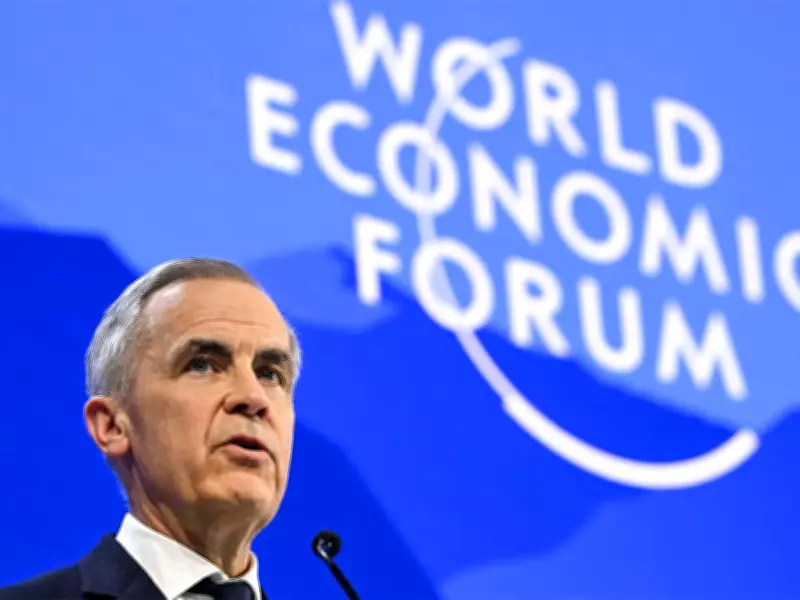
Prime Minister Mark Carney recently delivered a speech at the World Economic Forum in Davos that has drawn sharp criticism from political commentator Richard Ciano. In his address, Carney invoked the dissident spirit of Václav Havel, using Havel's famous parable of the greengrocer to lecture the global elite on "living in truth" and the failures of the international rules-based order.
The Greengrocer Parable Applied to Canadian Governance
Ciano argues that the irony of Carney's speech was overwhelming. According to Ciano, if there is a greengrocer on the world stage today, it is Canada itself, with Carney serving as the shop manager who straightens the signs while the shelves rot. The commentator suggests that under the Liberal establishment, Canada has become a masterclass in performative governance—a nation defined by polite fictions displayed to conceal the brutal realities of national decline.
Canada has evolved into a country of signs that nobody truly believes in, maintained by what Ciano describes as a governing gerontocracy that comforts itself while the country crumbles for everyone else. This critique extends to several key areas of Canadian policy and national identity.

The Crown Allegiance Ritual
Walk into the Canadian shop, Ciano suggests, and the first sign you encounter is the Crown. New citizens, police officers, and lawyers are compelled to swear allegiance to King Charles III—a foreign monarch that approximately 60 percent of Canadians do not support. According to Ciano, this represents the ultimate Havelian ritual: a mandatory public lie performed to gain entry to civil society.
The establishment fights to keep this sign up, Ciano argues, terrified that removing it would require a conversation about national identity that they lack the courage to handle. This bureaucratic inertia represents what Ciano sees as a fundamental hypocrisy in Canadian governance.
Reconciliation as Performative Virtue
Look deeper into the store, Ciano continues, and you find the "Reconciliation" sign. Government press conferences and corporate board meetings now routinely begin with solemn Land Acknowledgements declaring "unceded territory." Ciano describes these as moral preening rituals—"conscience-clearing rites" for the Laurentian elite that signal virtue without demanding sacrifice.
When the B.C. Supreme Court ruled in Cowichan Tribes v. Canada that "unceded" actually means "unceded," threatening fee-simple property rights, the government panicked rather than rejoicing in justice. Ciano points to B.C. Premier David Eby's immediate signal of an appeal as evidence that the establishment's commitment to reconciliation ends exactly where their own property values begin.
Climate Leadership Contradictions
Then there is the "Climate Leader" sign. Prime Minister Carney preaches "net zero" to the choir at Davos while overseeing what Ciano describes as a petro-state expansion strategy for Canada. This represents what Ciano calls the definition of Havel's "ideological mystification"—using high-minded rhetoric to mask the low foundations of power.
Canada wants the credit for being green without the inconvenience of actually stopping the drill, Ciano asserts. This contradiction between rhetoric and action forms a central part of his critique of Carney's leadership and the broader Liberal establishment.
The Broader Implications
Ciano's analysis suggests that Canada has become a nation of performative governance, where signs and symbols replace substantive action and policy. The greengrocer's window displays attractive slogans while the actual products inside—the policies and actions—fail to match the advertised virtues.
The commentary raises fundamental questions about truth in governance, the gap between political rhetoric and reality, and the sustainability of a political system built on what Ciano characterizes as polite fictions. As Canada positions itself on the world stage, these internal contradictions become increasingly visible and problematic according to this critical perspective.