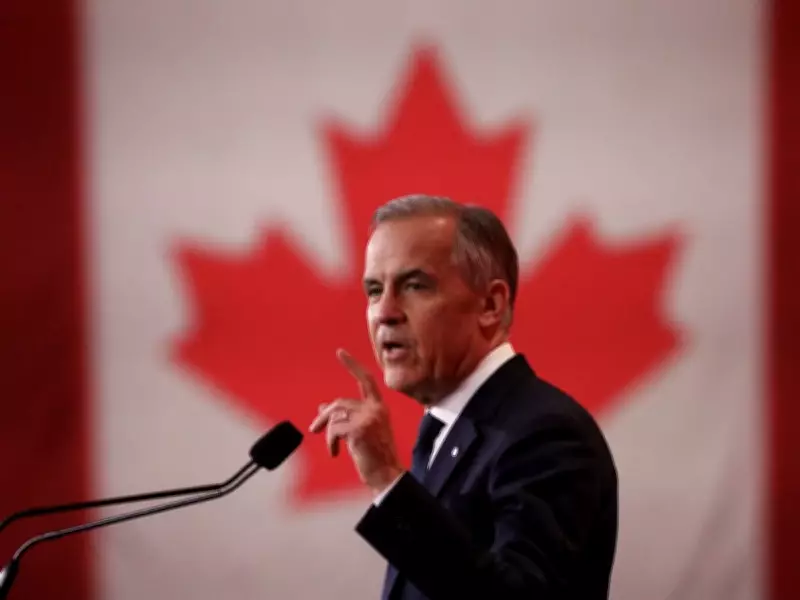
Donna Kennedy-Glans Warns Carney's Unity Push Threatens Parliamentary Debate
Donna Kennedy-Glans, a prominent commentator, has raised significant concerns about Prime Minister Mark Carney's approach to governance, suggesting that his push for national unity risks transforming Parliament into a forum of managed consensus rather than genuine democratic debate. This development, she argues, could particularly marginalize opposition voices from Alberta and Western Canada, undermining the essential role of dissent in holding government accountable.
The Legacy of Charlie Fischer: A Contrast in Approaches
Kennedy-Glans draws on her experience working with the late Charlie Fischer, a respected Alberta business leader and former CEO of major Canadian energy companies. Fischer, an engineer by training, was known for his ability to build pipelines, plants, and businesses, but he consistently refused to steamroll differing viewpoints. Despite his strong convictions and frequent recruitment by political parties, Fischer was deeply uncomfortable with the public spectacle of partisan conflict in Question Period and media exchanges.
"Even when former Prime Minister Joe Clark explained that the opposition's role is to oppose and hold government accountable, Charlie viewed it as a waste of time and talent," Kennedy-Glans notes. This perspective reflects a preference for collaborative problem-solving over adversarial politics, a mindset that Kennedy-Glans suggests Carney's administration might appeal to, but at the potential cost of democratic vigor.

Carney's Pragmatic Shift and Its Implications
Since taking office a year ago, Prime Minister Mark Carney has steered the Liberal Party toward a more results-oriented approach, overturning many ideological enthusiasms and borrowing heavily from conservative priorities. His pragmatism has made overt partisanship less relevant, as evidenced by the recent Liberal National Convention in Montreal, where delegates focused on "widening the circle" to defend national unity rather than engaging in traditional political point-scoring.
Carney told the convention crowd, "This is not the time for politics as usual, for petty differences or political point scoring. United, we will build a Canada strong that no one can ever take away." This rhetoric, while appealing for unity, raises questions about the space for legitimate opposition and debate in Parliament.
The Risk of Managed Consensus Over Democratic Debate
Kennedy-Glans warns that Carney's approach risks replacing robust parliamentary debate with a managed consensus that sidelines dissenting voices. She points out that while the mechanics of power—such as judicial appointments, Senate selections, and control of policy—remain partisan, the overt partisanship has taken a back seat to a broader question: who can best deliver what many consider a "conservative" agenda?
"To some of my friends, Carney is the best conservative leader the Liberals have ever had," she observes, highlighting the blurring of traditional political lines. However, this convergence may come at the expense of Alberta and Western Canada, where opposition views are crucial for regional representation and accountability.
Potential Consequences for Alberta and the West
The article suggests that Carney's unity push could particularly impact Alberta and Western Canada, where genuine opposition is essential for addressing regional concerns. Kennedy-Glans speculates that figures like Charlie Fischer might have welcomed an invitation to join Carney's cabinet, given its pragmatic and less partisan tone, but this could further dilute the voice of Western dissent in federal politics.
She also notes the example of NDP MP Heather McPherson, suggesting that if alert to Carney's direction, she might have followed others in crossing party lines, reflecting the reduced relevance of overt partisanship. This trend, while fostering unity, may undermine the democratic process by minimizing constructive conflict and debate.

In conclusion, Kennedy-Glans emphasizes the need for balance between unity and debate in Parliament. While Carney's results-oriented approach has merits, it must not sacrifice the essential role of opposition in a healthy democracy, especially for regions like Alberta that rely on strong representation to hold government accountable.