From Global Acclaim to Domestic Challenge: Carney's Quebec Test
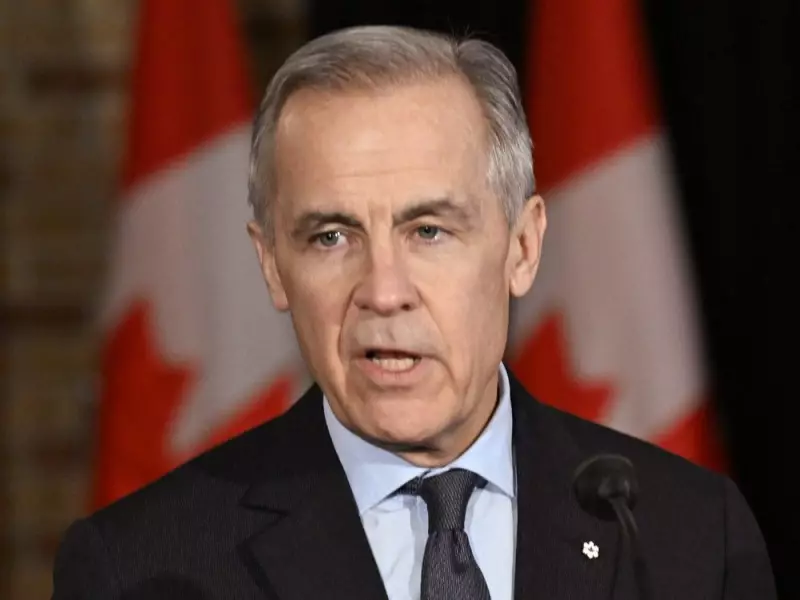
Fresh from receiving a standing ovation at the World Economic Forum in Davos for his landmark speech on the breaking of the rules-based international order, Prime Minister Mark Carney returned to Canada on Thursday to deliver an equally crucial message. This time, his audience was potentially far less receptive: the people of Quebec, where rising separatist sentiment presents a serious domestic challenge.
Historic Setting for a High-Stakes Address
The Prime Minister chose the Citadelle in Quebec City's historic old quarter as the backdrop for his cabinet planning forum and subsequent address. This location carries profound symbolic weight, situated just a stone's throw from the National Assembly where nationalist Premier François Legault recently announced his intention to step down. Current polls indicate the Parti Québécois could be poised for victory in the scheduled fall election.
The fortress itself was built by the British to repel an American attack that never materialized, and it overlooks the storied Plains of Abraham where English forces defeated the French in 1759. This moment remains a painful turning point in Quebec's collective memory, making Carney's decision to reference it directly particularly bold.

A Controversial Historical Narrative
In his speech steeped in historical references, Carney opened with the cataclysmic events of 1759, acknowledging that "this ground was soaked with blood" before tracing what he described as a gradual evolution toward cooperation and partnership between French and English Canadians. He emphasized how this response was "not inevitable" but rather "chosen," highlighting Confederation, official bilingualism, and the parliamentary recognition of Quebecers as a nation.
"This partnership, despite all its frustrations, deserves not only to be preserved but to be reinforced," Carney declared. "Unity doesn't necessarily pass by uniformity... We can share a country without conforming to a single identity... Our differences, honestly recognized and managed with respect, are a source of strength."
Immediate Pushback from Sovereignist Leaders
The Prime Minister's rosy interpretation of history drew swift criticism from Quebec sovereignist figures. Bloc Québécois Leader Yves-François Blanchet took to social media to highlight what he characterized as significant omissions in Carney's narrative, including the hanging of Louis Riel, the suppression of les Patriotes, the October Crisis, and referendum controversies.
Parti Québécois Leader Paul St-Pierre Plamondon went further, calling the speech part of a "long tradition of colonialism" and promising a point-by-point rebuttal at an upcoming party convention. With polls showing the PQ would win handily in an October election, and St-Pierre Plamondon vowing to hold a sovereignty referendum in a first mandate regardless of external threats, Carney's unity message faces substantial headwinds.
Domestic Challenges Amid Global Uncertainty
The skepticism greeting Carney's Quebec address underscores the serious domestic challenges confronting his minority government, which remains two seats shy of a majority. The Prime Minister must navigate the delicate task of preventing internal fractures while simultaneously protecting Canada from unprecedented external threats, particularly given former U.S. President Donald Trump's expansionist rhetoric regarding Canadian territory.
Carney's Davos speech earned him praise for standing up to Trump without naming him directly, declaring a "rupture" in the post-World War II international order and proposing that middle powers forge alliances rather than submit to self-interested superpowers. Yet this global statesmanship appears insufficient to address Quebec's particular concerns and historical grievances.
The Path Forward for Federal Outreach
As a non-Quebecer who speaks French well but isn't fluidly bilingual, Carney faces natural limitations in leading any potential "No" campaign in a future referendum. His embrace of Bonhomme, the Quebec Carnaval mascot, during the Citadelle event symbolizes the cultural gestures expected of federal leaders, but observers note he will need to demonstrate deeper awareness and sensitivity to Quebec's specific concerns.

The coming months will test whether Carney can translate his international diplomatic success into effective domestic leadership, particularly as Quebec prepares for an election that could dramatically reshape the national unity landscape. With separatist sentiment rising not only in Quebec but also showing signs of growth in Alberta, the Prime Minister's ability to craft a compelling narrative of Canadian partnership faces its most significant test yet.