Mark Carney's Inconsistent Iran War Position Erodes Canada's International Credibility
Prime Minister Mark Carney's rapidly changing stance on the Iran-Israel-America conflict has drawn sharp criticism from political observers and foreign policy experts, who argue that his vacillation is damaging both Canada's global reputation and his own leadership credibility.
From Clear Support to Regretful Qualification
In the immediate aftermath of the military action initiated by Israel and the United States against Iran's regime, Carney issued a statement that appeared to offer unambiguous support. "Canada's position remains clear: the Islamic Republic of Iran is the principal source of instability and terror throughout the Middle East," the Prime Minister declared, adding that Canada "supports the United States acting to prevent Iran from obtaining a nuclear weapon."
This initial statement represented what many considered a rare moment of moral clarity from Carney regarding Israel, marking the first time observers could recall him publicly applauding the nation's defensive actions.

A Rapid Reversal and Further Confusion
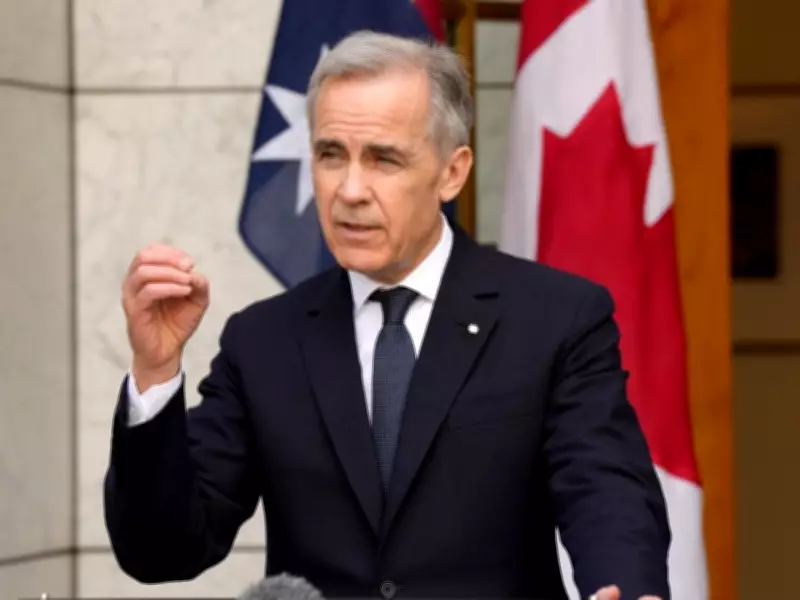
Just forty-eight hours later, during a media appearance in Canberra, Australia, Carney seemed to completely reverse his position. "We do, however, take this position with regret because the current conflict is another example of the failure of the international order," he stated, transforming his clear support into qualified regret.
The confusion deepened when Carney was asked about potential Canadian military involvement in the conflict. While dismissing the question as "hypothetical," he notably added: "One can never categorically rule out participation." This stands in stark contrast to former Prime Minister Jean Chrétien's definitive four-word statement in 2003 regarding another Middle Eastern conflict: "Canada will not participate."
Canada's Tangible Stakes in the Conflict
Despite not being a direct combatant, Canada has significant interests at stake in the Iran conflict. The Iranian regime has directly impacted Canadian citizens on multiple occasions:
- On January 8, 2020, Iran shot down Ukraine International Airlines Flight 752, killing 85 Canadians
- On October 7, 2023, seven Canadians were murdered by Hamas, Iran's proxy organization
- In November 2024, former Liberal cabinet minister Irwin Cotler revealed Iran had plotted to assassinate him
- For years, Canadians have been targeted by terror plots funded and facilitated by Iran
"Canada may not be fighting in Iran, but we have stakes in the outcome," notes the analysis. "Iran has killed and wounded many Canadians, and never paid a price for that."
Leadership Lessons from Leon Panetta
The criticism of Carney's approach echoes wisdom from Leon Panetta, the respected former U.S. Secretary of Defense. "Leaders have to understand that when you send people into war, you better damn well have a very clear mission for what they're doing and why they're doing it," Panetta emphasized in a recent interview.
Panetta warned that constantly changing mission objectives "really begins to screw up what soldiers are thinking" and "begins to hurt your own effort." While Canada isn't deploying troops to Iran, the principle applies to political leadership during international crises: citizens and allies alike deserve clarity and consistency.
The Political Fallout of Indecision
Carney's initial statement represented what could have been a defining moment of moral clarity for his administration. Instead, he followed it with what critics describe as "a farrago of vacillation and qualification" that has raised questions about his leadership during international crises.
The Prime Minister's shifting positions have created uncertainty about Canada's foreign policy direction at a time when allies and adversaries alike are watching how Western democracies respond to Iranian aggression. This inconsistency comes despite Iran's demonstrated hostility toward Canadian interests and citizens.

As the conflict continues to evolve, Carney faces mounting pressure to provide the clear, consistent leadership that both Panetta's wisdom and Canada's international standing demand. The Prime Minister's handling of this crisis will likely have lasting implications for how Canada is perceived on the global stage and for his own political legacy.