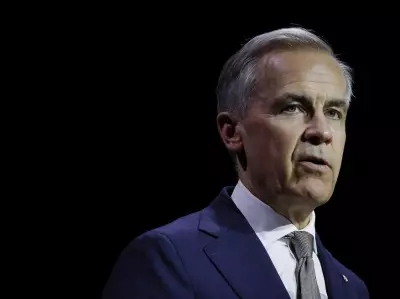
Carney's Approval Ratings Defy Economic Performance Concerns
Recent polling data reveals a striking political paradox in Canadian federal politics. Prime Minister Mark Carney continues to enjoy substantial public support despite mounting criticism of his government's economic performance and policy decisions. According to the latest Nanos PM tracker poll, Carney maintains a commanding lead over Conservative Party Leader Pierre Poilievre in the credibility contest, with 53 percent of Canadians preferring Carney as prime minister compared to just 24 percent for Poilievre.
The Polling Disconnect Between Leadership and Party Support
This leadership approval gap has remained remarkably consistent since last fall, creating an interesting dynamic as speculation grows about potential election timing. While Carney's personal approval ratings remain strong, the gap between the Liberal and Conservative parties is much narrower in general polling, typically showing a difference of just four to nine percentage points. This suggests that while Canadians express confidence in Carney personally, their support for his party may be more conditional.
The Conservative Party recently demonstrated strong internal support for Poilievre during their January convention in Calgary, where the leader received more than 87 percent approval in his leadership review. However, this partisan enthusiasm has failed to translate into broader electoral appeal, creating a significant challenge for the opposition as they prepare for the next federal election.

Economic Performance Under Scrutiny
Carney's sustained popularity appears particularly puzzling given his government's economic track record. Last year, the prime minister promised Canada would "build at speeds not seen in a generation," yet actual economic performance has fallen well short of this ambitious goal. Housing starts and manufacturing have contracted, while overall economic growth has reached only one percent—far below the four percent growth that would represent truly generational expansion.
The most significant generational growth under Carney's leadership appears to be in the federal deficit, which is projected to exceed $70 billion annually for at least the next four years. This substantial fiscal challenge raises questions about the government's economic management and long-term financial planning.
Trade Policy and International Relations Concerns
Carney's approach to international trade has drawn criticism from multiple directions. His dealings with U.S. President Donald Trump have been characterized as inconsistent, alternating between tough rhetoric and conciliatory gestures without achieving meaningful progress in trade negotiations. This uneven approach has left Canada's trade relationship with its largest partner in a state of uncertainty.
The government's Major Projects Office, established to streamline major infrastructure developments, has been criticized for achieving minimal tangible results. While Carney has boasted about negotiating "12 new trade deals on four continents in six months," critics note that most of these agreements contain no binding commitments for Canada or partner nations and offer little in terms of new market access or tariff reductions.
The China Trade Dilemma
Perhaps the most controversial aspect of Carney's trade policy involves his approach to China. The recent trade agreement with Beijing comes with significant costs, including potential job losses in Ontario's automotive assembly lines due to increased imports of Chinese-made electric vehicles. Additionally, the agreement maintains relatively free access for agents from China's security and propaganda apparatus to operate within Canada.
This relationship with China creates ethical dilemmas for the government, particularly regarding human rights issues. Critics worry that Carney's desire to maintain positive trade relations with Beijing may lead to weak responses to human rights abuses, similar to former Prime Minister Justin Trudeau's handling of the Two Michaels case when he was attempting to strengthen ties with Chinese leadership.

The current situation involving media mogul Jimmy Lai, who received a 20-year sentence for advocating democracy in Hong Kong, presents a test of Carney's willingness to prioritize human rights over trade considerations. How the government responds will reveal much about its foreign policy priorities and ethical boundaries.
Political Implications and Election Timing
The disconnect between Carney's personal popularity and his government's policy performance creates an unusual political landscape. Most political analysts agree that a snap federal election is unlikely until Liberal seat projections—not just raw polling numbers—show the party comfortably positioned to win a majority government.
With Carney's approval ratings remaining strong despite policy criticisms, and Poilievre struggling to translate partisan enthusiasm into broader electoral appeal, the political dynamics suggest continued Liberal advantage in leadership perception. However, the narrower gap between the parties themselves indicates that policy issues and economic performance may ultimately play a decisive role when Canadians next go to the polls.
This complex political environment presents challenges for both major parties as they navigate public opinion, policy implementation, and electoral strategy in the coming months.