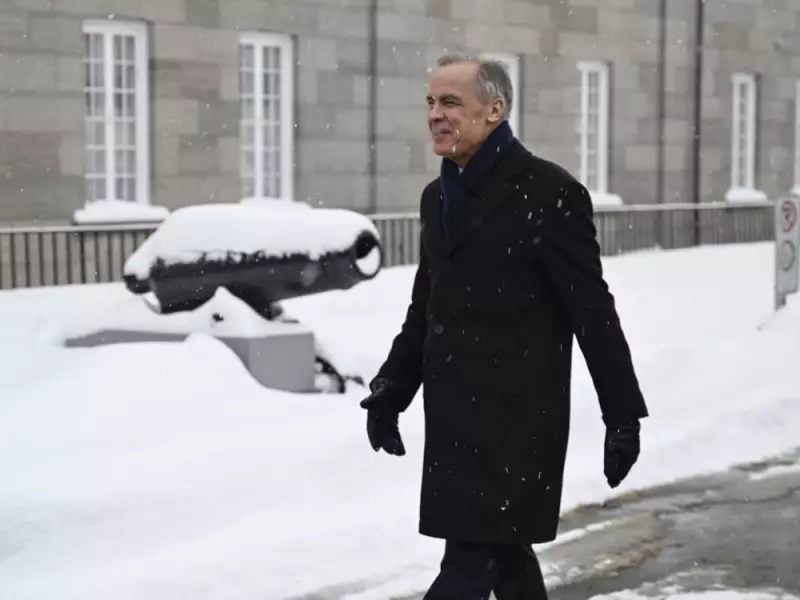
Quebecers' Support for Carney Plummets After Historically Flawed Speech on Plains of Abraham
Prime Minister Mark Carney experienced a dramatic shift in public opinion in Quebec last week, following a speech on national unity delivered at the historically significant Plains of Abraham in Quebec City. This comes after initial praise for his address at the World Economic Forum in Davos, Switzerland, which had been warmly received by many in the province.
From Acclaim to Backlash
Carney's Davos speech was described by veteran commentator Chantal Hébert as "one of the best speeches ever delivered on the world stage by a Canadian prime minister." La Presse, Quebec's leading daily newspaper, published the address in full—a rare gesture it had not made in years. Comments on the newspaper's app were overwhelmingly positive, including from sovereigntists, indicating broad approval across political lines.
However, upon returning to Canada, Carney chose the Plains of Abraham as the venue for a speech on national unity. This site marks the 1759 battle where British forces defeated the French army, leading to the conquest of New France by Great Britain. The location is profoundly symbolic and sensitive in Quebec's historical narrative.

The Controversial Historical Claims
The speech began with Carney acknowledging that British authorities had sought to eliminate the French language from Canada, referencing the Great Deportation of the Acadians and the Durham Report following the Patriots' Rebellion. He noted the resilience of francophones and the pragmatism of British authorities, who realized governing 70,000 people against their will was impractical, especially with unstable American colonies to the south.
Up to this point, the address was uncontroversial. However, Carney then made a statement that sparked immediate backlash. He asserted that, "The Plains of Abraham mark a battlefield, and also the place where Canada began to make its founding choice of accommodation over assimilation, of partnership over domination, of building together over pulling apart."
Historical Inaccuracy and Political Fallout
This claim has been widely criticized as historically inaccurate and insensitive to the experience of French Canada. As noted by commentator André Pratte, a staunch federalist, the Battle of the Plains of Abraham did not mark the beginning of "accommodation over assimilation" or "partnership over domination." In fact, the opposite is true historically.
While the Quebec Act of 1774 later granted certain rights to French Canadians—partly out of fear they might join the new American republic—there were repeated attempts before and after to make Canada an English-only land. Carney's statement reflects a misunderstanding of these basic historical facts, surprising given his reputation as a brilliant and cultivated leader.
Political Consequences and Cancelled Events
The blunder was so significant that the press conference scheduled for the close of the Liberal cabinet retreat on Friday was conveniently cancelled. This move suggests recognition of the political damage caused by the speech. Quebec, which played a crucial role in handing Carney his election victory, has seen a substantial loss of goodwill toward the prime minister as a result of this incident.
The episode highlights the delicate balance required when addressing Quebec's historical sensitivities, particularly on symbolic ground like the Plains of Abraham. It serves as a reminder that even well-intentioned messages can backfire when they misrepresent foundational historical events that continue to shape regional identity and political discourse in Canada.