Prime Minister Carney Addresses Controversial Quebec City Remarks
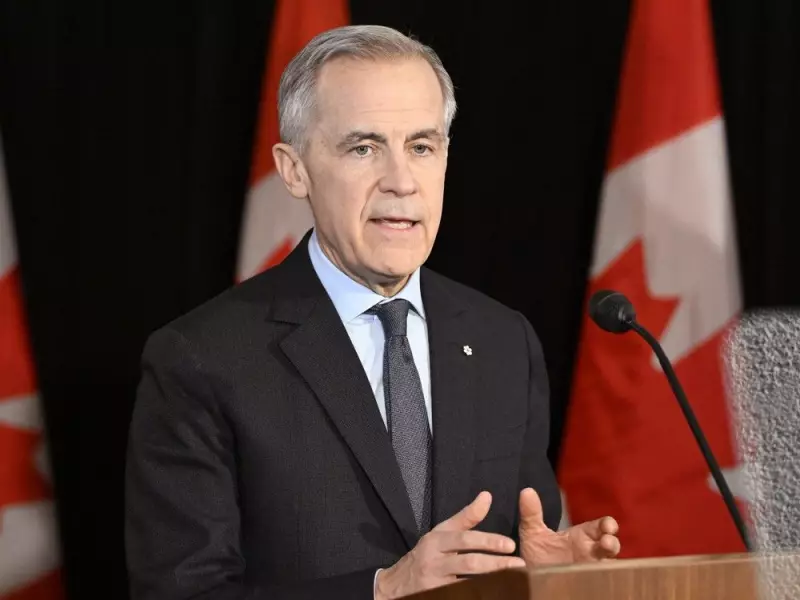
Prime Minister Mark Carney has directly responded to the growing controversy surrounding his recent speech in Quebec City, where he addressed what he termed the historical "struggle" of francophones in Canada. During a press conference in Ottawa held on Monday to announce new affordability measures, Carney defended his comments while stopping short of issuing any formal apology.
Carney's Defense of Historical Remarks
"I began my speech by recognizing the struggle of francophones during the history of Canada," Carney told reporters. "I mentioned and even stressed the efforts of some in our history to pursue a policy of assimilation of francophones." The Prime Minister emphasized that he believes it was "because of the resilience of the francophone people that we created Canada."
Carney elaborated further, stating that this Canada eventually recognized "two founding peoples and, after a certain time, three founding peoples, including Indigenous Peoples." His comments came in response to direct questioning from journalists about whether he would apologize to Quebecers and francophones across Canada for his original speech.

The Plains of Abraham Reference Sparks Backlash
The controversy stems from Carney's characterization of the Plains of Abraham during his January 22 speech at the Citadelle in Quebec City. The Prime Minister referred to the historic site where French forces fell to the British in 1759 as a place of "accommodation" and "partnership." This interpretation has drawn significant criticism from multiple Quebec political leaders who view it as a revisionist take on history.
On Monday, Carney acknowledged that this period represented "a difficult history" for francophones. However, he pointed to what he sees as positive outcomes, noting that "over the course of time, the French language and culture, as well as Quebec institutions such as its civil code, had been maintained."
Quebec Political Leaders Voice Strong Criticism
The Prime Minister's remarks have generated substantial pushback from across Quebec's political spectrum. Leaders from the Parti Québécois, Bloc Québécois, and Coalition Avenir Québec cabinet Minister Jean-François Roberge have all publicly criticized Carney's characterization of history.
These critics argue that Carney's speech fails to properly acknowledge the genuine hardships experienced by Quebec's francophone population throughout Canadian history. Parti Québécois Leader Paul St-Pierre Plamondon offered particularly pointed commentary on social media, suggesting a pattern of federal behavior.
"It's not the first time in our history that, faced with a sovereignty movement that's growing in strength, that the federal government distorts our history and suddenly promises the end of the contempt it displays towards our democratic choices," Plamondon stated.
Broader Context of the Speech
Carney delivered the original speech during a cabinet planning forum at Quebec City's historic Citadelle on January 22, 2026. The location itself carries significant symbolic weight, situated within a fortress that represents centuries of military and political history in North America.
The Prime Minister's decision to frame the Plains of Abraham—a site traditionally associated with military conquest and cultural conflict—as one of accommodation and partnership appears to reflect his government's approach to federal-provincial relations. However, this interpretation has clearly struck a nerve with Quebec politicians who view the historical narrative differently.
As the debate continues, the incident highlights ongoing tensions in Canadian federalism and the delicate nature of historical interpretation in a country with multiple founding narratives. The Prime Minister's office has not indicated whether Carney plans any further statements or actions regarding the controversy beyond his Monday remarks.