Prime Minister's Address at Historic Site Draws Sharp Criticism
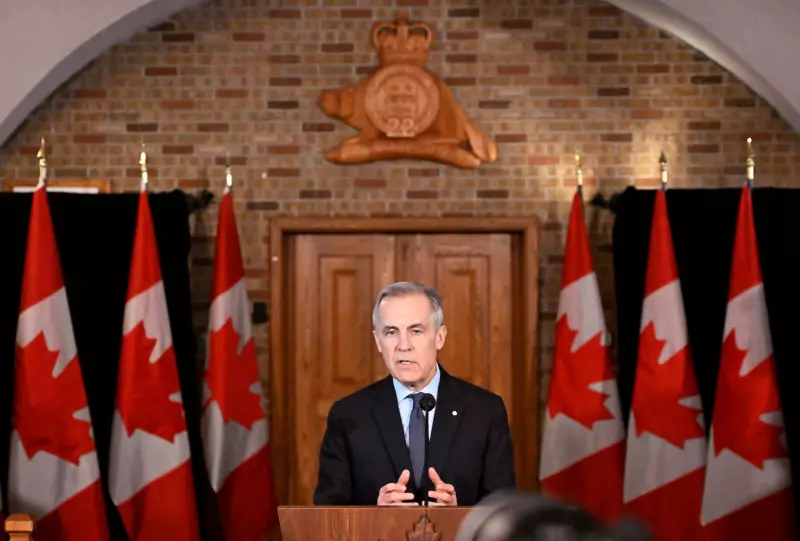
Prime Minister Mark Carney has ignited a political firestorm following a speech delivered at the Plains of Abraham in Quebec City, with critics accusing him of attempting to rewrite Canadian history. The controversial remarks came during the opening of a Cabinet Planning Forum held at the Citadelle on Thursday, January 22, 2026.
Contentious Historical Interpretation
While the exact wording of Carney's speech has not been fully disclosed, multiple sources indicate that his interpretation of events surrounding the historic 1759 battle prompted immediate backlash. Political opponents and historical commentators have characterized his narrative as selective and misleading, suggesting it minimizes certain aspects of the conflict's legacy while emphasizing others to suit contemporary political objectives.
The Plains of Abraham remains one of Canada's most symbolically charged historical sites, representing both a pivotal military confrontation and ongoing debates about national identity, conquest, and reconciliation. Carney's decision to speak there during a cabinet retreat was seen by many as a deliberate choice with significant symbolic weight.

Political Reactions and Implications
The accusations of historical revisionism come at a sensitive time for the federal government, which has been navigating complex relationships with Quebec and Indigenous communities. Critics argue that manipulating historical narratives for political purposes undermines genuine reconciliation efforts and distorts public understanding of Canada's past.
"When political leaders reinterpret history to align with current agendas, they risk eroding public trust in both historical scholarship and democratic institutions," noted one political historian who requested anonymity due to the sensitivity of the topic.
Broader Context of Cabinet Retreat
The speech occurred during a multi-day cabinet retreat focused on sovereignty and security issues, suggesting Carney may have been attempting to frame contemporary challenges within a historical context. However, the immediate controversy has overshadowed other retreat discussions, including:
- National security strategy development
- Intergovernmental relations with provinces
- Economic planning amid global uncertainties
This incident follows previous controversies surrounding Carney's historical references, though none have generated quite this level of concentrated criticism regarding specific historical events.
Historical Sensitivity and Political Communication
The Plains of Abraham represents particularly contested historical ground, with interpretations varying significantly between English and French Canadian perspectives, as well as Indigenous viewpoints. Political leaders addressing this history must navigate:
- The factual accuracy of historical claims
- The emotional resonance of the site for different communities
- The contemporary implications of historical framing
- The balance between commemoration and critical examination
Carney's approach appears to have stumbled on several of these considerations, according to critics who have called for greater transparency about the speech's full content and context.
Looking Forward
As the controversy develops, political observers will be watching for several key developments:
- Whether the Prime Minister's Office releases the complete speech transcript
- How opposition parties leverage the controversy in parliamentary debates
- Potential impacts on federal-provincial relations, particularly with Quebec
- The government's strategy for addressing accusations of historical manipulation
The incident underscores the ongoing challenges political leaders face when engaging with Canada's complex historical narratives, particularly at sites carrying deep symbolic significance for multiple communities with differing historical experiences and perspectives.