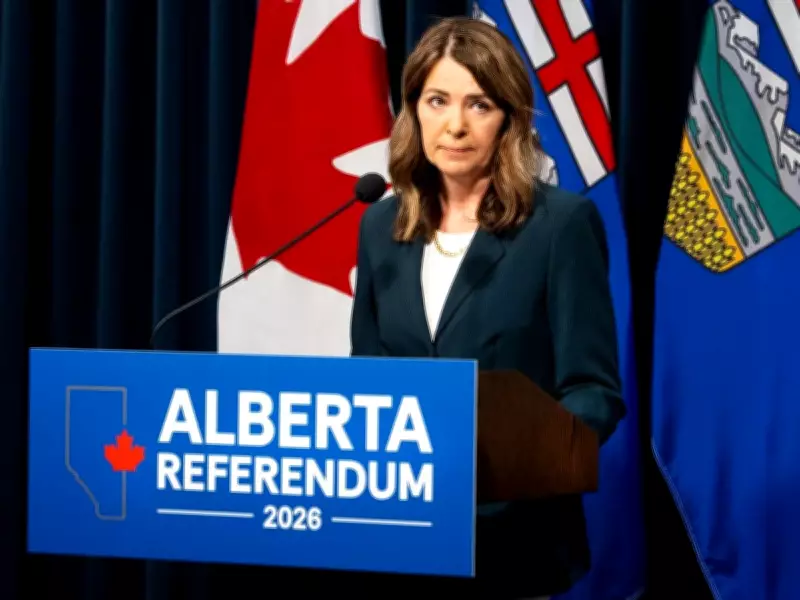
There’s probably a limit to the amount of clarity we can expect on a muddled question such as this, but we deserve more than we’re getting. Premier Danielle Smith's referendum question related to a potential separation vote leaves more questions than it answers.
It’s clear not everyone is happy, but Alberta is locked in, and this quasi-separation vote is set for October. The specific question obviously wasn’t the government’s first choice. I doubt it was anyone’s first choice. With the courts having stymied the separatist petition — and potentially also the government if it copied and pasted the same question — they found a palatable Plan B.
Specifically, that means asking the following question: “Should Alberta remain a province of Canada or should the Government of Alberta commence the legal process required under the Canadian Constitution to hold a binding provincial referendum on whether or not Alberta should separate from Canada?”

It’s clear that the two options are stand-ins for the two sides of this debate. However, there is ambiguity as to what the results of this vote entail. A resounding “remain” vote would make it difficult for the separatist side to keep this issue at the forefront, but I don’t think they’d just fold their tents and wave the white flag (or the red and white flag).
If the other side wins — then what? Here, there are all kinds of uncertainty, and the premier on Friday did little to clear that up. Remember, the Alberta government has launched an appeal of the court decision that quashed the separatist petition. That’s a defensible position to take, given the need for clarity on whether the duty to consult with First Nations applies in these circumstances.
So, how does the government’s current course of action differ from what a “commence” vote would obligate it to do? When she was asked this on Friday by Postmedia’s Rick Bell, Danielle Smith struggled to answer. She suggested that “we could, perhaps, request an expedited review” of the decision they’re already appealing, but then conceded that it would likely have to go to the Supreme Court.
Under Alberta’s existing laws, a referendum cannot be held one year before or after a general election. A quicker answer from the courts doesn’t expedite things here at home. But the Alberta government is already challenging the ruling. Her answer seems to suggest the response to a referendum mandate would be to challenge it more enthusiastically?
Conversely, does it then follow that if the referendum comes down on the side of “remain in Canada,” the government would abandon its appeal? The premier’s defence, though, is that this is about an important legal principle and not an embrace of Stay Free Alberta’s separatist cause. If that’s true, there’s no reason to drop the appeal. But even if the government chose to let the ruling stand, Stay Free Alberta is not likely to follow suit. If this decision is eventually overturned, their petition would have to be certified by Elections Alberta.