Former Adviser Bolton Says Trump Likely in 'Panic Mode' Following Iranian Attacks
Former national security adviser John Bolton asserted on Friday that President Donald Trump is probably "back in a panic mode" after Iran shot down two U.S. military fighter jets. This incident occurred less than 48 hours after Trump assured Americans that the United States maintained air supremacy over the region.
Credibility Undermined by Contradictory Events
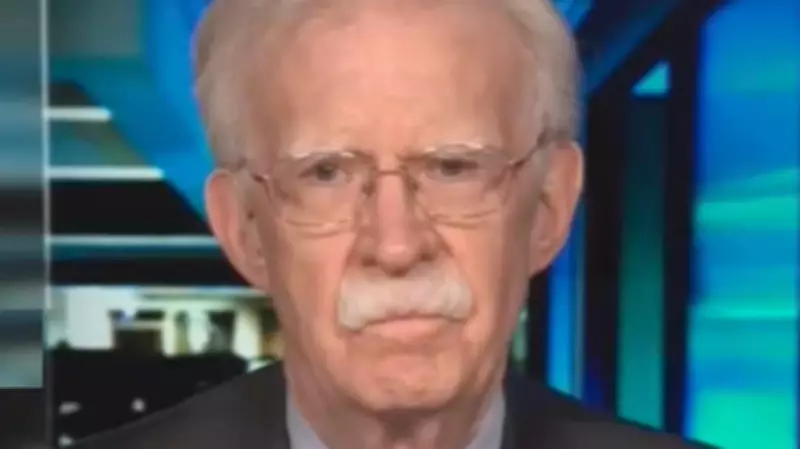
During an appearance on CNN's "The Source," Bolton was questioned by host Kaitlan Collins about whether these developments undermine White House credibility. Trump had stated in a national address on Tuesday that Iran possesses "no anti-aircraft equipment" and that their radar capabilities were "100% annihilated."
"Sure, it absolutely degrades White House credibility," Bolton declared. "And that's a self-inflicted wound by the White House, not by the Iranians. If you overstate what you've accomplished and evidence comes that shows that you've overstated, you look foolish."

Trump's Earlier Claims of Military Dominance
In his Tuesday address, Trump emphasized that the U.S. military is "unstoppable as a military force" and has "beaten and completely decimated Iran." He added that "the hard part is done," highlighting that Iran is under "intense satellite surveillance and control."
However, on Friday, the Islamic Revolutionary Guard shot down an F-15 fighter jet, forcing its two-person crew to eject. One pilot was rescued, while the other remains officially missing in Iran. Additionally, Iran downed an A-10 Warthog, whose pilot was safely recovered.
Bolton's Blunt Assessment of Presidential Silence
When asked if Trump's silence on the matter was notable, Bolton responded bluntly. "Uh, no," he told Collins. "It sounds to me like he's probably back in a panic mode, wishing he could find a way to declare victory and get out of this war, regardless of whether or not he opens the Strait of Hormuz before he does it. I think that's a mistake, too."
Iran effectively closed the Strait of Hormuz, a critical passage for one-fifth of the world's oil, following the U.S. initiation of the conflict. The war has resulted in the deaths of at least 13 U.S. military service members and over 1,900 Iranians, now threatening to trigger a global energy crisis.
Critique of Decision-Making Before the Conflict
Bolton criticized the pre-war decision-making process, suggesting that concerns should have been addressed earlier. "I think if there had been an effective decision-making process before the war started and these concerns were raised and they bothered the president, he had the option then not to initiate the attack," Bolton said. "But apparently he was satisfied."
He continued, "Now if things are upsetting him that he either didn't think about or didn't pay attention to in the run-up to the war, that's a problem for him. And therefore it's a problem for the country. But it was easily avoided and should have been avoided."
Trump's Threatening Reminder on Deadline
On Saturday, Trump shared a threatening reminder about the April 6 deadline he set for Iran to open the strait. He wrote on his Truth Social platform that Iran was given 10 days to comply and now has "48 hours before all Hell will reign down on them."