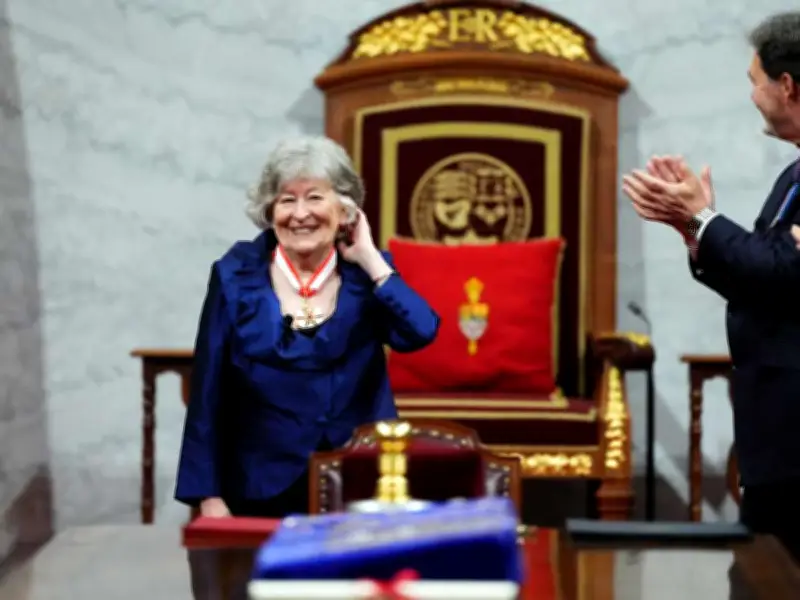
Much like Prime Minister Mark Carney's speech to the Jewish community last week, Governor General Louise Arbour described an idealized Canada that doesn't exist in her installation speech on Monday.
They share the enduring view of the Laurentian Elite — the political, legal, financial and cultural gatekeepers of Canada in the Montreal, Ottawa, Toronto corridor — of which Arbour, as a former UN High Commissioner for Human Rights and Supreme Court justice, is a charter member.
It is a view of Canada that works for them, but not for millions of Canadians on the outside looking in.

“We don’t think we are perfect, but we believe we are pretty well on the way there,” Arbour quipped, in a smug wink to her fellow elites.
“It is through our differences, and our fundamental right to express them, that we will nourish critical thinking, creativity and innovation.
“It is through our differences that we will build our common future … We benefit from strong institutions that allow different views to be expressed.
“We must continue to protect the public space in which our national debates take place: from schools and universities to the media, political parties, unions and civil society organizations. From theatres, concert halls and museums to courtrooms and the floors of our legislative assemblies.”
In all seriousness, what was Arbour talking about?
The Laurentian Elite today set the terms of “acceptable” views in Canada, which promotes contempt for our history and vilification for those lacking “acceptable” views on everything from residential schools, to climate change, to law and order, to taxation, to war in the Mideast, to the role of the state in raising children.
Our schools, universities, liberal media, political parties, public sector unions and civil society are bastions of “group think,” where contrary views aren’t debated but silenced, and those who hold them, denounced, vilified and in some issues intimidated, threatened and assaulted.
A society where Jew hatred is at its highest level since the Second World War, marked by the failure of Canada’s institutions to address it is not protecting “the public space in which our national debates take place” nor is it nourishing “critical thinking” or suggest a society, “pretty well on the way” to “perfect.”
In fact, it suggests something far more alarming.