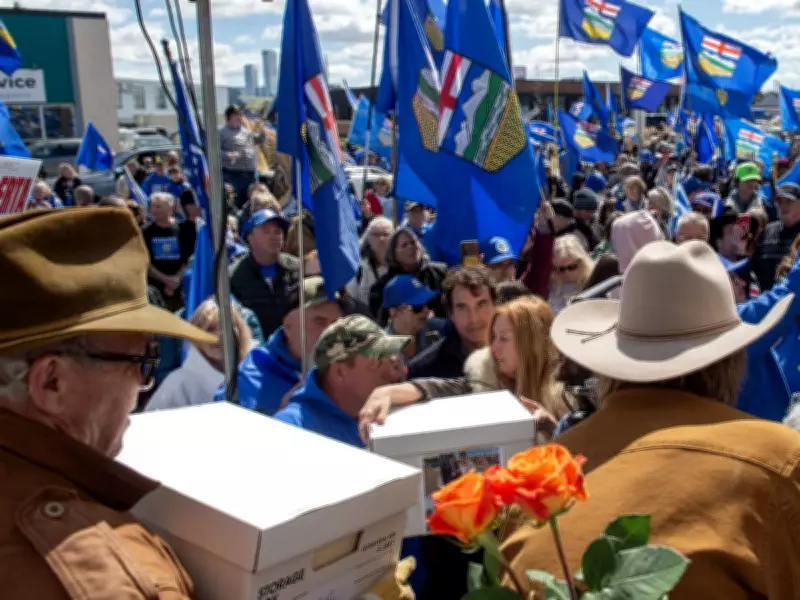
Wednesday's King's Bench ruling that invalidated the Alberta citizen petition on separatism is intricate and complicated, so instead of tussling with the fine details, I had better put on my Albertologist hat and try to focus on the big picture. The judge in the case made a ruling that everyone seems to find a bit weird. Justice Shaina Leonard ruled that the chief electoral officer of Alberta made an error in allowing, as the written law provides, for the gathering of signatures for a citizen initiative on separation. The Crown in right of Alberta, she says, had a formal 'duty to consult' with Aboriginal treaty parties before the CEO's permission was given.
That permission, Justice Leonard says, triggered the unmet duty because a sufficient number of signatures — which the campaigners claim to have gathered — would positively bind the Alberta government to hold a referendum on separation. The Alberta government's position had been that the rights of Aboriginal citizens would only be engaged if the separatists won the ensuing vote, which would commence a process of negotiations with the federal government and other provinces. Only then would the duty to consult come into play.
The ruling rejects that logic. The duty to consult, according to the judge, was engaged as soon as the CEO handed out blank forms to aspiring separatists, even though he had an obligation to do so under the citizen-initiative statute and couldn't possibly meet the duty to consult Aboriginals himself.

This looks a bit like imposing the recognized but nebulous 'duty to consult' backward onto a legislature's statute-making itself. Which is something that the previous Aboriginal caselaw consciously and explicitly refused to do. If the decision stands, no Alberta referendum on separation will be possible at all — even by direct fiat of the government — until the duty is met. That is, met to the satisfaction, it hardly need be said, of other future courts.
Does this give Aboriginal folk per se a veto over the activity, in one sphere, of the provincial legislature? I am afraid that is how it is going to look politically in Alberta. The separatists here are extremely outnumbered, not to mention at each other's throats most of the time, and if they had been allowed to fight a referendum without contrived interference from a court, a humiliating loss would have been certain. But the law of Canada, which allowed for two uninterrupted Quebec referendums on secession and which consciously envisions the separation of a province, appears to have grown spiky new principles that give courts a gatekeeping role.
It's completely possible, even natural, to favour the 'duty to consult' in principle while objecting to the particular priority that Justice Leonard has given it. Someone thinking strategically about protecting Confederation, someone thinking like a politician rather than a judge, would be extremely aware of the chaos surrounding new Aboriginal entitlements in British Columbia — entitlements that once looked like idle expressions of good faith or harmless technicalities, but which now threaten property in practice.