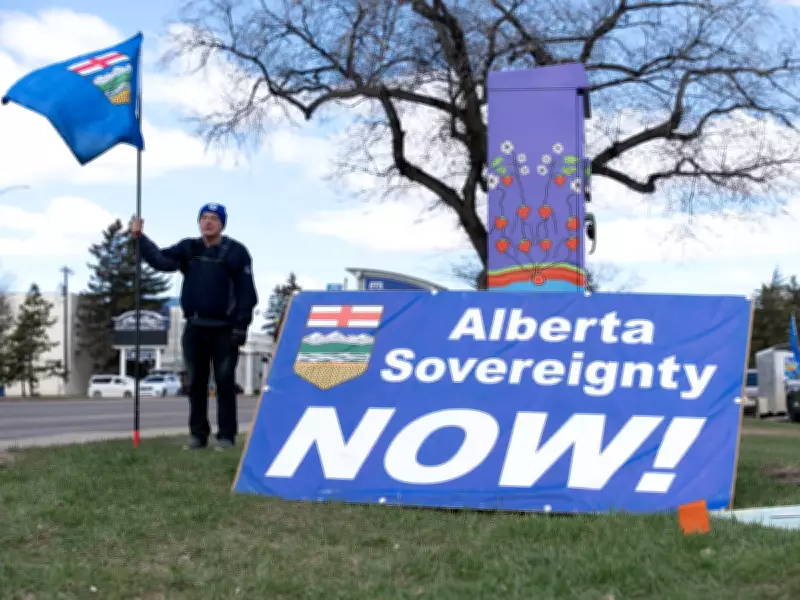
An Alberta court has ruled that political activists cannot proceed with a petition to force a vote on seceding from Canada, dealing a significant blow to the province's independence movement. The decision from the Court of King's Bench on Wednesday determined that the government failed to meet its duty to consult with Indigenous peoples before allowing the petition to move forward.
Court Ruling and Reactions
The ruling is a major setback for separatist groups in Alberta, the western Canadian province that holds most of the country's known oil reserves and exports millions of barrels of crude oil daily to the United States. However, Alberta Premier Danielle Smith announced that her government intends to appeal the decision, as did the leaders of the pro-independence group Stay Free Alberta.
At a press conference, Smith stated that although her government supports Alberta remaining part of Canada, the court judgment was "anti-democratic." She did not rule out finding alternative ways to put the separatist question to a provincewide vote, adding that she would consult with her party's lawmakers.

Petition Details
Stay Free Alberta submitted a petition earlier this month, claiming over 301,000 signatures in favor of a referendum on the province breaking away from Canada. The proposed referendum question was: "Do you agree that the Province of Alberta should cease to be part of Canada to become an independent state?"
Polls currently indicate that most Alberta residents do not support the idea of secession. However, Premier Smith is attempting to manage separatist sentiments within her United Conservative Party, which has been in power since 2019.
Legal Challenge by Indigenous Groups
The separatists' efforts were challenged in court by several Indigenous groups. Justice Shaina Leonard sided with them, ruling that the province's chief electoral officer made an error in law by allowing the Stay Free Alberta petition to proceed. The Indigenous groups' case targeted the provincial government, the chief electoral officer, and separatist organizer Mitch Sylvestre, who led the petition.
The Athabasca Chipewyan, Siksika Nation, Piikani Nation, and Blood Tribe argued in court filings that Sylvestre's petition should never have been allowed. These First Nations have specific rights because they entered into treaties with the British Crown in the 1800s, before Alberta became a Canadian province in 1905.
"A requirement to implement secession without prior involvement of the Applicants has the potential to adversely affect Treaty rights," Leonard wrote in her decision.
Appeals and Next Steps
Jeffrey Rath, one of the organizers of the separatist movement, said the group will file an appeal. "We disagree fundamentally with the decision which appears on its face to violate principles of natural justice and contain numerous errors of law," he said in a post on X.
The Canadian dollar did not move significantly in reaction to the court decision. Derek Holt, head of capital markets economics at Bank of Nova Scotia, called it a "positive development" but noted Smith's intention to appeal.
For a citizen-initiated referendum, Alberta requires about 178,000 verified signatures to advance to the next stage of the process. The province has a population of around 5 million.