Never let it be said drug smugglers aren't ingenious, especially when no one is trying very hard to stop them. CTV's astonishing but not entirely surprising reporting on organized crime groups operating behind the nominal security barrier at Toronto's Pearson Airport exposes a truly expert exploitation of what appears to be a largely unguarded system.
The Scam's Mechanics
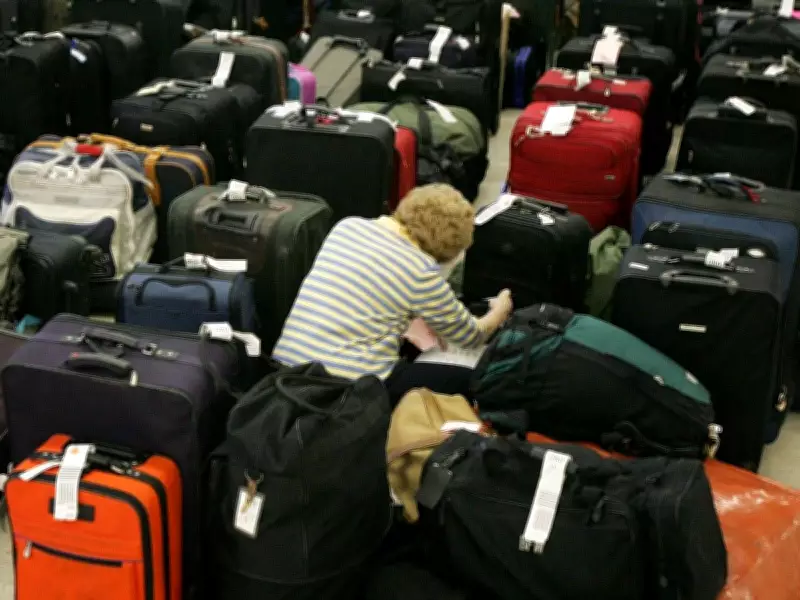
On the departures level, airport workers—six of whom have been arrested over the past year, according to CTV—have allegedly brought in a suitcase full of drugs, stolen the label off an unsuspecting passenger's suitcase, and attached it to the drug bag. The innocent passenger's bag is left behind at Pearson, destined for a later flight. Multiple red flags are raised.
Victims have faced terrifying situations. One Ontario couple was arrested in the Dominican Republic and not allowed to return home for months. As CTV pointed out, some destination countries impose the death penalty for drug-related crimes.

Easy to Detect, Hard to Prove Innocence
One might hope innocence is easy to prove. Shock and confusion would be obvious to a well-trained officer. A quick check of video footage from the originating airport should confirm the passenger checked no such bag. Presumably, someone with hotel reservations in Singapore, even if smuggling drugs, would bring along clean underwear or socks. But making that case to a Singaporean border guard is daunting.
Arrivals Level Vulnerability
People are also smuggling drugs into Pearson. On the arrivals level, the scam is no less brazen. Even if someone sneaks into international baggage claim and tries to walk out with a bag, they would theoretically be caught because they lack the customs declaration sheet. That procedure once seemed pointless but now appears crucial.
Broader Security Implications
The story as it stands involves drugs, incoming and outgoing. But it could easily be about something far worse. This scam is alarmingly reminiscent of the security lassitude that led to the Air India bombing in 1986, costing 268 Canadian lives and 39 others.
What is most astonishing is how easy the scam was to detect. In 2026, much of Canada seems to operate without adult supervision. The fix is simple: screen airport workers the way we screen passengers. This is Third World garbage happening at Canada's busiest airport.