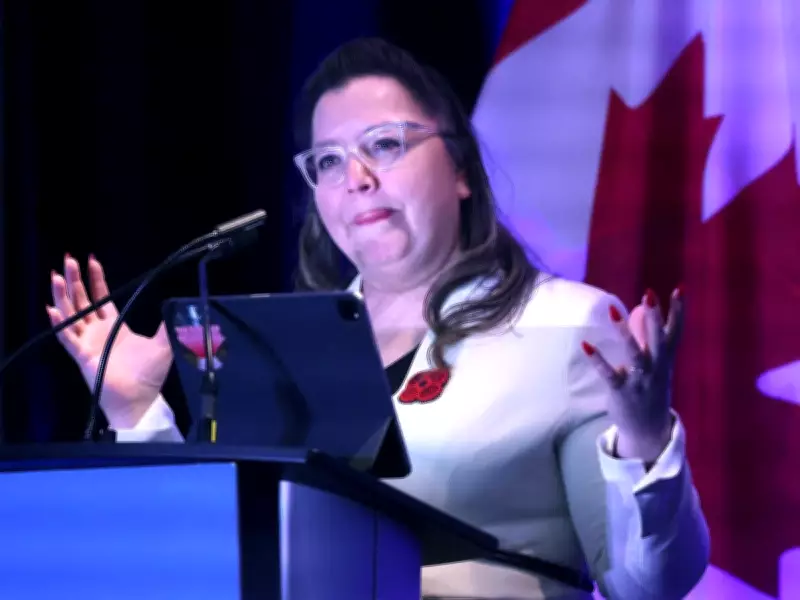
The national chief of the Assembly of First Nations (AFN) has strongly criticized the federal government's proposed overhaul of rules governing major infrastructure projects, calling the 30-day consultation period "not acceptable" and warning that some proposals threaten First Nations rights.
Consultation Timeline Under Fire
Cindy Woodhouse Nepinak, AFN National Chief, expressed deep concern over the truncated feedback window, stating that meaningful engagement with Indigenous communities requires more time. "All options are on the table," she said in an interview, adding that the AFN has not ruled out any course of action in response.
Proposals Threaten Rights
Woodhouse Nepinak noted that upon initial review, several aspects of the proposed reforms appear to undermine First Nations rights. Among the options being considered by the Liberal government are the creation of federal economic zones, streamlining approvals by allowing cabinet to exempt certain at-risk species from jeopardy tests, permitting construction before impact decisions, and transferring pipeline approval authority to the Canada Energy Regulator.

"The substance of the proposals and the constrained timeline for consultation are not acceptable, and they threaten First Nations rights in a few aspects. Unfortunately, they demonstrate a pattern of exclusion once again," she said.
UNDRIP and Free, Prior, Informed Consent
The AFN chief emphasized that granting upfront approvals for projects like pipelines contradicts the principle of free, prior, and informed consent enshrined in the United Nations Declaration on the Rights of Indigenous Peoples (UNDRIP), which the Liberals passed into law in 2021. "I don't know why it's so hard to speak to First Nations. First Nations are willing and able to listen and to work with industry, and all governments. Don't leave them out," she urged.
Government's Stance
The federal government, in announcing the proposed changes, stated that "Indigenous partnership is critical to building a stronger Canadian economy" and that it is "engaging meaningfully with Indigenous groups" in accordance with UNDRIP. However, Woodhouse Nepinak expressed skepticism: "They keep pushing that narrative of, you know, just trust us."
Context of the Reforms
Since taking office last spring, Prime Minister Mark Carney has prioritized accelerating major project approvals and addressing industry concerns that Canada's regulatory regime is too burdensome. The proposed reforms represent the latest measure in this agenda, aiming to streamline processes and reduce investment risks.
The AFN's strong response signals potential conflicts ahead as the government seeks to balance economic development with Indigenous rights and consultation obligations.