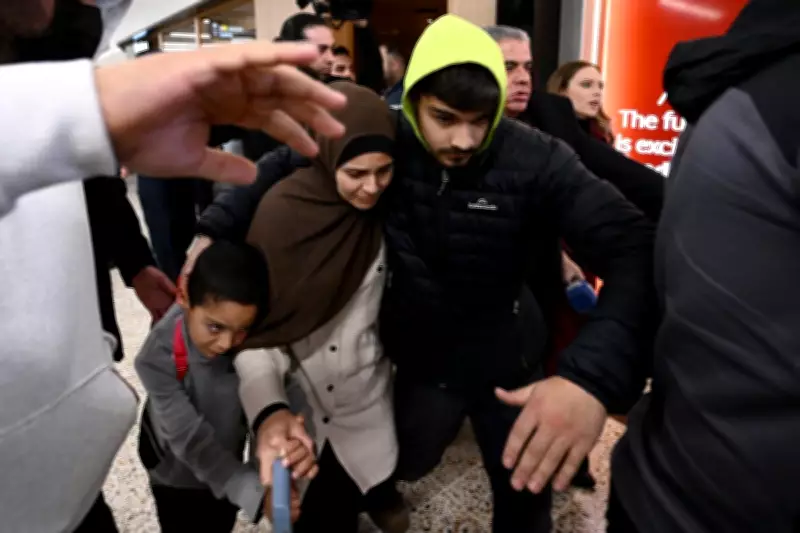
Two planes carrying 19 Australians allegedly linked to the Islamic State group have landed in Melbourne, Australia, authorities confirmed. The group, including women and children, arrived amid tight security at Melbourne International Airport on Thursday, May 7, 2026.
Background of the Repatriation
The repatriation follows months of negotiations between Australian officials and foreign authorities to bring back citizens who had traveled to conflict zones in the Middle East to join the Islamic State. The 19 individuals are believed to have been detained in Syria and Iraq before being transferred to Australian custody.
Security Measures
Security was heightened at the airport as supporters gathered outside. Police maintained a visible presence to ensure safety. The Australian government has stated that each returnee will be assessed individually, with potential charges for those who engaged in terrorist activities.

Prime Minister Mark Carney emphasized that the government is committed to protecting national security while upholding legal processes. "We have a duty to bring our citizens home, but also to ensure that any threats are neutralized," he said.
Legal Proceedings
Upon arrival, the individuals were taken into custody for processing. Legal experts anticipate that some may face charges related to terrorism offenses, while others, particularly women and children, may be offered rehabilitation programs. The Australian Federal Police are leading the investigation.
Public Reaction
The repatriation has sparked mixed reactions. Some community groups welcome the return of families, while others express concern over potential security risks. A protest outside the airport called for stricter measures against returning fighters.
This operation is part of a broader international effort to repatriate foreign fighters and their families from conflict zones. Australia has previously brought back citizens from Syria, but this is one of the largest groups to return at once.
Ongoing Monitoring
Authorities will monitor the returnees closely, with some possibly subject to surveillance or travel restrictions. The government has allocated additional resources to counter-terrorism agencies to manage the situation.
The repatriation underscores the complex challenges of dealing with citizens who joined extremist groups abroad, balancing security concerns with humanitarian obligations.