

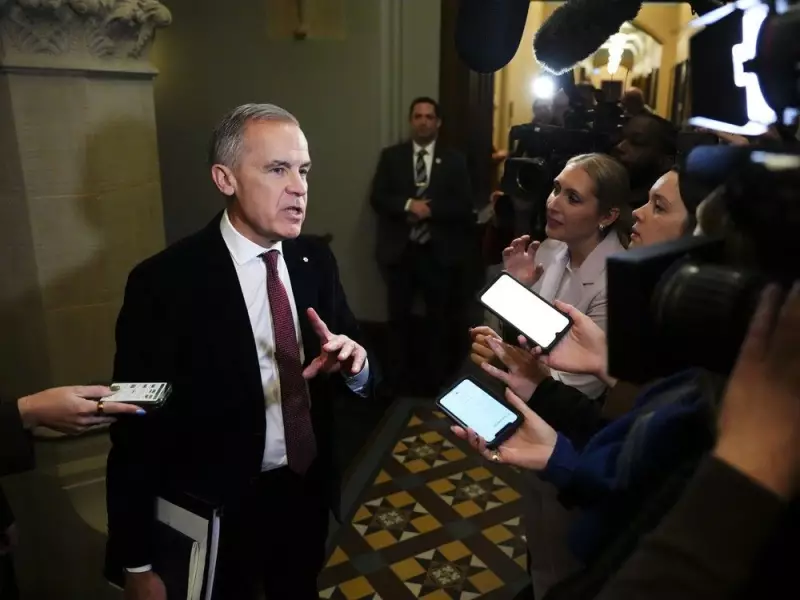
The federal government under Prime Minister Mark Carney has released its finalized methane regulations, marking a significant shift by granting Canada's oil and gas industry greater flexibility in how it achieves ambitious emissions reduction targets.
A New Flexible Pathway for Compliance
Published on December 16, 2025, the final rules maintain the core objective established under former Prime Minister Justin Trudeau: to eliminate venting and routine flaring, which are major sources of planet-warming methane gas. However, the Carney administration has introduced a key change. Producers now have the option to design their own company-specific methane reduction approaches, provided they can demonstrably meet or exceed federally mandated performance thresholds.
This "flexible pathway" is contingent on operators undertaking robust and verifiable methane monitoring. A government news release stated this model allows operators more leeway to implement the most effective and innovative solutions for their specific operations, moving away from a purely prescriptive regulatory framework.

Ambitious Targets Remain in Place
Despite the increased flexibility, officials briefing the media emphasized that the environmental ambition of the regulations has not been diluted. The rules are projected to slash greenhouse gas emissions by a substantial 304 megatonnes of carbon dioxide equivalent between 2028 and 2040.
The original regulations, announced in 2023, sparked immediate backlash from Alberta Premier Danielle Smith, whose province is the heart of Canada's oil production. The revised approach appears to reflect Prime Minister Carney's stated goal of improving federal-provincial relations, particularly with energy-producing regions.
Part of a Broader Shift in Energy Policy
This regulatory announcement follows Carney's recent signing of a sweeping energy pact with Alberta, a deal that rolled back certain environmental policies. That move was controversial enough to prompt the resignation of former Environment Minister Steven Guilbeault from cabinet in protest.
The finalized methane rules represent a pragmatic middle ground, seeking to maintain progress on climate goals while addressing industry concerns about operational flexibility and economic competitiveness. The success of this model will now depend on rigorous monitoring and enforcement to ensure the sector's custom-designed plans deliver the promised emissions cuts.






