WASHINGTON — President Donald Trump’s desire to control every aspect of Washington, D.C., has now extended to electoral politics, as voters in the capital prepare to elect a new mayor for the first time in over a decade. The race has become a flashpoint over the city’s autonomy.
The Contenders
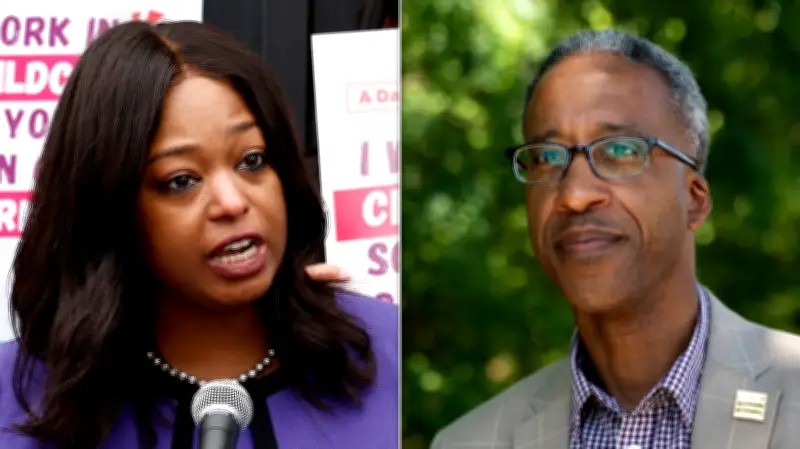
Janeese Lewis George, a city council member leading in the polls, is a democratic socialist who has campaigned on universal childcare and ending the D.C. police department’s cooperation with federal immigration authorities. Trump last week stated he “wouldn’t like it” if she won, suggesting he might “take back Washington” and run it on a federal basis. “We won’t put up with it. We’re not going to lose our businesses,” he said at the White House.
Her opponent, Kenyan McDuffie, a longtime former council member seen as part of the political establishment, represents a more moderate approach. The race encompasses issues like housing costs, crime, and economic recovery from a DOGE-induced shock, but voters are also weighing who can best handle Trump.

Legal Limits on Trump’s Power
Trump cannot simply “take back Washington” legally. While he has direct control over D.C.’s National Guard and can use the police force under emergency conditions via the Home Rule Act, he cannot unilaterally take over the city government. Only Congress can amend the Home Rule Act, which would require Democratic support in the Senate—a highly unlikely scenario.
Last year, Trump briefly took over the police department and deployed the National Guard in response to a supposed crime crisis. Groups of guardsmen from GOP-controlled states still patrol the streets.
Candidates’ Responses
Lewis George advocates a confrontational stance. “We are not going to get ICE off our streets by fearing this president,” she said. “Threatening Home Rule because you do not like how residents vote is an attack on democracy itself.” In a Friday video, she urged: “So D.C., let’s vote.”
McDuffie suggests electing her could provoke Trump and Republicans in Congress, who have proposed undoing D.C. laws and revoking home rule. “The strongest defense against federal interference is a city that works,” he wrote, noting her opposition to expanded pretrial detention and a youth curfew. He said he would work with any administration when it benefits Washingtonians but fight back when necessary.
Historical Context
Current Mayor Muriel Bowser has often avoided direct confrontation with Trump, praising his law enforcement surge last summer and allowing police cooperation with federal immigration enforcement, which sparked protests. Trump has praised Bowser in turn.
Matthew Dallek, a politics historian at George Washington University, said the question of dealing with Trump has been central. “The entire campaign… message from George is that McDuffie is not going to fight enough.” He noted that Lewis George might act more pragmatically if elected, similar to New York Mayor Zohran Mamdani, whose harsh campaign rhetoric gave way to a friendly meeting with Trump.
Trump’s interest in D.C. has grown in his second term, with legally questionable construction projects and praise for a city he once called a hellhole. “Washington now is a safe, beautiful place,” he said recently.