Trump Administration Officials Abruptly Cancel Appearance at National Election Conference
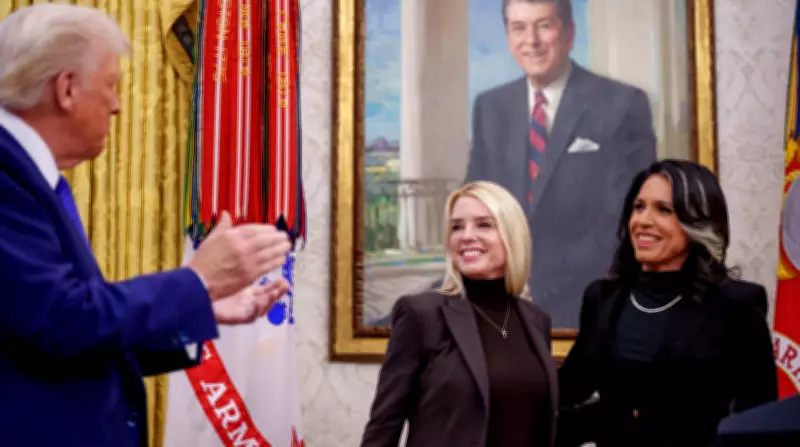
Three senior officials from President Donald Trump's administration failed to appear at the annual conference of state election officials on Friday, despite a highly publicized announcement that they would address the gathering. The National Association of Secretaries of State had adjusted its conference schedule to accommodate Attorney General Pam Bondi, Secretary of Homeland Security Kristi Noem, and Director of National Intelligence Tulsi Gabbard for a Friday afternoon session.
By midday Friday, the promised appearance had dwindled to just Gabbard, and ultimately the entire Trump administration presentation was canceled moments before it was scheduled to begin. Neither the agencies involved nor the White House provided immediate explanations for either the planned appearance or its last-minute cancellation.
"Cowards": State Officials React to Federal No-Show
Maine Secretary of State Shenna Bellows, a Democrat who is running for governor in 2026, offered a blunt assessment of why the federal officials ultimately failed to appear: "Cowards." Before their cancellation, it appeared the administration officials were preparing to appear before state election administrators as a demonstration of force.

This comes as the Trump administration pursues what critics describe as an unprecedented effort to assert federal control over election administration ahead of the 2026 midterm elections. Bondi's Department of Justice has filed lawsuits against 23 states and Washington, D.C., including Republican-controlled Georgia, seeking access to sensitive voter information including partial Social Security numbers and driver's license identification numbers.
Controversial Voter Data Collection and Legal Challenges
While the Justice Department has not publicly explained why it requires this extensive voter data, states that comply with these requests are feeding information into a database controlled by Noem's Department of Homeland Security. This database purportedly identifies noncitizens, though it frequently produces false positives according to critics.
Three federal judges have already dismissed these lawsuits. A California judge described the suit against that state as "unprecedented and illegal." In Oregon, a judge issued a rare bench decision dismissing the lawsuit, while in Georgia, another judge dismissed the case for being filed in the wrong jurisdiction.
Following these legal setbacks, Bondi attempted to pressure Minnesota to release voter data by offering reduced immigration enforcement operations in exchange for compliance. This enforcement operation has already resulted in the deaths of two citizens at the hands of federal officers.
FBI Raid in Georgia Raises Additional Election Concerns
A separate development emerged on Wednesday when FBI agents raided an elections hub in Fulton County, Georgia, seizing ballots, voter rolls, and scanner images as part of an investigation into the 2020 election results. This search and seizure appears to be part of Trump's campaign of retribution against political opponents, including those he falsely claims stole the 2020 election from him.
After losing the 2020 election, Trump falsely claimed victory in Georgia and pressured Republican Secretary of State Brad Raffensperger to find "11,780" votes. Adding to the controversy, Gabbard was photographed at the scene of the raid, raising questions about why the nation's top counterintelligence official was involved in domestic election investigations.
"Spies should never be involved in elections," Bellows commented regarding Gabbard's presence at the raid.
State Officials Express Concerns About Federal Overreach
Democratic secretaries of state expressed disappointment that administration officials didn't appear to answer their questions. Vermont Secretary of State Sarah Copeland Hanzas wanted to ask Bondi whether her demand that Minnesota turn over private voter information in exchange for reducing immigration enforcement operations "is coming to other states."
Connecticut Secretary of State Stephanie Thomas echoed this concern, questioning "why the federal government is extorting states in exchange for reducing immigration activities."

Bellows also raised alarms about how the administration's immigration enforcement operations could impact the 2026 elections. While noting that federal law prohibits agents from interfering with polling places, she observed that people are already "afraid to leave their homes" during current operations. This fear could suppress voter turnout if immigration officers are "patrolling streets" on Election Day.
The canceled appearance at the election officials conference represents just one facet of growing tensions between state election administrators and federal authorities as the 2026 midterms approach. With multiple legal battles underway and new controversies emerging, the relationship between state and federal election authorities appears increasingly strained.