

As the holiday season settles over Quebec, a different kind of quiet anticipation grips the province's political class. With the next provincial election now less than a year away, the major party leaders are facing a period of intense reflection and strategic maneuvering. The political landscape, as sketched in Robert Libman's seasonal poetic commentary, reveals a field in significant flux, with the governing Coalition Avenir Québec (CAQ), the Quebec Liberal Party (QLP), and the Parti Québécois (PQ) all confronting pivotal challenges.
A Government Languishing in the Polls
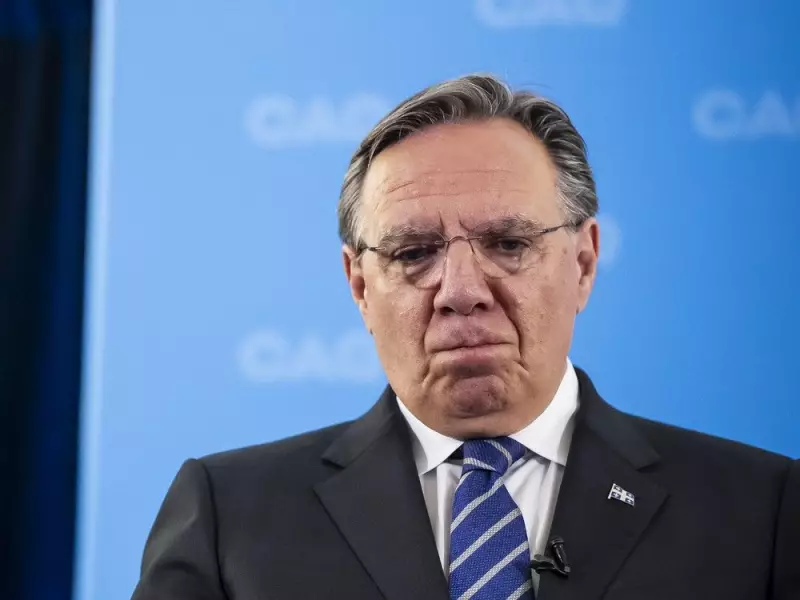
At the centre of the pre-election drama is Premier François Legault and his CAQ government, which is languishing in public opinion surveys. A series of controversies and policy missteps have eroded the coalition's once-commanding support. Voters are grappling with record deficits, a high cost of living, and ongoing crises in healthcare and education.
The government has faced intense scrutiny over its handling of several files, including the financing of companies like Northvolt and Lion Electric, and a scandal at the SAAQclic that reportedly wasted half a billion dollars. Battles with doctors' unions and religious minorities have further complicated the CAQ's narrative of competent management.

In what some analysts see as a diversionary tactic, Legault has recently pivoted to championing a Quebec Constitution. Critics, however, view this as a "Hail Mary pass" that is unlikely to connect with voters whose daily concerns are more immediate. The premier's recent backtrack on Bill 2 has also left observers questioning whether the political damage is now irreversible. A central question for 2026 is whether the CAQ's only hope for recovery rests on Legault himself stepping aside, a move seemingly complicated by the leader's own ego.
Liberal Turmoil and Leadership Questions
While the government struggles, the official opposition has been engulfed in its own crisis. Liberal leader Pablo (likely referring to Dominique Anglade's successor, though the column uses "Pablo") was forced to make a reluctant decision not to pursue the premiership after his leadership was blindsided by internal revolt. The situation deteriorated with allegations of vote-buying surfacing, creating a fire that grew daily.
With the Liberal brand in need of cleansing, the party now faces a critical choice: select new blood or return to the old guard for its next leader. Names like former MNA Karl Blackburn or Charles Milliard have been floated. The successor's first and most urgent task will be to rebuild trust and present a credible alternative to a weary electorate.
PQ Momentum Meets Skepticism
Capitalizing on the weakness of its rivals, the Parti Québécois, under leader Paul St-Pierre Plamondon (PSPP), has seen its poll numbers rise significantly. Many within the sovereignist party are beginning to believe they are staring at the next premier in the mirror.
Yet, significant hurdles remain. PSPP remains bent on holding a referendum on separation, a project still opposed by approximately two-thirds of the Quebec population according to polls. The leader has also displayed a temperament—a "very thin skin" and a tendency to rant against the federal "regime"—that raises questions about his readiness to govern a province with complex challenges.
His recent unveiling of a "Blue Book" outlining the vision for an independent Quebec is seen by some as an attempt to "hoodwink the masses" with promises and rose-coloured glasses, while voters remain focused on healthcare, the economy, and competent leadership.
The Wild Card and the Stakes
Into this three-way dynamic enters a potential wild card: Éric Duhaime's Conservative Party of Quebec. The question remains whether they can "come up the middle" and offer a protest vote alternative that siphons support from the major players.

The coming months present enormous stakes for the CAQ and the Liberals. Their decisions on leadership and strategy will determine if they can save their parties from potential defeat. History in Quebec has shown that political shifts can arrive as a "sudden voter wave." The current sleepwalk toward a PQ victory might not be as inevitable as it seems if the other parties recalibrate effectively.
Ultimately, Quebecers will wake from their holiday respite to a year defined by these political calculations. The collective hope, as expressed in Libman's closing, may be for a focus on unity and celebration—like a 25th Stanley Cup for the Montreal Canadiens—rather than the divisiveness of a third referendum. For now, the province's political future hangs in the balance, with many restless nights ahead before the October 2026 vote.





