Primary Elections: The Overlooked Key to Political Change in America
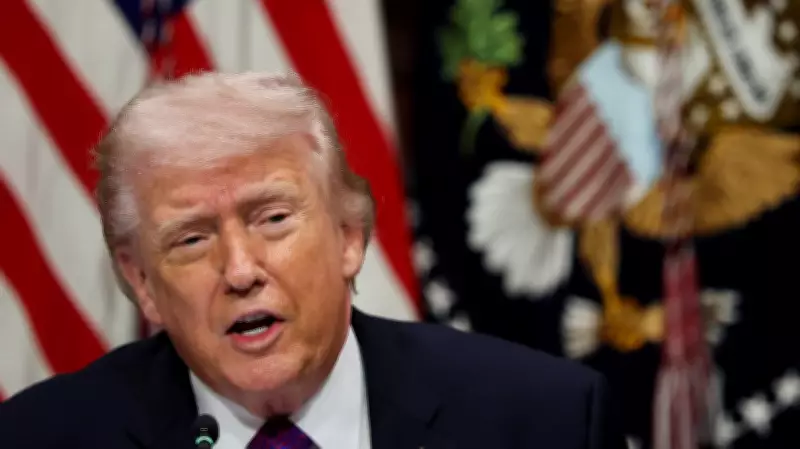
Across both physical communities and digital spaces, Americans are expressing strong, often negative opinions about the current state of the nation. Public sentiment reflects widespread concern, with President Donald Trump's approval rating standing at 37% as of late January, a decline from 40% in the fall. Many citizens believe the country is heading in the wrong direction, citing issues such as tensions with Iran and controversies surrounding the Epstein case.
While venting frustrations to friends, family, or online platforms provides an emotional outlet, there exists a more impactful action that most people neglect: participating in primary elections. The primary election season is now underway in the United States, yet approximately 80% of Americans do not vote in these crucial contests. This low turnout has significant implications, as primaries determine which candidates appear on the general election ballot, thereby shaping the nation's political landscape.
The Surprising Power of Primary Elections
According to political experts, primary elections hold substantial influence over the democratic process. Laurel Harbridge-Yong, a professor of political science at Northwestern University, emphasizes that the choices available in the general election are directly determined by primary outcomes. "Who those choices are in the general election really matter because when we think about the people who are voting in the general election, all they're going to have are those choices that are on the ballot," she explained. "So, if they feel like these are two awful choices, then things could have been different had they had different people come out of the primaries."

Ben Sheehan, author of the Politics Made Easy Substack and the book "What Does the Constitution Actually Say?", notes that many congressional races are not competitive in the general election due to historically red or blue districts. "If you know that your congressional district or state is likely going to go red or blue based on history and your area's voter makeup, then the real action isn't the general election, it's the primary election where you're picking the person who is most likely going to be the election winner if they make it out of the primary," Sheehan stated. "I just don't think people always realize that in most congressional districts and states, the primary election is really where the action is."
Congressional Power and the Path to Change
For those dissatisfied with national issues—whether economic concerns, foreign affairs, or domestic surveillance—voting in primaries offers a tangible way to influence change. Sheehan points out that Congress possesses the authority to halt, check, or reverse executive actions, yet many Americans express frustration with congressional gridlock, influenced by lobbying and special interests. "Because of gridlock and other factors, lobbying and special interests and money, Congress has become stagnant," he observed.
This year presents a pivotal opportunity, as all House seats and one-third of the Senate are up for election. "This year, all of the House is up for election, as is a third of the Senate, so the vast majority of Congress is on the ballot, and that's who actually can be a check on the president," Sheehan noted. He challenges the common notion of three coequal branches of government, arguing that the Constitution designates Congress as the most powerful branch. "It's very clear from the Constitution and our government's design that Congress was meant to be the driving force and the engine of our government, more so than the president or the Supreme Court," he said. "It really is Congress that has the ability to put an ultimate check on the President by stopping his legislative agenda."

Sheehan further explains that legislative progress requires both houses of Congress and presidential approval. "You need both houses of Congress to pass a bill and the president to sign it in order to become law ... right now, the majority is so thin for the Republicans that already they're having issues. If they lose one house of Congress, that pretty much guarantees a halt on any legislation moving through Congress that the president supports in the next term," he continued.
Responsiveness to Primary Voters
Research indicates that legislators are more attentive to the preferences of primary election participants. Harbridge-Yong shared findings from political science studies: "[Another] reason that I think that people should participate in primary elections is that my own research ― and other research in our field of political science ― has shown that legislators have incentives to be responsive to the people who participate in elections, and, more importantly, incentives to respond to the interests of people who participate in primary elections."
In primaries, voters often focus on specific issue positions, such as abortion, gun rights, or healthcare, whereas general elections tend to see more party-line voting. "And we know that the large fraction of people who participate in general elections are just going to vote the party line for the candidate, not really about whether a particular candidate was aligned with them or not aligned with them on a given issue," Harbridge-Yong added.
Understanding Primary Voting Rules
Eligibility to vote in primaries varies by state, with different rules affecting participation. "There are a number of different types of primaries that affect both who can participate in them as voters and what choices they will have on the ballot," Harbridge-Yong explained. Some states require voters to be registered with a political party, while others have open primaries.
Sheehan recommends the National Conference of State Legislatures website (ncsl.org) as a resource for up-to-date information on state-specific primary rules. "The National Conference of State Legislatures, which is ncsl.org, is a resource where you can find out what type of primary your state has and what the most up-to-date state laws and rules are around who can vote in your primary," he said. Once individuals determine their eligibility, they can plan to vote or take steps to become eligible.
Amid widespread frustration with elected officials, primary elections offer a proactive means to demand accountability. Rather than feeling powerless as national challenges mount, citizens can use their vote to signal discontent and drive political transformation. By engaging in primaries, Americans have the opportunity to reshape the candidate pool and influence the future direction of the country.