Poilievre's Leadership Test: Survival Expected but Broader Appeal Questioned
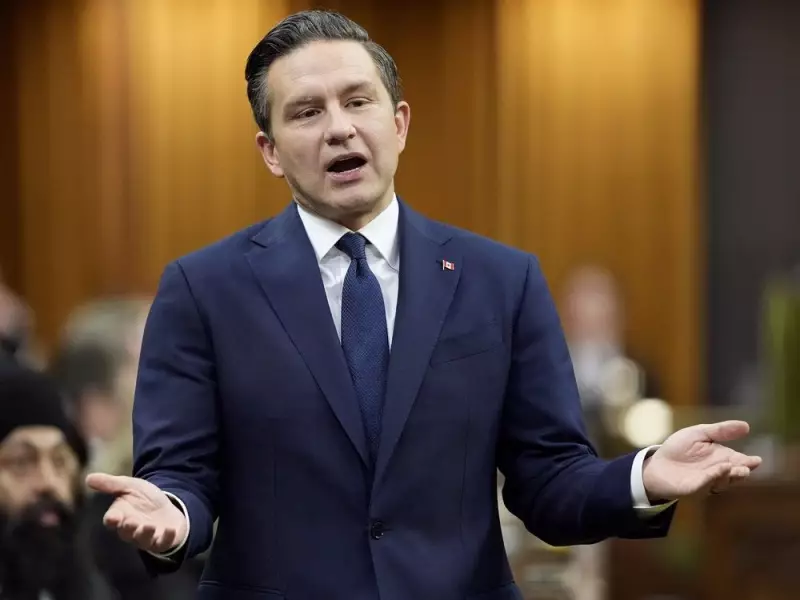
As the Conservative Party of Canada convenes its national convention in Calgary this week, members will cast a crucial vote on whether Pierre Poilievre should continue as party leader. This leadership review comes at a pivotal moment following the party's disappointing performance in last April's federal election.
The Volatile Nature of Political Leadership
The role of political leader remains inherently unstable, with voters serving as a diverse and often unpredictable board of directors. Each citizen brings unique issues, opinions, priorities, and perceptions to the table, making universal satisfaction an impossible standard. To achieve electoral success, a leader must rally the widest possible consensus through unifying qualities.
Essential leadership traits include proper tone, genuine presence, authentic sincerity, a sense of reassurance, and clear communication. These characteristics prove vital for extending appeal beyond a political party's core base. Furthermore, the loyalty of caucus members and party faithful typically endures only when they believe their leader represents the best chance for victory in the next election.

From Commanding Lead to Electoral Disappointment
For nearly two years preceding the election, polls consistently showed the Conservative Party holding a commanding lead in voter support—often exceeding Justin Trudeau's Liberal government by approximately twenty percentage points. After a decade of Liberal governance, many Canadians expressed frustration and readiness for change.
The political landscape shifted dramatically when Trudeau resigned and Mark Carney assumed Liberal leadership. The Conservatives' seemingly insurmountable advantage evaporated almost overnight. The Liberals secured victory, falling just a few seats short of a majority government while maintaining virtually the same team, ministers, and administration. Analysts widely attribute this stunning turnaround to the contrasting leadership styles of Carney versus Poilievre.
While the Conservatives did increase both their seat count and popular vote percentage, these gains proved insufficient after squandering such a substantial lead. Multiple factors contributed to this outcome, but Poilievre's inability to connect with a broader segment of voters played a significant role in derailing what many anticipated would be a Conservative breakthrough. The leader's personal defeat in his Ottawa riding of Carleton further underscored these challenges.
Current Political Landscape and Leadership Dynamics
Recent polling indicates the two major parties remain closely matched, yet reveals an intriguing discrepancy: the Conservative brand maintains greater popularity than Poilievre himself, who trails significantly behind Carney in leadership approval ratings. Subsequent defections of several Conservative MPs have pushed the Liberals to within a single seat of achieving majority status in Parliament.
Despite these challenges, Poilievre is expected to receive strong support from party members during the leadership review. The Conservative Party has shifted further toward right-wing positions in recent years, moving away from its traditional centre-right orientation. The specific percentage of support will prove crucial—whether Poilievre surpasses the psychological threshold of ninety percent could signal deeper concerns about his overall electability among the membership.
Style Versus Substance in Political Communication
Observers who have closely followed Poilievre's speeches, parliamentary interventions, and media interviews often note concerning patterns in his communication style. Many find themselves wincing at his manner, tone, or tendency toward sarcasm. The leader frequently pivots questions toward prepared talking points or delivers what some perceive as unnecessarily sharp criticisms.
During the election campaign, Poilievre's reliance on rhyming slogans and what appeared to some as a forced smile struck certain observers as artificial rather than authentic. These stylistic elements have raised questions about whether his approach resonates with voters beyond the Conservative base.

The Road Ahead for Conservatives
Political patience remains notoriously thin. While Carney currently enjoys strong approval ratings and has taken a prominent position on the international stage—particularly in diversifying Canada's trade relationships amid uncertainty from the Trump administration—Canadian voters will inevitably judge his performance on domestic economic issues.
For Conservatives to capitalize on future opportunities and eventually return to power, they cannot afford a leader perceived as off-putting by substantial segments of the electorate. The party must effectively communicate a convincing and reassuring vision for Canada's future, avoiding the perception of merely serving as an opposition pit bull hoping for opponents to fail.
Some analysts suggest Poilievre's political DNA may lack certain key unifying characteristics essential for successful national leadership. As Conservative members cast their votes this weekend, they will signal whether they share these concerns or believe their current leader possesses the qualities necessary to guide the party to victory in future elections.