RFK Jr.'s Viral Video Ignites Discussion on Meat and Masculinity
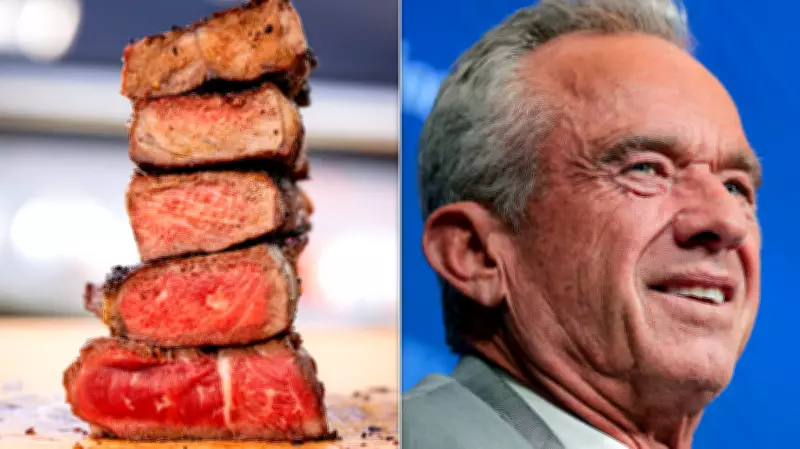
In February, Secretary of Health and Human Services Robert F. Kennedy Jr. posted a video that quickly captured public attention. The footage showed him eating steak, exercising shirtless, and drinking whole milk in a hot tub alongside musician Kid Rock. While many online reactions ranged from bewilderment to mockery, the video undeniably projected a specific image of masculinity, connecting a key U.S. health policy figure to the so-called "manosphere."
The Cultural Connection Between Meat and Manhood
This online sphere often features fitness content targeted at young men but is also associated with misogynistic, homophobic, and antisemitic ideologies. The video raises questions about why public figures like RFK Jr. choose to showcase certain dietary habits. Research indicates that men globally consume more meat than women and tend to react defensively to messages advocating reduced meat intake, whether for health, ethical, animal welfare, or climate reasons.
In her book, journalist Olivia Nuzzi described RFK Jr., noting, "like all men, but more so, he was a hunter." This portrayal aligns with pop culture tropes that equate meat-eating with masculinity, such as Ron Swanson from "Parks and Recreation" or Homer Simpson's quip, "You don't win friends with salad." Even Cartman from "South Park" once declared, "If you don't eat meat at all, you become a pussy," highlighting how deeply ingrained these associations are.

Psychological Insights into Dietary Defensiveness
Sophie Attwood, a psychologist and behavioral scientist specializing in food choices related to health and sustainability, explains the gender disparity in responses to dietary advice. "If you go to women and say, '[Meat] is really bad, you should probably think about cutting down,' women will tend to respond by cutting down," she said. "Whereas, if you do that to men, what happens is they push back, go right into defense mechanisms — and then they increase intake." Attwood emphasizes that while this is a generalization, it is consistently observed in research.
Daniel Rosenfeld, a UCLA psychologist studying eating behavior and morality, offers theories on the meat-masculinity link. "There isn't 100% certainty on why the meat-masculinity association exists, but a good account is one of historical and evolutionary narrative," he explained. Many people hold a glorified image of early humans as hunter-gatherers, with men as hunters and women as gatherers, leading to the perception that eating meat is inherently manly.
Rosenfeld notes that consuming meat symbolizes dominance over nature, even though most meat today is store-bought. Conversely, plant-based foods like salad or tofu are often viewed as feminine because they are seen as gathered rather than hunted. He stresses that this is more about cultural narratives than anthropological facts, as early humans primarily ate plant-based diets with occasional scavenged meat.
Pop Culture and Public Figures Reinforce the Narrative
Modern trends like the paleo and carnivore diets attempt to mimic these idealized hunter-gatherer lifestyles, despite scientific evidence suggesting otherwise. Rosenfeld also points to associations between meat, protein, muscle, and manhood. This connection is evident in figures like the Liver King, an influencer who promoted raw organ meat consumption before being exposed for steroid use.
RFK Jr.'s interest in falconry further cements his image as a hunter, aligning with traditional masculine ideals. It is no coincidence that a leader in U.S. food policy embodies such flashy, traditional masculinity. However, this does not fully explain why men become defensive about meat-eating, even when confronted with scientific evidence or personal values.
Socioeconomic Factors and Identity Threats
Zooming out provides additional insights. A German study found that men of lower socioeconomic status tend to consume the most meat. A 2024 study revealed that gender differences in meat consumption are widest in the most gender-egalitarian countries, like Scandinavian nations, with the U.S. and U.K. in the middle. This suggests that meat becomes more meaningful when men feel socially or economically disempowered.

In the U.S., men are lagging behind women in education, employment, and health. Historically, men could support families with a single blue-collar job, but today, that role is harder to fulfill. Attwood notes that diet plays a crucial role in identity construction, not just for meat-eating men but also for groups like environmentally conscious academics. "If you're under threat, your identity is under threat. So your whole thing is about trying to neutralize the threat and reassert the identity, which means you are going to hang on to these symbols to use to communicate to others," she said.
Policy Implications and Cultural Stories
Some aspects of masculine identity, like providing for others, can be positive, but traits like dominance often fall into toxic masculinity. These ideas permeate pop culture and policy. For instance, with the latest USDA food pyramid featuring a cartoon T-bone, RFK Jr. declared an end to the "war on protein," blaming liberal food policies and organizations like the American Heart Association.
This stance overlooks that most Americans already consume excessive protein and that health authorities link red meat and full-fat dairy to poor health outcomes. Additionally, the USDA recently announced plans to "strengthen the American beef industry," hinting at economic motivations behind promoting meat consumption.
Ultimately, the debate transcends scientific facts, centering on the narrative being told. Meat-eating is framed as natural and good, with critics labeled as villains. Embracing tradition and rejecting challenging nutritional science is portrayed as a path to making America healthy and great again. In this story, suggesting plant-based alternatives is seen as an attack on masculinity itself, reinforcing deep-seated cultural beliefs that continue to shape dietary choices and identities.