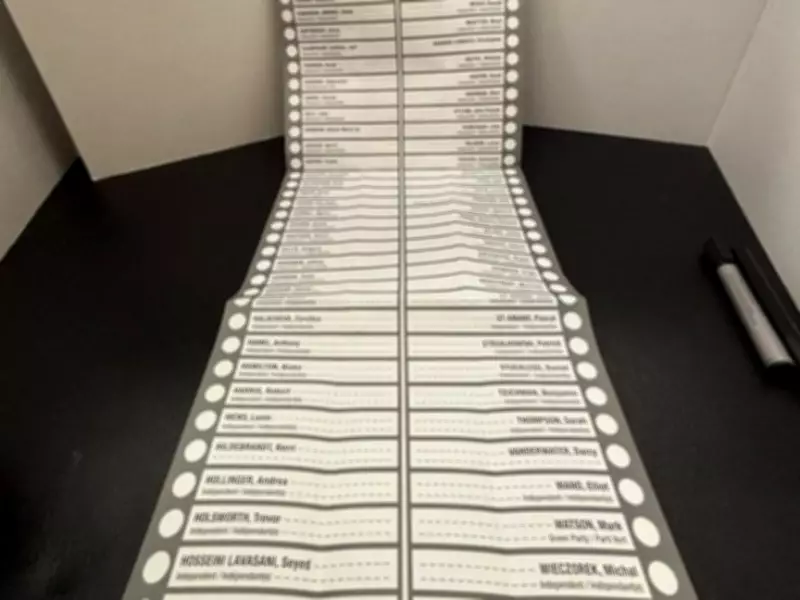
The Longest Ballot Committee (LBC) is once again preparing to disrupt Canada's electoral process, this time by targeting the upcoming Terrebonne byelection in the Montreal area. This group's latest maneuver represents another calculated effort to register support for proportional representation while attempting to overturn the country's longstanding first-past-the-post (FPTP) electoral system.
Targeting a Sensitive Riding
Terrebonne presents a particularly sensitive target for this electoral protest. Following last year's general election, Liberal candidate Tatiana Auguste was initially declared the winner over her Bloc Québécois opponent. However, the Supreme Court of Canada granted an appeal last month and subsequently annulled the election result after discovering that Elections Canada had used an incorrect postal code for a mail-in ballot cast for the Bloc candidate.
Given this contentious history, the Terrebonne byelection must produce a clear and unequivocal outcome. It should not be muddied by those seeking to roil the electoral waters with what amounts to political theater.

A Pattern of Electoral Disruption
This is not the first instance where the LBC has attempted to throw a wrench into Canada's electoral machinery. According to official Elections Canada records, the group has intervened in eight previous elections, including two that directly involved Conservative Leader Pierre Poilievre.
During last year's general election, the Carleton riding that Poilievre had held for two decades before losing it featured 91 candidates on the ballot. In the Battle River-Crowfoot byelection, where Poilievre regained a parliamentary seat, the situation became so extreme with 214 registered candidates that Elections Canada was forced to implement a write-in ballot system.
Elections Canada Expresses Concern
In 2024, Elections Canada Chief Stéphane Perreault wrote to then-Democratic Institutions Minister Dominic LeBlanc expressing serious concerns about the LBC initiative. Following a byelection in LaSalle-Émard-Verdun where 91 candidates registered, Perreault suggested modifying election rules to prevent such disruptions.
The proposed change would tweak the requirement that candidates obtain 100 signatures by stipulating that signatories could only endorse one candidate. The Elections Canada website explicitly notes that excessively long ballots create confusion, reduce accessibility for voters, and present significant challenges for accurate counting.
The Proportional Representation Debate
Those advocating for proportional representation as a superior alternative to FPTP should examine the instability this system has generated in other nations. Italy, which employs proportional representation, has experienced 68 different governments since the conclusion of the Second World War, illustrating the potential for political fragmentation and governmental instability.
While Canada's current electoral system may not be perfect, it has demonstrated functionality and stability over time. If the Longest Ballot Committee genuinely desires electoral reform, they should consider working within the existing system to effect change rather than attempting to undermine democratic processes through disruptive tactics that ultimately confuse voters and complicate election administration.