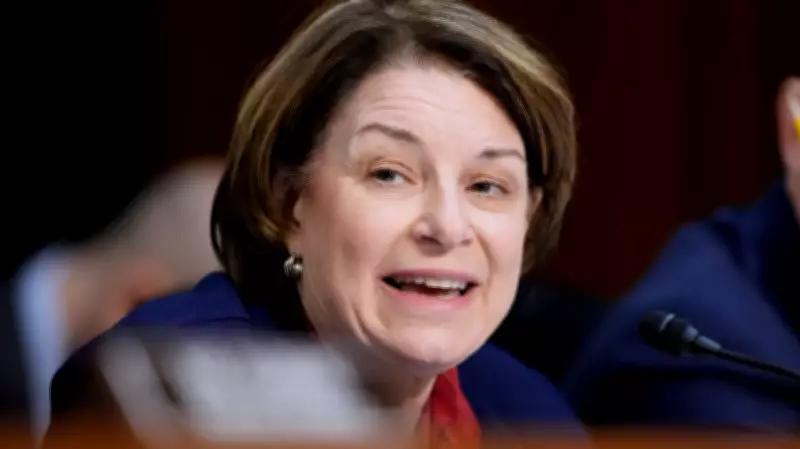
Senator Amy Klobuchar Officially Enters Minnesota Gubernatorial Race
Democratic Senator Amy Klobuchar of Minnesota formally announced her candidacy for the state's governorship on Thursday, immediately establishing herself as the leading contender for the position that current Governor Tim Walz will vacate later this year. The announcement, which was delayed due to another fatal shooting incident in Minneapolis over the weekend, marks a significant development in Minnesota's political landscape.
Campaign Launch Focused on Minnesota Values
In her campaign declaration, Klobuchar emphasized the need for leadership grounded in traditional Minnesota principles while directly addressing the controversial deployment of federal immigration agents within the state. "Minnesota, we've been through a lot," she stated during her announcement. "In these moments of enormous difficulty, we find strength in our Minnesota values of hard work, freedom, and simple decency and goodwill."
The senator positioned herself as an alternative to what she characterized as rubber-stamp politics, declaring that "these times call for leaders who can stand up and not be rubber stamps of this administration, but who are also willing to find common ground and fix things in our state." Her comments represented a clear critique of the Trump administration's immigration enforcement actions that have generated national controversy.

Political Background and Strategic Implications
Klobuchar, 65, brings substantial political experience to the gubernatorial contest, having served in the United States Senate since 2007. As a prominent centrist within the Democratic Party, she has risen to the third-ranking position in Senate Democratic leadership while holding significant committee assignments including the Senate Rules, Judiciary, and Agriculture committees.
Her previous presidential campaign during the 2020 Democratic primary, while unsuccessful in gaining substantial momentum, nevertheless established her national profile. Political analysts suggest that securing a Midwestern governorship could substantially enhance her appeal for potential future national campaigns, including the 2028 presidential election cycle.
Broader Political Context and Candidate Field
Klobuchar joins a growing exodus of Senate Democrats departing their positions this year, including fellow Minnesota Senator Tina Smith, along with Dick Durbin of Illinois, Michael Bennet of Colorado, Gary Peters of Michigan, and Jeanne Shaheen of New Hampshire. She also becomes the latest senator to announce a gubernatorial campaign, following Republican Senators Marsha Blackburn of Tennessee and Tommy Tuberville of Alabama who have made similar moves.
The potential second vacancy in Minnesota's Senate delegation creates opportunities for other Democratic figures. Representative Angie Craig and Lieutenant Governor Peggy Flanagan are both competing to replace Senator Smith when she departs at year's end. The unsuccessful candidate in that Senate primary could potentially be appointed to complete the remainder of Klobuchar's Senate term, which extends through 2030.
Republican Challenges and Departures
Governor Walz, who was the 2024 Democratic vice-presidential nominee, announced earlier this year that he would not seek reelection as originally planned, citing his inability to dedicate full attention to campaigning while addressing a welfare fraud scandal within the state. Approximately a dozen Republican candidates are competing to replace him, including prominent conspiracy theorist Mike Lindell, the fervent Donald Trump supporter widely recognized as the "MyPillow guy" from television advertisements.
The Republican field experienced a notable departure this week when attorney Chris Madel withdrew from the gubernatorial race. Madel cited his opposition to the Trump administration's ongoing immigration crackdown in Minnesota, stating he could not support "stated retribution on the citizens of our state, nor can I count myself a member of a party that would do so." He further characterized the federal operation, which has resulted in multiple fatal shootings by immigration agents, as an "unmitigated disaster."

The Minnesota gubernatorial race now emerges as a critical political contest with implications for both state governance and national political dynamics, featuring established political figures, controversial policy debates, and complex electoral calculations.