

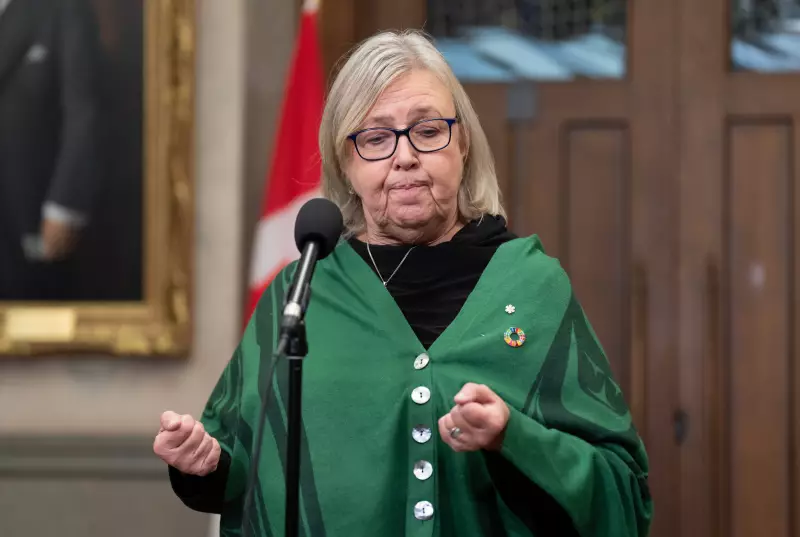
Green Party leader Elizabeth May has left the door open to potentially supporting the minority Liberal government in the future, using the phrase "never say never" when questioned about the possibility.
A Shift in Parliamentary Dynamics
The comments were made during an interview with reporters in the Foyer of the House of Commons in Ottawa on Monday, November 17, 2025. May was speaking about her party's position regarding the government's budget at the time. Her statement suggests a potential flexibility in the Green Party's approach to parliamentary cooperation, which could have significant implications for the stability of Prime Minister Justin Trudeau's administration.
The Context of Minority Government
In Canada's minority Parliament, the governing Liberals often rely on support from other parties to pass legislation and survive confidence votes. While the New Democratic Party (NDP) has been the primary partner in a supply-and-confidence agreement, the Greens' stance can influence the political landscape. May's remarks indicate that while no formal agreement is currently in place, future collaboration is not being ruled out entirely.

Elizabeth May's "never say never" comment reflects the pragmatic realities of minority governance. It underscores that party positions can evolve based on policy proposals and the political climate. The Greens have historically pushed for more aggressive action on climate change, environmental protection, and social justice, areas where they may find common ground with Liberal initiatives.
Implications for Future Policy
This openness from the Green Party leader could empower the Liberal government to pursue more progressive policies, knowing that securing additional votes from the Greens might be feasible. Conversely, it also gives the Green Party leverage to advocate for their key priorities in potential negotiations.
The political scene in Ottawa remains fluid, and May's statement, reported by Stephanie Ha on December 7, 2025, adds a new layer of strategic consideration for all parties involved. Observers will be watching closely to see if this rhetorical openness translates into tangible parliamentary support in the coming months, especially on pivotal bills related to the budget, climate, and social programs.






