

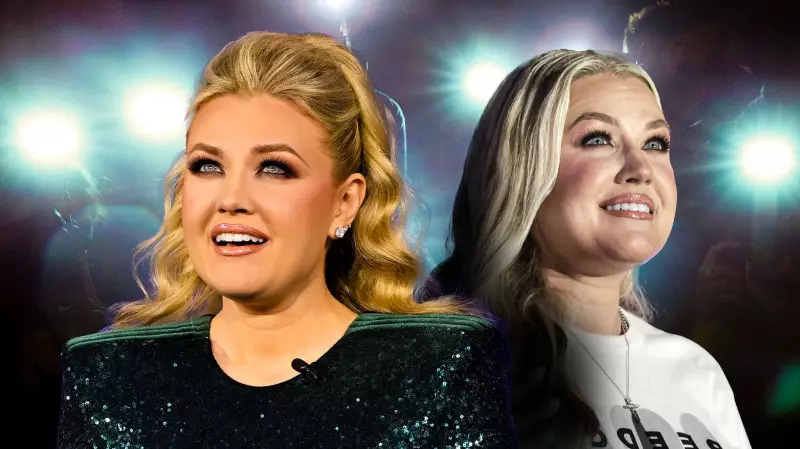
Following the assassination of her husband, conservative firebrand Charlie Kirk, Erika Kirk assumed leadership of the influential nonprofit Turning Point USA. The organization, credited with drawing a significant number of Gen Z men to far-right politics, now aims to replicate that success with young women under its new CEO.
The Prediction and the Political Reality
Shortly after the transition, Tyler Bowyer, Turning Point USA's chief operating officer, sparked widespread discussion on social media with a bold forecast. He predicted that just as Charlie Kirk converted young men, Erika Kirk would come to convert young women. Major news outlets quickly explored the possibility, with headlines speculating whether she could bring more young women into the Republican Party.
However, experts who study the youth vote present a starkly different picture. They argue that the traditionalist narrative Erika Kirk advocates—centered on young marriage, motherhood, and wifely submission—is failing to resonate with a generation of women with markedly different priorities.

Rachel Janfaza, founder of the Gen Z research firm The Up and Up, expressed skepticism about a massive shift. "I certainly think that Erica Kirk could be a strong leader, bringing in more young women... but I don't suspect we're going to see a massive shift right amongst young women anytime soon," she stated.
A Deepening Generational Gender Divide
Dr. Corey Seemiller, a generational expert and author of six books on Gen Z, agrees. She notes that the messaging resonating with Gen Z women is fundamentally different from what appealed to their male peers. This demographic is shaping up to have one of the largest political gender divides in generations, a fact evident in recent election results.
In the 2024 presidential election, young women aged 18-29 supported Kamala Harris over Donald Trump by an 18-point margin. Meanwhile, young men in the same age group favored Trump over Harris by a 14-point margin. Seemiller attributes Charlie Kirk's success with young men to his unfiltered "shock appeal." She questions whether that model can work for women, stating plainly, "I don't think women are looking for that."
Data reveals profound differences in values:
- While 23% of Gen Z men say they want to marry to avoid being alone, only 13% of Gen Z women agree.
- Among those not wanting to marry, 56% of women cite a desire for independence, compared to 41% of men.
- Gen Z women who voted for Trump ranked achieving financial independence as their number one marker of success, even above their male counterparts.
"We're not seeing any indicators that these women are leaning on these 'head of household' men who would take care of them financially," Seemiller observed.
The Authenticity Challenge
Another significant hurdle for Erika Kirk is the premium Gen Z places on authenticity. Before becoming CEO of a multi-million dollar nonprofit, Kirk publicly lectured women on being a "helpmate" and prioritizing their husband's career. She cautioned against marrying after 30, calling it not "ideal." However, she herself was 32 when she married the younger Charlie Kirk and was a businesswoman with a podcast and a clothing line.
Leela Strong of Tufts' Center for Information & Research on Civic Learning and Engagement emphasized this point. "Young people as a whole, especially Gen Z, are about authenticity," she said. "They want candidates and figureheads who can speak to substantive issues... they've personally experienced."
Janfaza echoed this, stating, "Anyone looking to connect with Gen Z needs to be real and clear about their day-to-day, how they spend their time and their own priorities." Seemiller suggests that young women are also seeing through the wave of "tradwife" content on social media, where creators profit from advocating a non-working lifestyle.

While Erika Kirk has asserted her transparency publicly, promising "what you see is what you get," experts remain doubtful. They predict Turning Point may spin her personal history as a testament to her belief in the mission or frame her leadership as a calling following her husband's death. The core challenge remains: her prescribed path to happiness is fundamentally at odds with the life goals of financial freedom and independence held by most Gen Z women.





