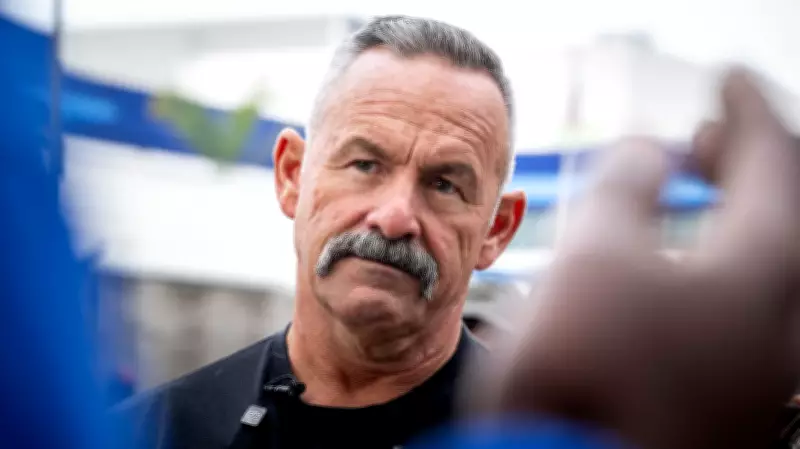
Riverside County Sheriff Chad Bianco, a prominent Republican candidate for California governor, has taken the extraordinary step of seizing more than half a million ballots cast in a November special election. The sheriff claims he is investigating a discrepancy in the ballot count, but county election officials and the state attorney general have strongly disputed his actions, labeling them as unprecedented and potentially damaging to public trust in elections.
Sheriff's Investigation Sparks Political Firestorm
Sheriff Bianco held a news conference on Friday to announce that his office had launched an investigation after receiving a complaint from a local citizens group regarding the ballot count from a November 2025 special election on redistricting. In that election, voters approved a measure to redraw congressional district lines in favor of Democrats for the upcoming midterm election, passing the measure in Riverside County by a margin exceeding 80,000 votes.
Bianco, who has been twice elected sheriff in the inland California county of 2.5 million residents, described the effort as "a fact-finding mission." He stated, "This investigation is simple: Physically count the ballots and compare that result with the total votes reported." The sheriff seized nearly 1,000 boxes of ballots and election materials from the county's elections office using a warrant in February.

Disputed Claims and Official Pushback
At the heart of the controversy is an alleged discrepancy reported by a citizen group between handwritten ballot intake logs and the number of votes officially reported to the state. Bianco claims this discrepancy amounts to approximately 45,800 votes. However, county election officials have refuted this claim at public meetings, asserting that the machine count and the final count submitted to the state differed by only about 100 votes.
Election officials argue that the handwritten logs, which were not relied upon for verifying the count, were maintained by temporary election workers who had worked extended hours and may have made inadvertent errors. California Attorney General Rob Bonta, a Democrat, has repeatedly sent letters to Bianco's office over the past two months, stating that sheriff's staff are not qualified to conduct a recount. In one letter, Bonta wrote that the ballot seizure was "unacceptable" and "sets a dangerous precedent and will only sow distrust in our elections."
Political Context and Gubernatorial Campaign
Bianco is one of two prominent Republicans running for governor in a crowded June primary that includes more than half a dozen Democratic candidates. California employs a top-two primary system where all candidates appear on the same ballot regardless of party affiliation, with the two highest vote-getters advancing to the November general election.
Leading California Democrats express concern that their party's numerous candidates could split the vote, potentially allowing Bianco and another top Republican, Steve Hilton, to advance to the general election. This would represent a stunning outcome in a state where Democrats hold substantial political dominance. Despite the timing, Bianco insists the investigation has "absolutely nothing to do" with his gubernatorial campaign, asserting, "I have a duty to investigate alleged crime in Riverside County."
Broader National Implications
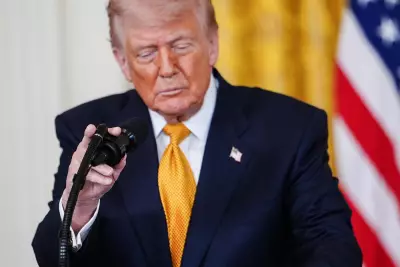
The ballot seizure occurs against a backdrop of continued election disputes nationally, reminiscent of former President Donald Trump's repeated challenges to the 2020 election results based on unsubstantiated fraud claims. Trump's administration recently seized ballots and documents from an election office in Georgia, and some Republicans have adopted similar rhetoric regarding voting integrity in their respective states.
Bianco announced on Friday that the ballot counting process had started and stopped but would now resume under the supervision of a special master appointed by a judge. This development adds another layer of judicial oversight to an already contentious situation that continues to unfold as California approaches critical election cycles.