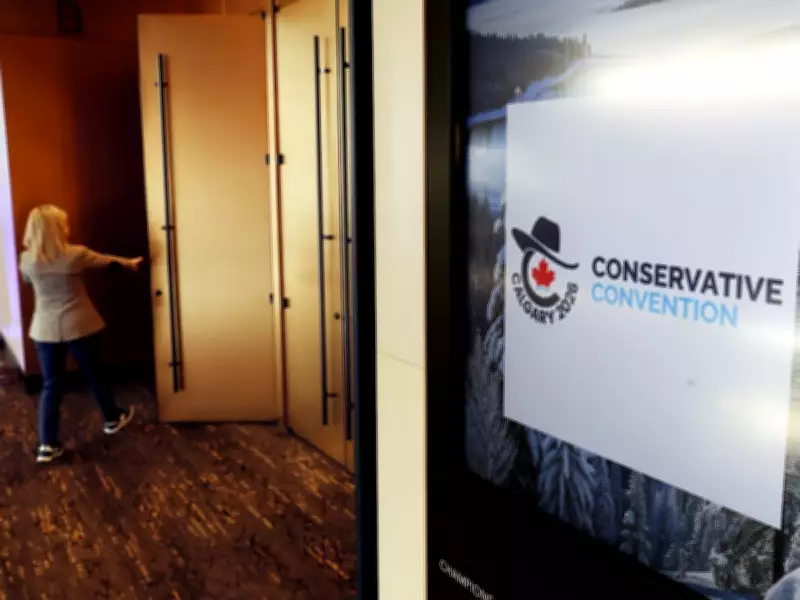
Amy Hamm: Conservative Convention Should Have Targeted Woke Cities to Expand Support
As final preparations unfolded at Calgary's BMO Centre on January 29, 2026, for the Conservative Party of Canada convention, a fundamental question emerged about party strategy. Conservative leader Pierre Poilievre's decision to fly economy class to the event sparked predictable reactions from both supporters and critics, but this symbolic gesture masks a deeper political reality that demands attention.
The Economy Class Metaphor for Poilievre's Political Position
Poilievre found himself in a classic political dilemma regarding his travel arrangements. Had he purchased an expensive first-class ticket, critics would have labeled him elitist and out of touch. By choosing economy seating, he faced accusations of staging a publicity stunt to appear as a "man of the people." This no-win scenario perfectly illustrates his broader political challenge: how to appeal beyond his established base while maintaining core conservative principles.
The airplane seat controversy ultimately serves as a metaphor for Poilievre's current polling situation. Within Conservative circles and among existing supporters, enthusiasm remains remarkably high. However, outside this core constituency, the landscape looks dramatically different, with Poilievre struggling to gain meaningful traction among undecided and opposition voters.

Polling Data Reveals Stark Political Divide
Recent Abacus Data polling provides concrete evidence of this political polarization. The survey concludes that "Poilievre's strength with Conservatives is inseparable from his weakness with everyone else." The numbers reveal a staggering 40 to 50 percentage point gap in leadership ratings between different voter groups.
Key findings from the poll include:
- 79% of Poilievre's existing base rate his leadership as "good" or "excellent"
- Only 11% of non-Conservative voters share this positive assessment
- 62% of non-Conservative voters describe his leadership as "poor" or "very poor"
This data suggests that while Poilievre has successfully consolidated support within his party, he has made limited progress expanding his appeal to the broader electorate that ultimately decides Canadian elections.
Multiple Factors Contributing to Poilievre's Challenges
Several interconnected factors appear to be limiting Poilievre's ability to broaden his political coalition. Canadian anti-Trump sentiment has manifested in the "Maple MAGA" characterization that some opponents apply to Poilievre's approach. Prime Minister Mark Carney's recent performance at the World Economic Forum, where he employed Havel's greengrocer metaphor to position himself as noncompliant rather than meek, has resonated with certain voters despite being criticized as disingenuous.
Furthermore, Justin Trudeau's prorogation of Parliament just over a year ago disrupted what many Conservatives viewed as Poilievre's certain path to victory. Many Canadians harbor concerns that Poilievre might usher in an era of divisive politics and social conservatism, while fence-sitting voters appear drawn to Carney's more moderate presentation style.
Poilievre's Strategic Adjustments and Policy Proposals
Following his election loss to Carney, Poilievre has deliberately sharpened his conservative messaging to distinguish himself from the prime minister. His recent positions include:
- Strong advocacy for women's sex-based rights
- Firmer stances on both immigration policy and free speech protections
- Increased candor on issues ranging from wokeism to national socialism
These moves have further energized his base, as evidenced by his expected successful leadership review at the convention. However, they have done little to address his weakness among non-Conservative voters.
Days before the convention, Poilievre unveiled his proposed "Canadian Sovereignty Act," an expansive legislative package that would repeal laws like Bills C-69 and C-48 that hinder energy and mining projects while blocking tankers from the Pacific coast. The proposal also emphasizes the need to re-engage with the United States under President Trump, directly challenging Carney's approach to international relations.

The Fundamental Question of Political Strategy
The central dilemma facing Poilievre and the Conservative Party remains unresolved. Despite Carney's acknowledged failures in negotiating with Canada's closest ally, and despite widespread disappointment among those who voted Liberal, Carney continues to gain in the polls. His apparent indifference to U.S. relations has somehow become politically advantageous rather than damaging.
This political paradox raises critical questions about Conservative strategy. Should the party continue to focus on consolidating its base with increasingly conservative messaging? Or should it pursue a different approach that might appeal to urban voters in traditionally progressive cities who currently view Poilievre with skepticism or outright hostility?
The convention in Calgary represents both an opportunity and a challenge for Poilievre. While he will undoubtedly receive enthusiastic support from delegates, the broader political landscape suggests that without meaningful outreach beyond conservative strongholds, his path to forming government remains uncertain. The economy class flight may have generated temporary attention, but lasting political success will require navigating a much more complex journey toward broader national appeal.