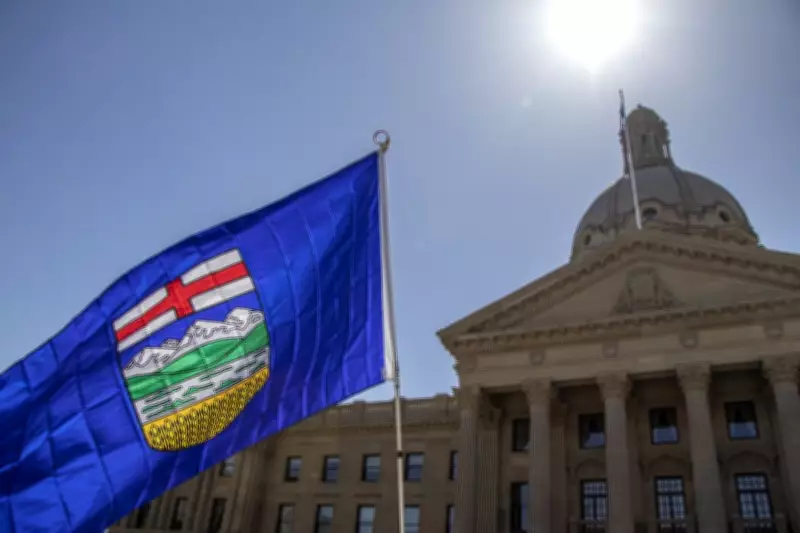
Alberta Rejects Proposed Electoral Map, Launches Expedited Redraw Process
The Alberta government is poised to discard a recently proposed electoral map and initiate an expedited redrawing process overseen by a government-led committee. This move comes just three weeks after the initial boundaries were recommended, with the new process notably excluding public consultation.
Legislative Changes and Increased Representation
A motion listed on Thursday's order paper, to be introduced by Government House Leader Joseph Schow, outlines the new approach. The motion calls for legislation amending a government bill from late 2024, which would increase Alberta's electoral divisions from the current 87 to 91. This represents an addition of four divisions from the status quo and two from the prior legislation.
The motion cites the Electoral Boundaries Commission's final report from last month, which noted that while the legislative assembly would grow by only two percent since its last adjustment, Alberta's population has surged by more than twenty percent during the same period.

Committee Structure and Lack of Public Input
The proposed process involves creating a special committee of MLAs, led by United Conservative Party member Brandon Lunty. This committee will include three additional UCP members and two opposition members. Critically, the motion specifies that the committee will not be required to hold public hearings, a departure from typical boundary review procedures.
Last month's EBC report included both a majority report and a minority report authored by two UCP appointees. The minority report challenged the presented map but faced heavy criticism from the commission's chair.
Expedited Timeline and Panel Mandate
The motion establishes an October 22 deadline for the redraw, to be conducted by a new independent advisory panel selected by the committee. Panelists must be either:
- The president of a post-secondary institution in Alberta
- A judge or retired judge from any Alberta court
- Or "a person whose stature and qualifications are similar"
The panel is mandated to implement a recommendation from an addendum to the EBC's final report. This suggests that if MLAs cannot agree on the presented map, the two electoral divisions slated for removal should be restored, while maintaining "the rest of the province as we propose must be maintained to the extent possible."
Boundary Criteria and Opposition Criticism
Population in the new electoral divisions must remain within the established 25 percent variance standard, with limited exceptions for some rural ridings. When crafting boundaries, the panel must consider factors including:
- Communities of interest
- Geographical features
- Transportation connections throughout the province
Official Opposition Leader Naheed Nenshi has strongly criticized the government's approach, accusing them of gerrymandering boundaries in what he describes as an unprecedented and undemocratic move. Nenshi's statement highlights concerns about the lack of public consultation and the potential for political manipulation in the redistricting process.
The motion could be introduced as soon as Thursday morning's sitting of the legislative assembly, marking a significant shift in how Alberta approaches electoral boundary adjustments and raising questions about transparency and democratic process in the province's political landscape.