Alberta Electoral Boundary Commission Faces Controversy Over Minority Report
American-style political tactics have reportedly infiltrated Alberta's electoral process, as evidenced by recent developments within the province's Electoral Boundaries Commission. This situation has sparked significant debate about fairness and democratic principles in the region.
Initial Consensus and Subsequent Division
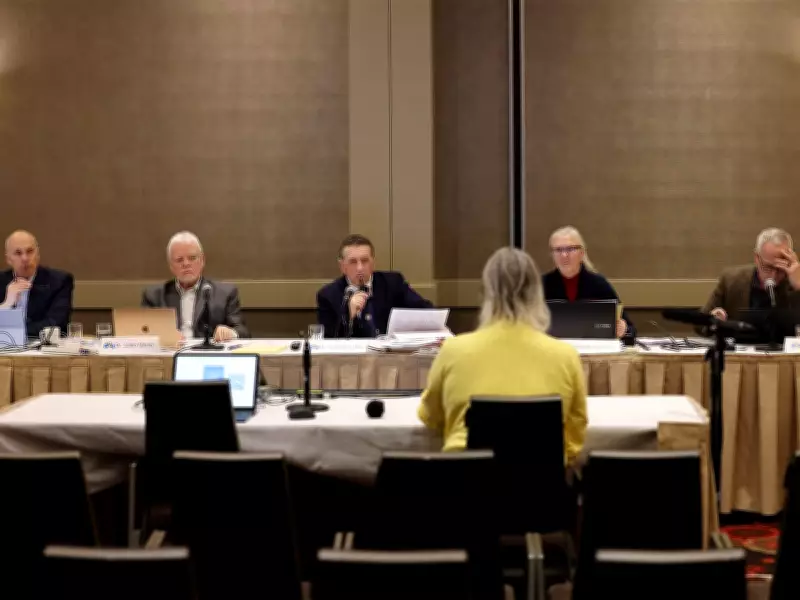
In October 2025, following extensive public consultation, the five-member commission released a unanimous interim report. This document recommended adding two new electoral divisions in Calgary to address population changes and maintain representation by population—a move widely seen as supporting democratic fairness. The commission members, including Greg Clark, Dr. Julian Martin, Justice Dallas Miller, Susan Samson, and John Evans, appeared aligned in their approach during public meetings, such as one held at the Sheraton Cavalier Hotel in northeast Calgary in January 2026.
However, by March 2026, drama unfolded when two commissioners broke from the initial agreement. Despite contributing to the interim report, they released a dissenting minority report with new electoral maps created without public input. This marked an unprecedented event in Alberta's Electoral Boundary Commission history, as maps from a minority of commissioners had never been proposed before.

Contentious Proposals and Procedural Concerns
The minority report suggested reducing seats for urban ridings and implementing hybrid boundaries that fragment urban neighborhoods, merging them into vast rural areas. In response, the commission majority issued a blunt critique, labeling the minority report as procedurally unfair, unreasonable, and potentially in violation of the Canadian Charter of Rights and Freedoms. They strongly advised the legislature against adopting these proposals.
Upon examination, the minority's maps reveal serpentine boundaries that carve up Calgary's outer neighborhoods, resembling pie slices allocated to rural ridings. For instance, the plan would combine Coach Hill with distant Springbank, link Evanston or Coventry Hills with Airdrie, and merge Forest Lawn with Chestermere. It also proposes dividing Lethbridge into four segments, with two ridings extending to the British Columbia border.
Political Implications and Historical Context
The motivations behind these controversial proposals have raised eyebrows. Public records indicate that one minority commissioner has donated to the Wildrose and PC parties, while the other has supported the UCP—both were appointed to the commission by the UCP. This has fueled concerns about partisan influence in what should be an impartial process.
Alberta's history of single-party rule has been partly attributed to an imbalance in vote valuation, where rural votes have historically been worth up to twice as much as urban votes. Even under the majority report's proposals, disparities persist; for example, a vote in Central Peace-Notley (with 28,715 residents) carries twice the weight of one in Calgary-McKenzie (with 62,772 residents). While many Calgarians acknowledge the need for accommodations in large rural ridings due to Alberta's geography, critics argue that using boundaries to dissect major cities undermines fair representation.
This ongoing controversy highlights the delicate balance between urban and rural interests in Alberta's electoral system, with the minority report's approach being criticized as a potential threat to democratic integrity and equitable governance.