

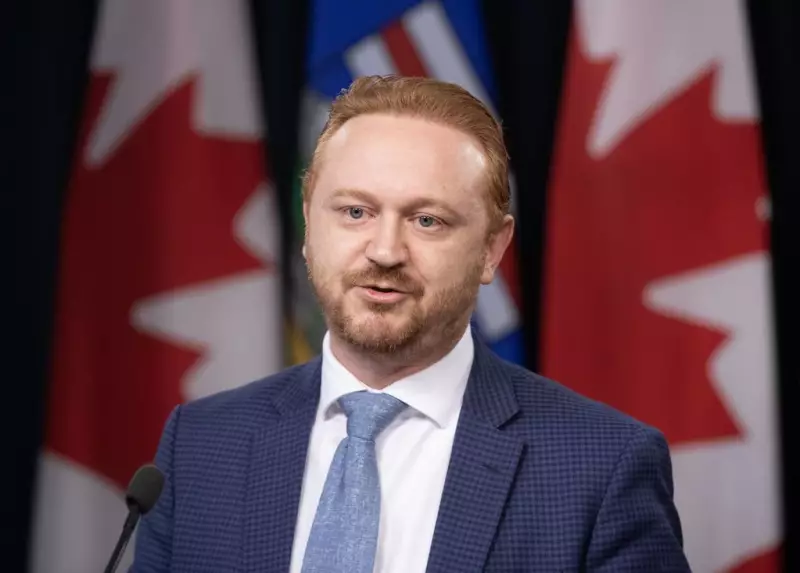
The Alberta government has introduced legislation that imposes new restrictions on political party names, a move officials say is designed to clarify ballots for voters but which also has significant political consequences. Bill 14, the Justice Statutes Amendment Act, 2025, was tabled by Justice Minister Mickey Amery on Thursday, December 4, 2025.
Clarity or Political Maneuvering?
Minister Amery framed the bill as a necessary step to protect the integrity of the electoral process. He pointed to the recent federal byelection in Battle River-Crowfoot, where a protest against electoral reform led to more than 200 candidates registering, as an example of the confusion the government seeks to prevent. "We believe that election ballots and party choices should be absolutely clear and transparent for all voters," Amery stated during a press conference.
The proposed law creates a list of protected words and initials that cannot be used in a new party's name if it could cause confusion with an existing registered party. This list includes terms like advantage, communist, conservative, democratic, green, independent, liberal, pro-life, reform, republican, solidarity, and wildrose.

Furthermore, the bill changes the standard used by the Chief Electoral Officer when reviewing party names. The current test of whether a name is "likely" to be confused with another would be replaced with a broader standard of whether it has the "potential" to cause confusion.
Blocking a Political Revival
If passed, the amendments would take effect retroactively to July 4, 2025. This retroactive application appears to directly impact an ongoing political and legal battle. Former United Conservative Party (UCP) members Peter Guthrie and Scott Sinclair have been seeking to revive the historic Progressive Conservative Party brand, aiming to rebrand the Alberta Party under that name.
The UCP has contested this move, arguing it holds the rights to the Progressive Conservative name. Bill 14 would effectively provide the legal mechanism to block Guthrie and Sinclair's efforts, as the use of "Conservative" could be deemed to have the potential for confusion with the UCP.
Amery denied the bill was specifically targeted at the two former MLAs. "There is no difference between somebody registering a political name that is very similar to an existing, well-established political party, as there would be for a restaurant that has been in operation for decades having a competitor open next door with a very similar name," he told reporters.
Paving the Way for Separation Vote
While blocking one political initiative, the legislation simultaneously removes a potential hurdle for another. The new rules would clear a path for a separatist group to launch a formal referendum campaign on whether Alberta should leave Canada.
Previously, such a group might have been blocked if its proposed name was deemed too similar to an existing party. The clarified and more restrictive rules provide a clearer framework, making it easier for a distinctly named separatist entity to gain official status and pursue a referendum, a long-standing goal for some factions within the province.
Minister Amery explicitly stated the bill has "nothing to do with the separatists," focusing instead on the stated goal of ballot clarity. However, the practical effect of the legislation is dual-faceted: it stifles the rebirth of a legacy conservative party while creating a more straightforward process for a potential sovereignty vote.
The bill, which amends seven existing statutes, now moves to the legislative assembly for debate. Its passage could reshape Alberta's political landscape, determining which voices are allowed on the ballot and under what names, with implications for both the province's past and its potential future.






