The United Arab Emirates has intensified its efforts to end the war with Iran, joining Saudi Arabia and Qatar in urging U.S. President Donald Trump to pursue negotiations rather than military action, according to sources familiar with the matter.
Gulf States Fear Renewed Conflict
The conversations were driven by concerns that any Iranian retaliation, should hostilities resume, would destabilize Gulf economies. In separate calls with Trump, leaders of the three U.S. allies argued that military force would not achieve America's long-term objectives with Iran, the sources said, requesting anonymity due to the sensitivity of the discussions.
The White House did not immediately respond to a request for comment.

Shift in UAE Stance
Abu Dhabi's position marks a change for a country that suffered heavily from Iranian attacks and had previously taken a harder line against Tehran. The UAE, Saudi Arabia, and Qatar disagree on the type of diplomatic deal the U.S. should pursue and how stringent it should be with Iran, but their outreach to Trump reflects a shared desire to avoid a repeat of the conflict that erupted in late February.
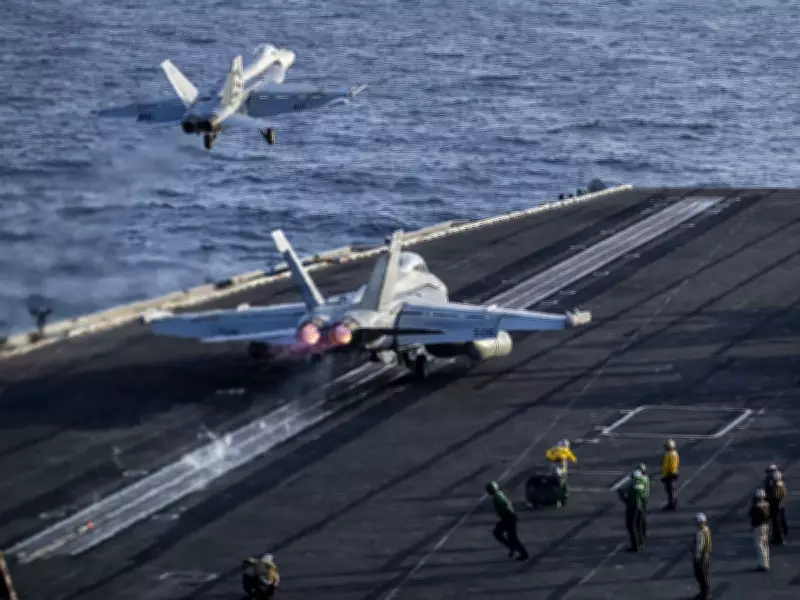
Between late February and early April, Israel and the U.S. launched a war against Iran, prompting Tehran and its allied militant groups in Iraq to retaliate with thousands of drones and missiles across the Gulf. The attacks killed numerous people and caused billions of dollars in damage to ports and energy infrastructure.
Regional Havens at Risk
“The Gulf Arab states saw their worst fears come true,” said Dina Esfandiary, an analyst at Bloomberg Economics. “They were caught in the middle of a U.S.-Iran war and suffered much of the fallout. They now face the prospect of renewed confrontation if the ceasefire can’t be translated into a permanent deal, with their image as stable regional havens at risk.”
The UAE was frustrated when Saudi Arabia and other Gulf states refused to collectively use force against Iran to deter its attacks. Abu Dhabi conducted limited strikes on Iran in coordination with the U.S. and Israel, while Saudi Arabia took separate action, according to sources.
Ceasefire and Negotiations
Iran and the U.S. agreed to a truce on April 8 and are exchanging messages via Pakistan about a peace deal. Both sides have stated they are prepared to resume hostilities and have shown little willingness to make concessions. However, U.S. Secretary of State Marco Rubio noted “slight progress” in negotiations on Friday, and Iranian media echoed similar comments. Pakistan's army chief, Asim Munir, was scheduled to visit Iran that same day, potentially signaling that the sides are moving closer to a deal.
The UAE's frustration with fellow Arab states culminated in its surprise decision in late April to leave OPEC, the oil cartel led by Saudi Arabia. Since then, ties with Gulf Cooperation Council (GCC) states have improved. The GCC includes the UAE, Saudi Arabia, Qatar, Kuwait, Bahrain, and Oman.