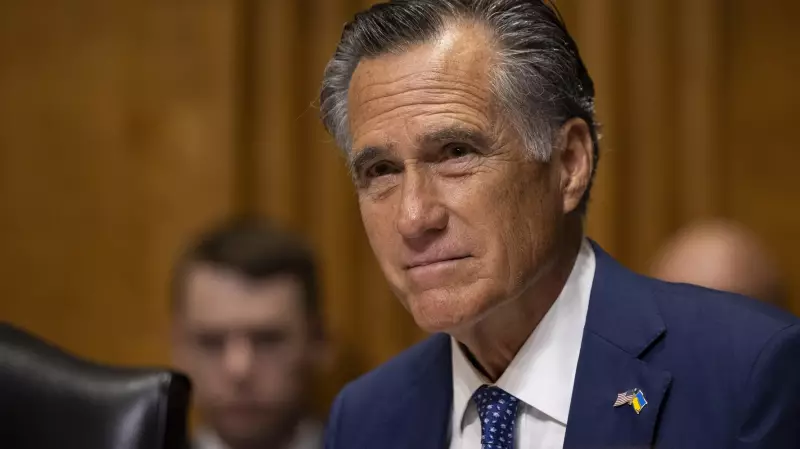
In a striking shift of perspective, former Utah Republican Senator and presidential candidate Mitt Romney has publicly called for increasing taxes on the wealthiest Americans. His goal is to secure the future of Social Security for coming generations, directly stating that "it's time for rich people like me to pay more."
A Republican Voice for Taxing Wealth
Romney laid out his case in a detailed opinion piece published by The New York Times on Friday. The former Massachusetts governor, known for his pro-business stance, argued that the financial stability of the Social Security Trust Fund is at a critical juncture. The fund is projected to be depleted by 2034, a date that is rapidly approaching. If Congress fails to act, this would lead to severe cuts in retirement benefits for millions.
"I believe in free enterprise, and I believe all Americans should be able to strive for financial success," Romney wrote. "But we have reached a point where any mix of solutions to our nation's economic problems is going to involve the wealthiest Americans contributing more." This stance aligns with aspects of President Joe Biden's recent budget proposal, which also seeks higher taxes on the wealthy and corporations to fund social programs.

Closing "Tax Caverns" and Targeting Loopholes
Romney didn't stop at a general call for higher rates. He specifically advocated for closing what he termed "tax caverns"—major loopholes exploited by the ultra-wealthy. His proposals mirror long-standing Democratic ideas, including:
- Increasing the tax rate on carried interest.
- Taxing large inheritances over $100 million that currently avoid capital gains taxes when passed on after death.
He pointed to Tesla CEO Elon Musk as a prime example of someone benefiting from such systems. Romney also criticized the ineffectiveness of Musk's now-defunct Department of Government Efficiency, which he said "failed spectacularly" at cutting government spending earlier this year.
A Changed Mind on Taxes and Debt
This position marks a notable evolution for Romney. As one of the wealthiest members of Congress before leaving the Senate in 2024, he historically supported tax cuts and entitlement reform. However, the ballooning national debt, now exceeding $38 trillion, appears to have shifted his thinking. This debt was exacerbated in part by the Trump-era tax cuts for the wealthy. Coupled with rising voter anger over income inequality, Romney now sees higher taxes on the rich as a necessary step.
"Yes, taxes can slow growth," he conceded. "But most of the measures I propose would have a relatively small impact on economic growth. If my party wants to be the one to give working- and middle-class Americans greater opportunity... this would be a start."
He concluded that such action would help avert the Social Security crisis and "may tend to quiet some of the anger that will surely grow as unemployed college graduates see tax advantaged multibillionaires sailing 300-foot yachts."
Billionaire environmentalist and former Democratic presidential candidate Tom Steyer quickly agreed with Romney's sentiment online, writing, "Tax me more. I've been saying it for a long time. Even rational Republicans agree, because they're looking at the numbers."