We are the mayors of two cities — Sarnia, Ont., and St. John's, N.L., respectively — whose economies depend on large industrial projects getting built. Our communities are in different parts of the country, but from both our vantage points the view has been the same for too long: seeing capital that could have come to Canada going elsewhere — not because our communities lacked the workforce or resources but because investors could not get a reliable thumbs-up from our regulatory system in a reasonable time.
That is why we feel the federal government's recently announced consultation on streamlining legislation, regulations and processes for getting major projects approved is a welcome and timely initiative, one in which we need to go far and fast.
Why This Matters
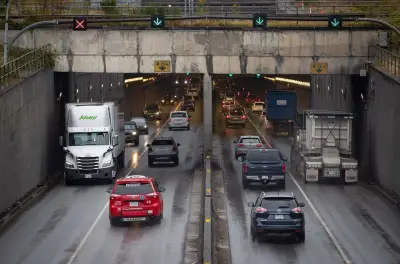
One of our cities, Sarnia, sits directly on the Canada-United States border, with Michigan visible from City Hall. Sarnia is home to multiple industrial facilities and serves as Canada's eastern energy hub, with 26 — that is not a typo: 26 — pipelines converging on it from across North America. For years now, every investment decision, every plant expansion, every regulatory delay has helped a visible alternative just across the St. Clair River. We have watched those alternatives become more appealing as we made it harder and harder to build things in Canada. For a city of 75,000 people, the downstream consequences — in terms of lost contracts, foregone construction, tradespeople leaving and emptier main streets — are not abstract problems.

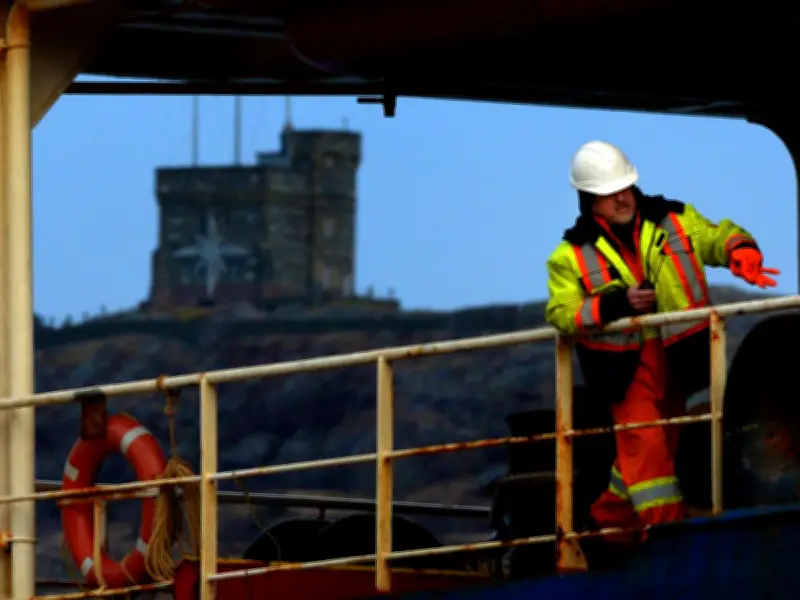
Our other city, St. John's, has lived through the full cycle of what resource development can do for a community and what its absence can't do. Newfoundland's offshore energy sector has been more than extractive: it has been a platform for genuine innovation, particularly in ocean technologies that are now competitive on a global stage. In recent years, however, even projects that completed the full federal review still faced unresolved uncertainty. That's not acceptable for communities and industries that have invested appreciable time and capital doing everything the process asked of them.
Ottawa's New Proposals
Ottawa's new proposals could address these underlying failures directly. The commitment to complete federal impact assessments and permit reviews within one year — running them concurrently rather than sequentially — is a structural change that gets to the core of the problem. So are the proposals for a single project decision, a single Crown consultation and assignment of project authority to the regulatory body with the most relevant expertise.
These are not shortcuts. They reflect a recognition that a complicated, multi-year approval gauntlet is not necessarily more rigorous than an efficient one, it is simply more costly. That cost ultimately is borne by communities themselves, not by the institutions administering the process.
Balancing Speed and Responsibility
Some might argue that slowing projects down is the responsible choice, especially when important matters like the environment are at stake. Our view is that going slow is not the same as doing something right, and that delay is not the same as diligence. A process that consumes five or more years and still fails to provide certainty is not protecting the environment or advancing reconciliation. It is simply protecting the status quo.
For the skilled tradesperson waiting on a project approval, for the local business owner watching foot traffic decline, for the family deciding whether to stay or go, this is not a mere policy debate. It is about whether Canada will remain a place where big things can still get built, and whether our communities will have a future of opportunity or one of decline. We urge the federal government to move quickly and decisively on its proposals, because every day of delay is another day we lose to our competitors.