


Arizona Senator Introduces Landmark $20 Minimum Wage Bill
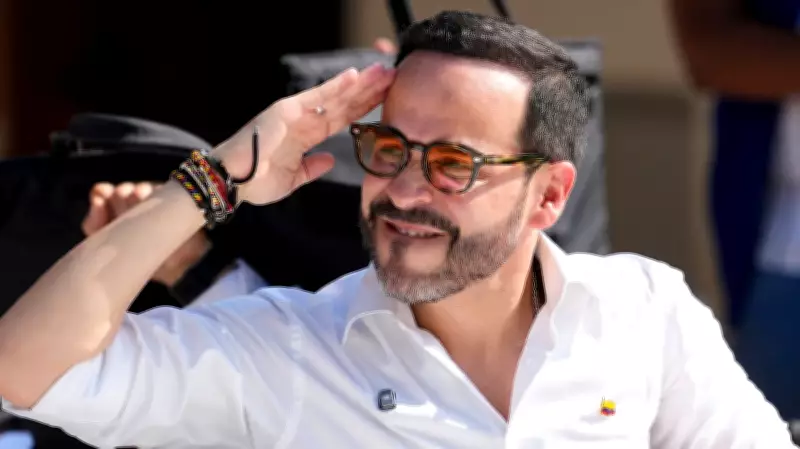
In a significant move aimed at reshaping the economic landscape, Democratic Senator Ruben Gallego of Arizona introduced legislation on Thursday to elevate the federal minimum wage to $20 per hour by the year 2029. This proposal establishes a new and ambitious benchmark for progressive advocates who have long sought to increase the nation's wage floor.
Political Strategy and Potential for Negotiation
Senator Gallego expressed to HuffPost his belief that President Donald Trump's populist rhetoric on economic matters might create a rare opening for substantive negotiations. This perspective comes despite a fifteen-year history of Republican resistance to any increase in the minimum wage. Gallego argued that Democrats should, at minimum, be proactive in presenting such ideas to the public.
"You're seeing a lot of kind of populist moves by this president that sometimes we could end up finding ourselves in alignment," Gallego remarked. "Who knows, maybe there is an opportunity for us to have some movement."
Personal and Political Context Behind the Proposal
The introduction of this bold legislation is particularly fitting for Senator Gallego. His decision to run for the Senate was partly motivated by the actions of his predecessor, former Independent Senator Kyrsten Sinema, who famously voted against a $15 per hour minimum wage proposal in 2021 with a theatrical thumbs-down gesture.
However, the political reality remains stark. Barring an unlikely endorsement from President Trump, the Republican-controlled House and Senate show no indication of approving such a measure. The federal minimum wage has remained stagnant at $7.25 per hour since 2007, the last time Congress passed an increase under President George W. Bush. Subsequent efforts by Democratic Presidents Barack Obama and Joe Biden were consistently blocked by Republican opposition.
The Current State of Minimum Wage in America
At its current level, the federal minimum wage translates to an annual salary of approximately $15,000 for a full-time worker. It serves as the baseline in any state that has not enacted a higher minimum wage. The relevance of this federal floor has diminished in recent years due to two primary factors:
- The widespread adoption of higher state-level minimum wages across the country.
- The persistent effects of inflation eroding purchasing power.
Consequently, data from 2024 indicates that only about 1.1% of American workers actually earn the federal minimum wage, highlighting its reduced direct impact on the workforce.
Strategic Positioning for Future Political Control
Senator Gallego articulated a dual strategy behind his aggressive proposal. He views it as a method to attract voters deeply concerned about affordability and the rising cost of living. Simultaneously, he aims to ensure that the Democratic Party is prepared to act decisively should they regain control of Congress following the next election cycle.
"We're going to be in a better situation as a country, I think, next year, potentially even with us now taking back the Senate," Gallego stated. "And if that's the case, then this should be one of our core tenets as a caucus."
Progressive Context and Presidential Ambiguity
This $20 proposal represents a notable escalation from previous progressive efforts. Last year, Senator Bernie Sanders of Vermont, along with dozens of Democratic co-sponsors, introduced legislation to raise the federal minimum wage to $17 per hour. With his new bill, Gallego has effectively leapfrogged the leading progressive voice in Congress on this issue.
The timing of this proposal is also politically significant. It arrives at a moment when the Democratic Party lacks a clear standard-bearer ahead of the 2028 presidential election. Gallego is among several Democratic officeholders seeking to distinguish themselves on the national stage. When questioned about potential presidential ambitions, Gallego remained focused on the immediate political horizon.
"What we are focused on between now and 2026 is making sure that we're putting the Democrats on the right path for victory," he explained. "We can't lose sight of why we lost the [2024] election. We are out of alignment [with] where the voters are. Voters care about standard of living, cost of living, immigration, immigration enforcement, border security."
The Unpredictable Variable: President Trump's Stance
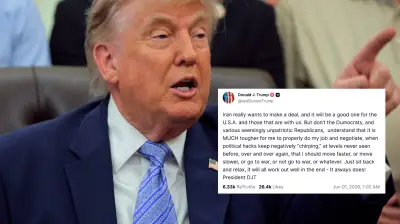
President Trump remains the unpredictable variable in this equation. During his second term, he has demonstrated a willingness to break from traditional Republican positions on issues like free trade. In response to widespread affordability concerns, he has advocated for looser monetary policy and caps on credit card interest rates.
However, his record on the minimum wage is inconsistent and marked by reversals. He has shown little interest in raising it during his current term, except for a move to lower it for federal contractors. His past comments reveal a history of contradictory statements. In a 2016 interview with Bill O'Reilly, Trump exemplified this ambiguity, stating, "Well, I would leave it and raise it somewhat," within the same sentence.
Senator Gallego's $20 minimum wage bill is therefore a high-stakes political maneuver. It tests the boundaries of economic populism, challenges long-standing partisan gridlock, and positions its sponsor at the forefront of a critical national debate on wages, affordability, and the future of the American worker.