Prime Minister Mark Carney Confronts Economic Imperatives as Parliament Returns
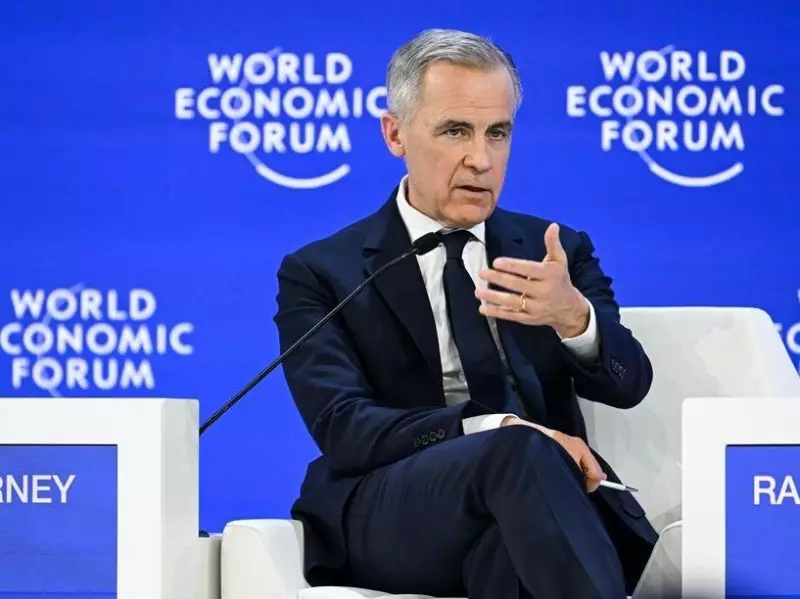
With Parliament reconvening this Monday, Prime Minister Mark Carney is under mounting pressure to transition from the eloquent political discourse of his recent World Economic Forum address to implementing tangible, practical strategies aimed at revitalizing Canada's economic landscape. The editorial underscores that his foremost priority must be addressing the nation's persistently weak economic growth, a legacy attributed to the preceding decade under former Prime Minister Justin Trudeau's administration.
Canada's Economic Performance in Global Context
During the Trudeau years, Canada recorded the poorest economic growth performance among G-7 nations when measured by real GDP per capita, a widely recognized indicator of national prosperity. More alarmingly, projections from the Organization for Economic Co-operation and Development suggest that, without significant intervention, Canada is poised to maintain the worst economic growth trajectory among developed countries through to 2060.
The editorial identifies several core factors contributing to this economic stagnation:

- Insufficient business investment and chronically low productivity levels.
- An environment of over-regulation and high federal operating costs.
- Rapid, unchecked immigration policies that provide companies with easy access to inexpensive labor, thereby reducing incentives to invest in efficiency-enhancing technologies.
- Persistent economic uncertainty, largely fueled by the tariff disputes initiated by U.S. President Donald Trump.
Navigating External Pressures and Trade Tensions
The economic challenges are compounded by external geopolitical pressures. President Trump has recently escalated tensions by threatening to impose 100% tariffs on all Canadian exports to the United States should Prime Minister Carney pursue a trade agreement with China. Trump's remarks, dismissively referring to Carney as "Governor Carney," included stark warnings about China's potential impact on Canada.
Further complicating matters, U.S. Treasury Secretary Scott Bessent has openly described Alberta as "a natural partner for the U.S.," hinting at possible bilateral arrangements that could undermine national unity. These developments occur as Canada prepares for the renegotiation of the Canada-U.S.-Mexico Agreement this year, adding another layer of complexity to the economic landscape.
The Path Forward: From Rhetoric to Results
Rather than engaging in a war of words with the U.S. administration—a tactic hinted at during Carney's WEF speech which criticized Trump's approach to international law without direct naming—the editorial argues that the most effective response lies in fostering a robust, resilient domestic economy. Canadians placed their trust in Carney's leadership, believing him to be the optimal candidate to confront Trump's aggressive policies and stimulate economic expansion.
The moment has arrived for the Prime Minister to demonstrate his capability and deliver on those expectations. The editorial concludes with a clear call to action: it is time for Carney to move beyond speeches and showcase decisive economic leadership that can navigate these multifaceted challenges and secure Canada's prosperous future.