Study Accuses Carney Liberals of 'Substantially' Worsening Federal Finances
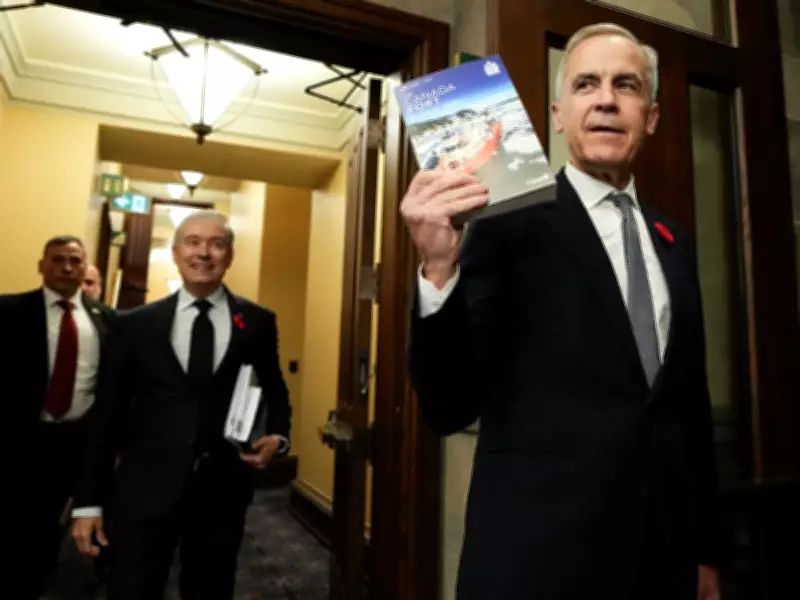
A new report from the Fraser Institute has delivered a stark assessment of Prime Minister Mark Carney's fiscal plans, indicating that his government is on track to run deficits more than twice as large as those projected by the previous Liberal administration under Justin Trudeau. The study, titled "Comparing Federal Fiscal Plans: Is the Carney Government Truly Taking a Different Approach than its Predecessor?", scrutinizes the financial trajectories set forth in Trudeau's last fall economic statement from December 2024 and Carney's inaugural budget in November 2025.
Projected Deficits and Debt Escalation
According to the fiscally conservative think-tank, Carney's combined deficits from 2025-26 to 2029-30 are projected to reach a staggering $321.7 billion. This figure represents a $167.3 billion increase over the $154.4 billion that Trudeau had planned for the same period. As a direct consequence, the total federal debt is expected to balloon to approximately $2.9 trillion by 2029-30, equating to 79% of the nation's GDP. The report underscores that this escalation in debt poses significant long-term economic risks, potentially straining public resources and future generations.
Increased Spending Amid Slower Revenue Growth
The Fraser Institute analysis further highlights that the Carney government intends to boost spending by $67.6 billion over the next five years compared to Trudeau's projections. This increase includes $47.8 billion allocated to new programs and an additional $19.8 billion for servicing the mounting debt. Notably, this surge in expenditure comes despite expectations of slower total annual revenue growth. From 2024-25 to 2029-30, revenue is projected to grow by only 14.2%, or $72.3 billion, under Carney, compared to the 19.9% or $101.8 billion growth anticipated under Trudeau's plans.

Criticism of Budgetary Classifications
One of the more contentious findings in the study pertains to the Carney government's budgetary classifications. The report criticizes the administration for categorizing 30% of its proposed capital spending, amounting to $94 billion, as investments in new infrastructure when, in reality, these funds represent increased operating expenditures. According to the Parliamentary Budget Office, this misclassification means that nearly a third of the planned capital investments should not be considered as such. Instead, they are operating spending or tax credits that have been "inappropriately shifted" to the capital side of the budget. This miscalculation, the Fraser Institute argues, undermines Carney's commitment to balancing operating spending against revenues by 2028-29.
Contextual Factors and Government Priorities
The study does acknowledge certain contextual factors that differentiate the Carney and Trudeau governments. For instance, Carney has prioritized boosting Canada's defence spending to 2% of GDP this year and aims to accelerate $1 trillion in new total investments. In contrast, Trudeau's primary focus was on income redistribution. Additionally, the report notes that Trudeau's last economic statement was formulated over a year before Donald Trump's presidency and the ensuing tariff war, suggesting that Trudeau might have also increased spending and deficits had he remained in office. Despite these distinctions, the Fraser Institute maintains that Carney's approach has "substantially worsened" the state of federal finances.
Co-author Jake Fuss remarked, "During the 2025 election, the Carney government promised to take a very different approach to federal finances than its predecessor, criticizing Trudeau for spending too much. But based on his first budget, spending is higher and deficits are double what even Trudeau planned, which substantially worsens the state of federal finances." This analysis raises critical questions about fiscal responsibility and the long-term sustainability of Canada's economic policies as the nation navigates evolving global challenges.