Yemeni Rebels Issue Fresh Threats as U.S. Naval Power Moves Toward Iran
Yemen's Houthi rebels have declared their intention to launch new attacks on maritime traffic in the strategically vital Red Sea, creating renewed security concerns for global shipping routes. This provocative announcement comes as the United States Navy dispatches the Nimitz-class aircraft carrier USS Abraham Lincoln toward waters near Iran, signaling a significant military escalation in an already volatile region.
Escalating Tensions in Critical Shipping Lanes
The Houthi movement, which controls substantial territory in Yemen following years of civil conflict, has repeatedly demonstrated its capability to disrupt international commerce through targeted strikes on commercial vessels. Their latest threat specifically references the Bab el-Mandeb Strait, a narrow chokepoint connecting the Red Sea to the Gulf of Aden through which approximately 10% of global oil trade passes annually.
Regional analysts note this development occurs against a backdrop of increasingly strained relations between Iran and Western powers, with the Houthis maintaining close ideological and material ties to Tehran. The rebel group's capacity to deploy drones, missiles, and fast-attack craft has transformed what was once considered a relatively secure maritime corridor into a potential flashpoint for broader conflict.

U.S. Naval Deployment Signals Strategic Response
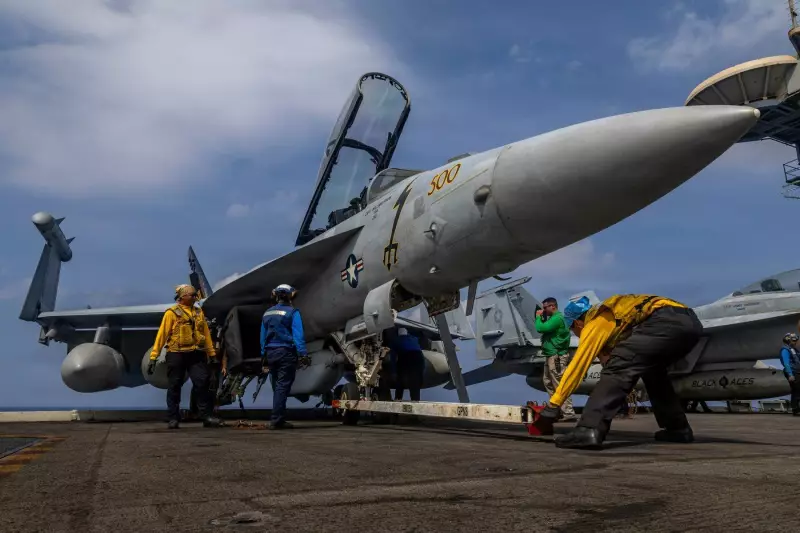
The USS Abraham Lincoln's movement toward the Persian Gulf represents a clear demonstration of American military commitment to ensuring freedom of navigation in international waters. Photographs released by the U.S. Navy show crew members preparing Boeing EA-18G Growler electronic warfare aircraft on the carrier's flight deck during operations in the Indian Ocean earlier this week, highlighting the vessel's readiness for potential combat scenarios.
This deployment follows months of escalating incidents involving Houthi attacks on commercial shipping and comes as diplomatic efforts to revive the Iran nuclear deal remain stalled. Military experts suggest the carrier group's presence serves both as a deterrent against further rebel aggression and as a visible show of force directed at Iran, which Western nations accuse of supplying the Houthis with advanced weaponry.
Broader Implications for Global Trade and Security
The convergence of these developments raises serious concerns about the stability of Middle Eastern shipping routes that are crucial to the global economy. Insurance premiums for vessels transiting the region have already increased substantially following previous attacks, and further disruptions could trigger significant economic consequences worldwide.
Regional governments and international shipping organizations are closely monitoring the situation, with many implementing enhanced security protocols for vessels operating in affected waters. The coming weeks will likely determine whether diplomatic channels can de-escalate tensions or whether the region faces another period of sustained maritime conflict with far-reaching implications for energy markets and international trade.