U.S. Military Bolsters Forces in Middle East Amid Escalating Iran-Israel War
The American military has ordered a significant deployment of 2,500 Marines and the amphibious assault ship USS Tripoli to the Middle East, a U.S. official confirmed on Friday. This move marks a major reinforcement in the region as the war between Iran and Israel enters its third week, with no signs of abating and severe repercussions for the global economy.
Marine Expeditionary Unit and USS Tripoli Deployment
Elements from the 31st Marine Expeditionary Unit, based in Japan, along with the USS Tripoli, have been directed to the Middle East. The U.S. official, who spoke anonymously due to the sensitivity of military plans, noted that these forces specialize in amphibious landings, embassy security, civilian evacuations, and disaster relief. While this deployment does not necessarily indicate an imminent ground operation, it significantly enhances U.S. capabilities in the volatile area.
The USS Tripoli was recently observed near Taiwan via commercial satellites, positioning it over a week away from Iranian waters. Upon arrival, it will join a flotilla in the Arabian Sea that includes the aircraft carrier USS Abraham Lincoln and eight destroyers, making it the second-largest U.S. ship in the region. Al-Udeid Air Base in Qatar, one of the largest U.S. bases in the Middle East, typically houses around 8,000 troops, though the total number of U.S. service members on the ground remains unclear.

Explosion at Tehran Rally Amid Israeli Warnings
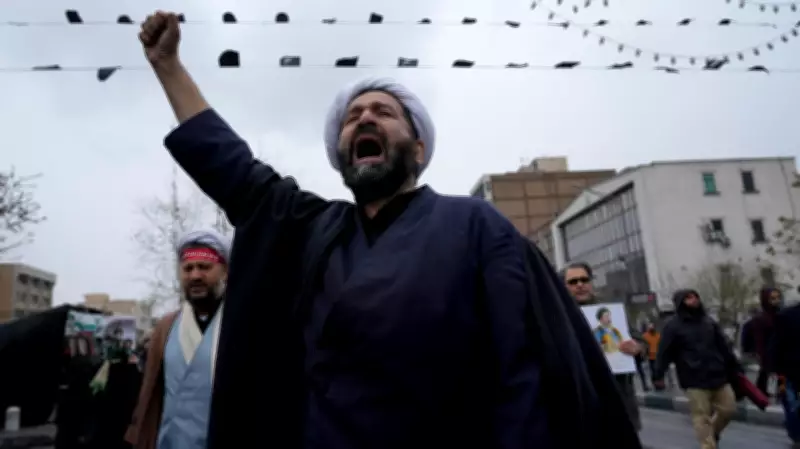
In Tehran, a large explosion rocked Ferdowsi Square during an annual state-organized Quds Day rally, where thousands gathered to support Palestinians and chant anti-Israel and anti-America slogans. Israel had issued a warning on a Farsi-language social media account for people to clear the area, but few Iranians saw it due to internet shutdowns by authorities. No casualties were reported from the blast.
Gholamhossein Mohseni Ejei, the hard-line head of Iran's judiciary, was present at the rally and, after the explosion, raised his fist in defiance, stating that Iran would never withdraw despite the attacks. The Israeli military later criticized Iran for blocking access to their warning messages.
Escalating Military Strikes and Humanitarian Crisis
Iran has continued widespread missile and drone attacks on Israel and Gulf states, effectively closing the Strait of Hormuz, a critical chokepoint for a fifth of the world's traded oil. U.S. Defense Secretary Pete Hegseth reported that over 15,000 enemy targets have been struck since the war began, averaging more than 1,000 per day. He assured that the U.S. is managing the Strait of Hormuz situation without need for public concern.
In Lebanon, the humanitarian crisis has deepened, with nearly 800 people killed and 850,000 displaced as Israel targets Iran-backed Hezbollah militants. Lebanese Prime Minister Nawaf Salam urged Israel to halt strikes and criticized Hezbollah for retaliatory rocket fire, while Israeli Defense Minister Israel Katz warned that the strikes are just the beginning.
Additional Incidents and Casualties
The U.S. military confirmed that all six crew members of a KC-135 refueling plane were killed in a crash in Iraq, bringing the U.S. death toll to at least 13 service members. The crash was not related to hostile fire, marking the fourth publicly acknowledged aircraft loss in U.S. operations against Iran.
In Oman, two people died when drones crashed in the Sohar region, and the U.S. Navy destroyer USS Oscar Austin intercepted an Iranian ballistic missile over Turkey, the third such incident in two weeks. Residents in Adana, Turkey, reported explosions near Incirlik Air Base, used by U.S. forces.
Political and Economic Implications
U.S. President Donald Trump, in an interview with Fox News, stated that the war would end "when I feel it in my bones," and expressed skepticism about opponents toppling Iran's government, citing the paramilitary Basij force's role in suppressing protests. The conflict has rattled global markets, with oil prices fluctuating due to the Strait of Hormuz closure and ongoing attacks on infrastructure.

As the war persists, international calls for de-escalation grow, but both sides show fierce determination, with continued strikes and military buildups shaping a protracted and devastating conflict.