Final U.S.-Russia Nuclear Treaty Expires as Trump Fails to Act on Putin's Extension Offer
The world's last remaining nuclear arms control treaty between the United States and Russia has officially expired, marking a significant shift in global security dynamics. The New Strategic Arms Reduction Treaty (New START), which had been the final agreement limiting nuclear weapon deployments between the two superpowers, reached its expiration date without renewal or extension.
Trump's Initial Support, Subsequent Inaction
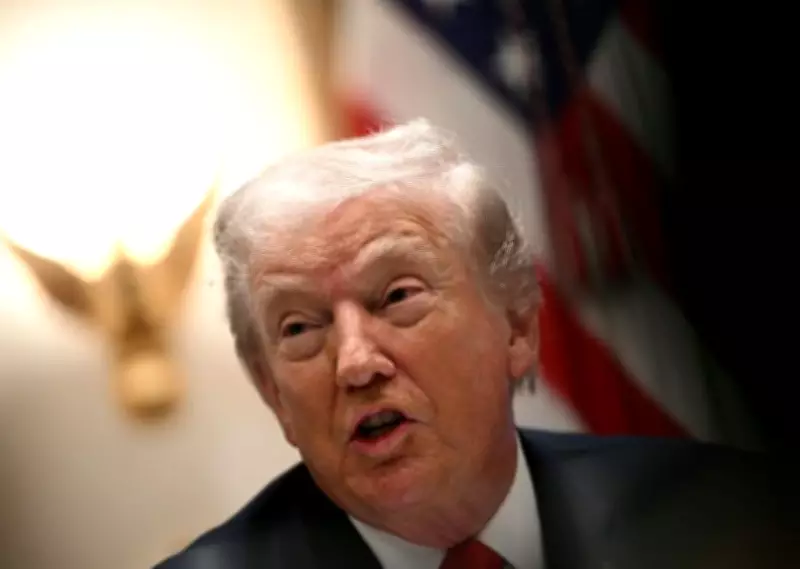
Russian President Vladimir Putin first suggested a one-year extension of New START in September, presenting what many experts considered a straightforward opportunity to maintain nuclear stability. When asked about Putin's proposal while boarding his helicopter, President Donald Trump responded that the extension "sounds like a good idea to me." However, despite this initial positive reaction, the Trump administration took no substantive action to formalize an extension agreement.
A White House official, speaking on condition of anonymity, indicated that Trump would prefer to see broader limitations on nuclear weapons that would include China in future arms control discussions. The official stated that Trump "will clarify on his own timeline" regarding how to achieve these objectives, but no concrete steps were taken before the treaty's expiration.

Expert Concerns and Warnings
Nuclear arms control experts have expressed significant concern about the treaty's expiration and the Trump administration's failure to secure an extension. Daryl Kimball, executive director of the Arms Control Association, noted that Trump's second administration has sidelined career diplomats and concentrated decision-making among a small group of individuals, creating an environment not conducive to complex international negotiations.
"Trump seems to have the right instinct on this issue but has thus far failed to follow through with a coherent strategy," Kimball stated, highlighting the administration's inconsistent approach to nuclear diplomacy.
Jon Wolfsthal, director of global risk at the Federation of American Scientists, emphasized that extending New START represented "a piece of low-hanging fruit that the Trump administration should have seized months ago." He noted that Trump and Putin could have reached a political agreement to extend the treaty with a simple phone call, avoiding the current situation of complete expiration.
Broader Context and Implications
The expiration of New START occurs within a broader context of deteriorating U.S.-Russia relations and the Trump administration's "America First" approach to international agreements. While some observers suggest that inertia rather than ideology may have contributed to the failure to extend New START, the practical consequences remain significant.
Russia had already suspended key elements of the treaty in 2023, including allowing inspections, as relations worsened following Russia's invasion of Ukraine. Alexander Khramchikhin, a Russian military analyst, commented that both powers had already indicated they would act according to their own interests regardless of treaty obligations.
The expiration has contributed to increased global nuclear tensions, with experts involved in the symbolic "Doomsday Clock" recently moving it closer to midnight partly due to New START's demise. This symbolic gesture reflects growing concerns about nuclear risks in a world without formal arms control agreements between the two largest nuclear powers.
Historical Significance and Future Uncertainty
New START represented the last in a series of nuclear arms control agreements dating back to the Cold War era. Originally signed in 2010 by then-Russian President Dmitry Medvedev and U.S. President Barack Obama, the treaty had successfully limited deployed strategic nuclear warheads and established verification mechanisms.
Medvedev, now a Putin ally, recently noted in an interview with Kommersant newspaper that Russia had received no "substantive reaction" from the Trump administration regarding New START extension proposals, though Russia continued to give Trump time to respond.

The treaty's expiration leaves the world without formal nuclear arms limitations between the United States and Russia for the first time in decades, creating uncertainty about future nuclear postures, potential arms races, and global security architecture. As both nations navigate this new reality, the absence of established verification mechanisms and deployment limits raises significant questions about nuclear stability in the coming years.