U.S. Rescue Mission for Downed Pilot in Iran Sparks Conflicting Narratives
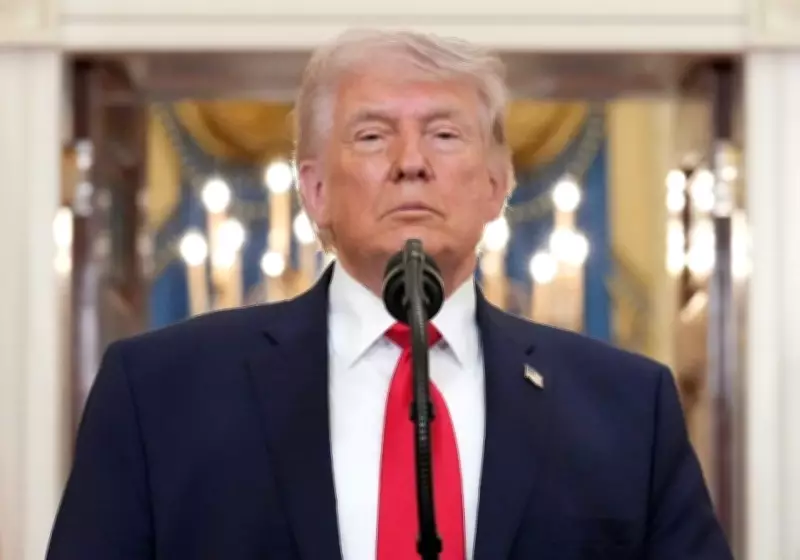
Conflicting accounts have emerged regarding a secretive U.S. military operation to rescue a downed fighter pilot in Iran. While former President Donald Trump boasted of a dramatic daylight rescue by special forces, Iranian military officials claim they "completely foiled" the mission, leaving the facts shrouded in uncertainty.
The Downed Aircraft and Injured Airman
The incident began when an advanced F-15E fighter jet was shot down over Iran's rugged Kohgiluyeh and Boyer-Ahmad province in southwest Iran last Friday. The airman, identified only as a "crew member officer" who served as the weapons system operator, ejected from the aircraft and sustained injuries in the process.
According to U.S. officials cited by news outlet Axios, the airman was wounded but remained capable of walking after his ejection. Trump initially stated the airman "will be fine" before later clarifying he was "seriously wounded." Like all U.S. aviators, the downed pilot had undergone specialized SERE training (Survival, Evasion, Resistance, and Escape) and carried standard survival equipment including a radio/GPS beacon, water, food, medical supplies, and a sidearm.

The Race Against Time in Mountainous Terrain
Immediately following the crash, Iranian authorities mobilized local residents and tribesmen to join security forces in searching for the airman, recognizing the significant political and military value of capturing a U.S. service member alive. This sparked a tense race against time in challenging mountainous terrain.
Social media platforms were flooded with images of U.S. aircraft and helicopters flying at low altitudes over Iran as part of search-and-rescue operations. According to The New York Times, the airman managed to evade capture by hiding in the rugged landscape and even climbed a 2,100-meter (approximately 7,000-foot) ridgeline at one point during his evasion.
Covert Operations and Extraction Efforts
The Central Intelligence Agency played a crucial role in locating the downed airman and reportedly launched a "deception campaign" aimed at convincing Iranian authorities that he had already been recovered. Axios cited an official who described the airman as being "inside a mountain crevice, invisible but for the CIA's capabilities."
The extraction operation, which Trump claimed involved "dozens of aircraft" and hundreds of special operations troops including Navy SEAL Team 6 commandos, unfolded on Sunday. These elite commandos, best known for their role in the 2011 operation that killed Al-Qaeda leader Osama bin Laden, were tasked with physically extracting the airman while U.S. attack aircraft provided protective cover.
Reports indicate that U.S. forces fired their weapons to keep approaching Iranian forces at bay during the extraction, which occurred as Iranian troops converged on the location. Trump asserted that no American lives were lost during the operation.
Iran's Contradictory Account
Iranian military spokesman Ebrahim Zolfaghari presented a dramatically different version of events, telling state media that U.S. forces had used an abandoned airport in southern Isfahan province under the "pretext of recovering the pilot of a downed aircraft" as part of what he called "a deception and escape mission."
Iranian state media broadcast images showing charred wreckage of what appeared to be aircraft in a desert area, with officials claiming that two C-130 military transport planes and two Black Hawk helicopters had been destroyed. The footage clearly displayed two charred propellers and engines amid the wreckage.
U.S. media reports, including from The Wall Street Journal, offered yet another perspective, citing unnamed officials who stated that American forces had deliberately destroyed two C-130s after the aircraft became stuck for unknown reasons during the operation.
Uncertainty Amid Conflicting Claims
The contradictory narratives from U.S. and Iranian sources have created significant uncertainty about what actually transpired during the tense days following the fighter jet's downing. While Trump celebrated what he called "one of the most daring Search and Rescue Operations in U.S." history, Iranian authorities maintain they successfully thwarted the mission.

Social media platforms were immediately flooded with misleading or fabricated images following the incident, further complicating efforts to establish an accurate account of events. The facts remain obscured by what military analysts often describe as "the fog of war," with both sides presenting versions of events that serve their respective political and strategic interests.
The incident highlights the ongoing tensions between the United States and Iran and raises questions about future military engagements between the two nations in the region.