U.S. Forces Intercept Iranian Drone as Iranian Leader Advocates for Dialogue
In a significant development highlighting ongoing regional frictions, the United States military has confirmed the downing of an Iranian drone. This incident occurs concurrently with Iranian President Masoud Pezeshkian publicly expressing a desire for fair and equitable negotiations with international counterparts. The dual narratives of military confrontation and diplomatic overture underscore the complex and volatile dynamics in the Middle East.
Details of the Military Engagement
The shootdown of the Iranian unmanned aerial vehicle (UAV) by U.S. forces represents a direct military action in a region fraught with geopolitical tensions. While specific operational details regarding the location and circumstances remain under official review, such interceptions are not uncommon in areas where U.S. naval and air assets operate. These actions are typically framed by the Pentagon as defensive measures to protect American personnel and interests.
Analysts note that these incidents often serve as a barometer for the state of U.S.-Iran relations, which have been strained for decades over issues ranging from nuclear proliferation to regional proxy conflicts. The downing of the drone sends a clear message of military readiness and a willingness to enforce red lines regarding perceived threats.

President Pezeshkian's Diplomatic Posture
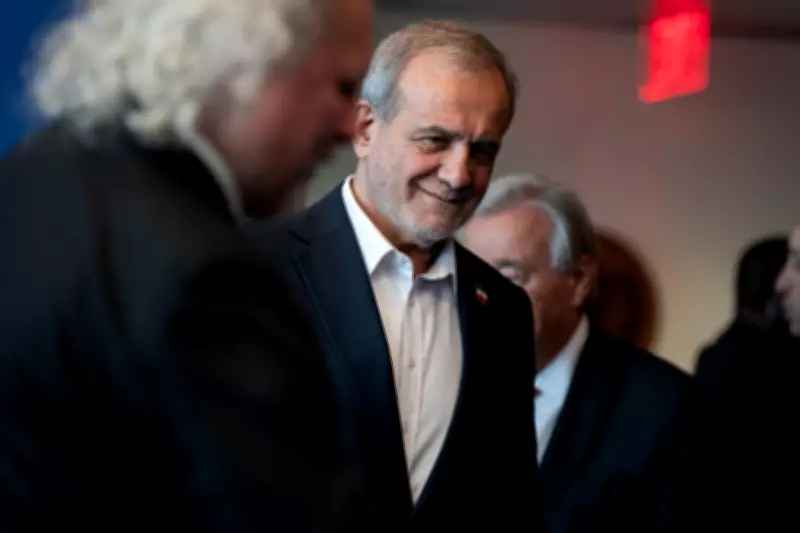
On the diplomatic front, Iranian President Masoud Pezeshkian has recently articulated a call for renewed and balanced international dialogue. Speaking from the platform of the United Nations General Assembly, where he was pictured in September 2025, Pezeshkian emphasized the need for negotiations that are both fair and equitable.
This appeal suggests a potential, albeit cautious, opening for diplomatic engagement. However, it is met with deep skepticism by many Western observers who point to Iran's continued military activities and support for militant groups across the region. The juxtaposition of a military incident with a call for talks creates a challenging environment for any potential breakthrough.
Broader Regional and Global Implications
The simultaneous occurrence of these events highlights the precarious balance between conflict and diplomacy in one of the world's most strategically important regions. Key implications include:
- Escalation Risks: Each military encounter carries the inherent risk of miscalculation and escalation, potentially drawing in other regional actors.
- Diplomatic Credibility: The international community will closely scrutinize whether Iran's call for talks is accompanied by tangible, confidence-building actions.
- Alliance Dynamics: U.S. allies in the region and globally are monitoring these developments to calibrate their own foreign and security policies.
- Domestic Politics: Both in Tehran and Washington, domestic political pressures significantly influence the calculus for either confrontation or negotiation.
As the situation continues to evolve, the path forward remains uncertain. The downing of the drone is a stark reminder of the persistent threat of open conflict, while President Pezeshkian's words offer a glimmer, however faint, of an alternative path through diplomacy. The coming weeks and months will be critical in determining which narrative ultimately prevails in shaping the future of U.S.-Iran relations and regional stability.