U.S. Conducts Major Military Strike on Iran's Kharg Island
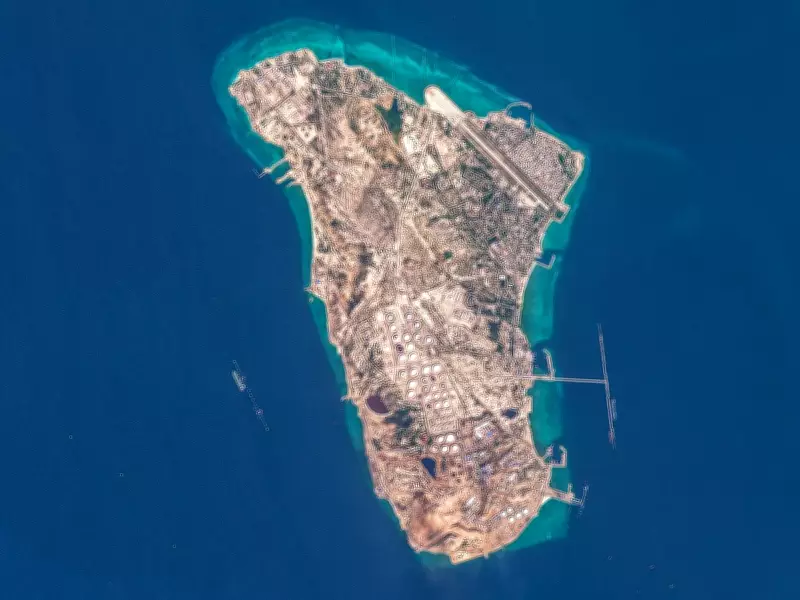
In a significant escalation of the ongoing conflict in the Middle East, President Donald Trump has revealed that United States forces executed a major bombing raid targeting military installations on Iran's Kharg Island. This strategic location in the Persian Gulf serves as Iran's primary crude oil export terminal, handling the overwhelming majority of the country's global oil shipments.
Trump's Warning to Iranian Leadership
President Trump issued a stark warning to Iranian officials through social media, stating "for reasons of decency, I have chosen NOT to wipe out the Oil Infrastructure on the Island." However, he emphasized that this restraint would be immediately reconsidered if Iran interferes with commercial shipping through the critical Strait of Hormuz.
The president described the operation as "one of the most powerful bombing raids in the History of the Middle East" and indicated that U.S. military actions would continue as long as necessary. Trump also suggested that the U.S. Navy would soon begin escorting vessels through the strategic waterway.

Marine Expeditionary Unit Deployment
Concurrently with the military strikes, the United States is deploying the 31st Marine Expeditionary Unit from Japan to the Middle East. This substantial force includes:
- Up to 2,400 troops
- The USS Tripoli command vessel
- A squadron of advanced F-35 fighter jets
- V-22 Osprey aircraft
- Multiple helicopters
The deployment is expected to take at least one week to reach the region, significantly bolstering U.S. military presence during this volatile period.
Strategic Implications of Kharg Island Targeting
Kharg Island represents a crucial economic lifeline for Iran, with oil pipelines terminating there that process approximately 90% of the country's oil exports. According to naval expert Steven Wills of the Center for Maritime Strategy, "If the island were to be captured or destroyed, it could, in theory, take out a significant ability of Iran to export oil, and that's what they live off of."
The selective targeting of military facilities while sparing oil infrastructure represents what analysts describe as a calculated warning shot to Iranian leadership. This approach demonstrates the Trump administration's attempt to pressure Iran while avoiding actions that could trigger catastrophic economic consequences.
Regional and Global Economic Impact
The conflict has already produced significant disruptions to global energy markets:
- Brent crude oil settled above $100 per barrel for the second consecutive session
- U.S. crude futures reached their highest levels since July 2022
- Millions of barrels of oil remain trapped in the Persian Gulf
- Traffic through the Strait of Hormuz has effectively halted
Energy analysts warn that any attack on Kharg Island's civilian infrastructure could send oil prices even higher, exacerbating existing global energy challenges. Asian nations are already experiencing shortages of cooking gas and road fuel, while U.S. gasoline prices have reached their highest levels in approximately two years.
Iranian Response and Regional Tensions
Iranian officials have responded defiantly to the U.S. actions, with social media images showing Ali Larijani, secretary of the Supreme National Security Council, participating in rallies alongside government ministers. The conflict has now entered its fourteenth day, with U.S. Defense Secretary Pete Hegseth reporting that American and Israeli forces have struck approximately 15,000 targets since hostilities began.
The situation remains fluid, with the potential for further escalation as both nations navigate the delicate balance between military pressure and economic stability in one of the world's most strategically important regions.