U.S. Diplomat's Controversial Statements Create Political Opening for Canadian Leader
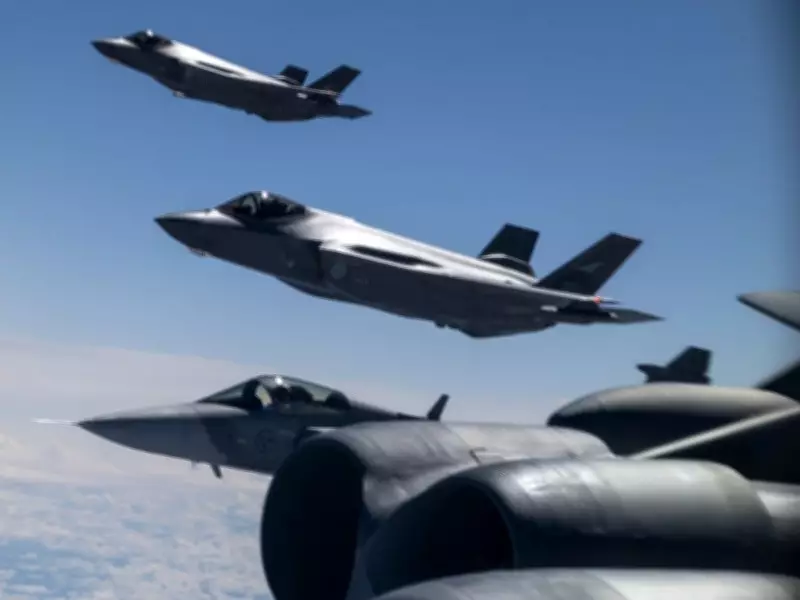
Prime Minister Mark Carney finds himself navigating complex political waters as he approaches a final determination regarding Canada's acquisition of F-35 stealth fighter jets from the United States. The ongoing review, initiated in March 2025 following sovereignty concerns raised by U.S. President Donald Trump's administration, has placed the Canadian leader in a delicate position between military recommendations and diplomatic considerations.
The Current State of Canada's Fighter Jet Procurement
At present, the Canadian government maintains a firm commitment to purchase only 16 F-35 aircraft, with Carney personally responsible for deciding whether to proceed with acquiring an additional 72 of these advanced stealth fighters. This decision carries significant implications for Canada's defense capabilities, international relationships, and fiscal planning for years to come.
The Royal Canadian Air Force has consistently advocated for the F-35 platform, asserting its superiority over the Swedish-made Saab Gripen alternative that entered consideration following Trump's threats against Canadian sovereignty. Military leaders have warned that selecting the Gripen could potentially compromise pilot safety and operational effectiveness, creating substantial pressure on Carney to follow their professional advice.

Diplomatic Tensions Escalate with Ambassador's Remarks
The situation grew more complicated when U.S. Ambassador to Canada Pete Hoekstra entered the fray with a series of provocative statements. Beginning in late 2025 and continuing into early 2026, Hoekstra made multiple inflammatory comments about Canada's importance to the United States, culminating in a January 26, 2026, interview where he suggested dire consequences if Canada declined to purchase the F-35s.
Hoekstra specifically warned that the North American Aerospace Defense Command (NORAD) agreement might require modification if Canada selected Gripens, claiming the Swedish aircraft would lack interoperability with American F-35s. He further suggested the United States might begin flying F-35s into Canadian airspace to address perceived threats, statements many Canadians interpreted as diplomatic threats rather than professional assessments.
Expert Analysis Challenges Ambassador's Claims
Aviation experts quickly challenged Hoekstra's assertions about NORAD interoperability requirements. Bill Sweetman, a respected U.S. aviation writer and author of a critical book about the F-35 program, publicly dismissed the ambassador's comments as "babbling nonsense" on social media platform X.
Sweetman noted that Canada and the United States have successfully operated different fighter aircraft within NORAD for over four decades, with Canadian jets controlled through Winnipeg-based command centers. He further questioned the relevance of F-35 stealth capabilities in NORAD operations, pointing out that Russian bombers typically lack air-to-air radar systems that would make stealth technology decisive in continental defense scenarios.
Political Implications for the Carney Government
Paradoxically, Hoekstra's controversial statements may have provided Carney with unexpected political cover to reduce Canada's F-35 commitment. By framing a decision to purchase Gripens as resistance to diplomatic pressure and bullying from the Trump administration's representative, the Liberal government could present the move as defending Canadian sovereignty and independence.
This development creates a unique political dynamic where Carney can potentially justify going against military advice by positioning the decision as standing up to inappropriate foreign interference. The situation illustrates how diplomatic missteps can create unexpected political opportunities for national leaders navigating complex procurement decisions with significant defense and economic implications.
The final decision, expected in the coming months, will reveal not only Canada's future fighter jet capabilities but also how the Carney government balances military requirements, fiscal responsibility, and diplomatic relationships in an increasingly complex global security environment.