Trump's Hormuz Blockade Threat Could Backfire: Analysts
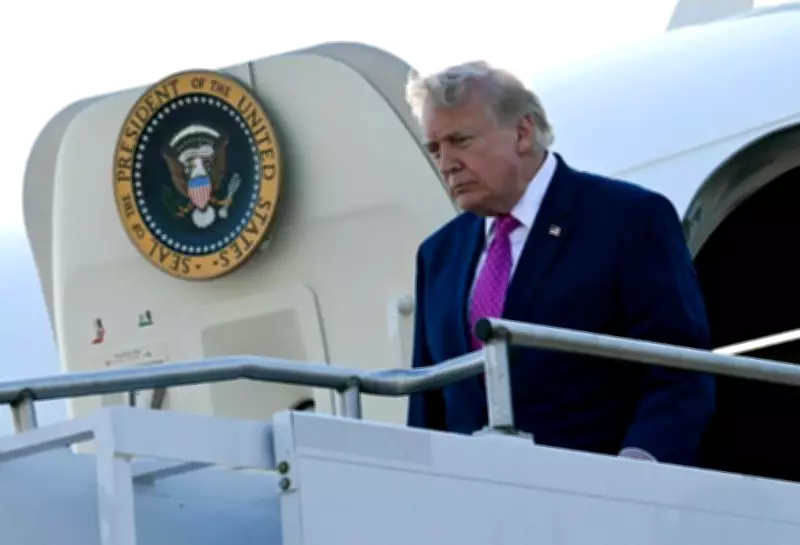
U.S. President Donald Trump's threat to impose a naval blockade on the strategic Strait of Hormuz could prove counterproductive and expose American forces to heightened risks, according to multiple security analysts and Middle East experts. The warning comes after the collapse of U.S.-Iran peace talks left the administration with limited options for addressing the ongoing regional conflict.
Failed Negotiations and Limited Options
The failure of marathon negotiations between U.S. Vice President JD Vance and top Iranian officials has left the Trump administration with several unpalatable choices. Protracted diplomatic efforts would undermine Trump's insistence that Iran has "no cards" left to play, while escalating military action carries significant political and strategic risks ahead of midterm elections.
Any blockade of the vital waterway through which approximately one-fifth of the world's oil flows would likely do little to ease global economic anxieties or reduce surging gas prices that have angered American voters. The situation presents a complex challenge for an administration already facing criticism for its approach to Middle East policy.

Analysts Question Strategic Thinking
Brian Katulis, a senior fellow at the Middle East Institute, characterized Trump's approach as resembling a "carnival barker" style that leaves close aides scrambling to chart a coherent path forward. "He may be simply buying more time to move in more military assets or because he doesn't know what else to do," Katulis told AFP. "I wouldn't call it a strategy; it is a military-centric approach without strategy."
Shibley Telhami, a professor of peace and development at the University of Maryland and fellow at the Brookings Institution, described the blockade threat as "bewildering and seems self-defeating." Telhami emphasized the damage to American credibility, noting that "Iran already has no trust in Trump" and that the threat makes it "hard to understate what this makes of what's left of America's global credibility."
Military Risks and Iranian Resilience
Danny Citrinowicz, a fellow at Israel's Institute for National Security Studies, warned that a naval blockade would expose U.S. forces to increased danger while unlikely to achieve its intended objectives. "There is little reason to believe that a blockade would force Iranian capitulation," Citrinowicz wrote on social media. "If anything, Iran's demonstrated resilience thus far suggests the opposite."
The analyst further noted that "Iran's geographic scale and military capabilities mean that sustaining such an operation would demand substantial and prolonged allocation of American resources." This assessment aligns with Iran's Revolutionary Guards recent pledge that Tehran's enemies would be trapped in a "deadly vortex" if they make a wrong move in the strategic strait.
Domestic Political Considerations
A prolonged military engagement may not resonate well with the American public, according to recent polling data. A CBS News poll revealed that worry, stress, and anger far outweigh feelings of safety and confidence when Americans are asked about the ongoing conflict. More than 80 percent of respondents said the United States should seek to reopen the strait and improve global access to oil to reduce gas prices, but fewer than 10 percent believed these goals had been achieved.
Democratic Senator Mark Warner expressed skepticism about the blockade approach on CNN's "State of the Union," stating: "I don't see how, 40-plus days into this war, that we are safer, that our allies are safer. I'm not even sure Israel is safer. I don't understand how blockading the strait is going to somehow push the Iranians into opening it. I don't get the connection there."
Diplomatic Alternatives Face Challenges
With the blockade option appearing increasingly problematic, questions arise about potential diplomatic alternatives. However, Democratic Senator Tim Kaine suggested that renewed negotiations would not be straightforward, particularly given Trump's decision to withdraw the United States from the 2015 nuclear accord reached between Tehran and world powers.

The administration faces a delicate balancing act between demonstrating resolve and avoiding actions that could escalate the conflict without achieving meaningful strategic gains. As analysts continue to question the wisdom of the blockade threat, the situation in the Strait of Hormuz remains a flashpoint with significant implications for global energy markets and regional stability.