Trump's Afghanistan Comments Draw Fierce Canadian Condemnation
Former U.S. President Donald Trump has sparked outrage across Canada with recent comments suggesting NATO troops avoided frontline combat during the Afghanistan conflict. The remarks have been met with particular anger from Canadian veterans, journalists, and military families who experienced the brutal reality of Canada's combat mission firsthand.
A Callous Distortion of Canadian Sacrifice
During a recent interview, Trump claimed that NATO forces in Afghanistan "stayed a little back, a little off the front lines." This characterization has been described by those who served in Afghanistan as not only inaccurate but deeply offensive to the memory of Canadian soldiers who made the ultimate sacrifice.
Graham Thomson, an Alberta journalist who completed two tours in Afghanistan as a reporter, expressed particular outrage at Trump's comments. "We keep saying he can't go any lower," Thomson remarked, "but somehow he always manages." Thomson emphasized that Trump's allegations represent a "callous, heartless lie" that dishonors Canadian service members.

The Human Cost of Canada's Afghanistan Mission
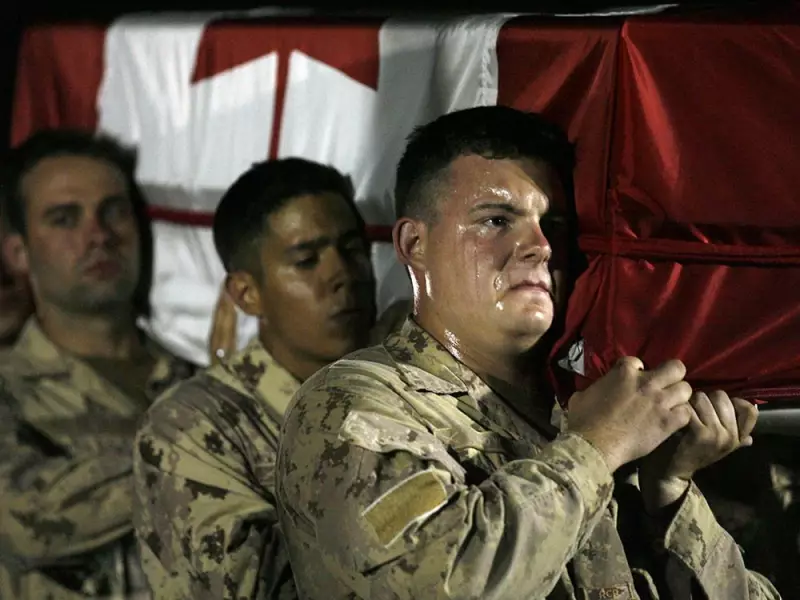
The Canadian military suffered significant losses during its Afghanistan deployment, with 158 soldiers killed in combat operations. This represents the third-highest casualty count among NATO countries, trailing only the United States and Great Britain. Hundreds more Canadian service members returned home with physical and psychological wounds.
Among those who perished was Captain Nichola Goddard of Calgary, who was killed on May 17, 2006, while serving as a forward observation officer. Her role involved coordinating artillery fire from exposed positions ahead of advancing troops, directly contradicting Trump's suggestion that NATO forces avoided frontline engagement. Captain Goddard was posthumously awarded the Meritorious Service Medal for her actions.
Journalists in Harm's Way
The danger extended beyond military personnel to Canadian journalists covering the conflict. Calgary Herald reporter Michelle Lang was killed alongside four soldiers on December 20, 2009, when their vehicle struck a roadside bomb. Lang's death represented a profound loss to Canadian journalism and highlighted the risks faced by media professionals in conflict zones.
Thomson, who narrowly avoided injury when his convoy encountered an unexploded roadside bomb during his 2007 deployment, emphasized that there were no truly safe areas in Afghanistan. "There was no real front line at all," he explained. "This was a chaotic, asymmetrical war. There was no safe place for Canadians, not even inside the main base."
The Reality of Canadian Combat Operations
Contrary to Trump's characterization, Canadian forces were consistently engaged in dangerous combat operations throughout their Afghanistan deployment. Canadian troops maintained forward operating bases in some of the most volatile regions of the country and regularly conducted patrols and missions in hostile territory.
"When it came to the fighting, Canadians were always out there, every day," Thomson stated. "We had countryside bases in some really dangerous places. They were under attack constantly." This reality stands in stark contrast to Trump's suggestion that NATO forces avoided frontline engagement.
Broader NATO Reaction
The controversy has resonated beyond Canada, with military communities across NATO nations expressing similar outrage. The suggestion that allied forces avoided combat has been widely rejected by military analysts and veterans from multiple countries who participated in the Afghanistan mission.
The incident highlights ongoing tensions within the NATO alliance regarding historical interpretations of shared military operations and the importance of accurately representing the sacrifices made by all participating nations.