Trump Pledges Heightened Military Action Against Iran as President Extends Apology to Neighbors
In a significant development within the ongoing Middle East conflict, former United States President Donald Trump has declared his intention to intensify military strikes against Iran. Concurrently, the Iranian president has formally issued apologies to neighboring countries, marking a complex diplomatic and military landscape.
Escalating Rhetoric and Military Posturing
Trump's announcement signals a potential escalation in hostilities, with the former president asserting that defense contractors have agreed to quadruple production of advanced weaponry he described as 'exquisite class.' This move aims to bolster U.S. military capabilities in the region. Israeli officials have concurrently warned of an impending 'new phase' in the war, further heightening tensions.
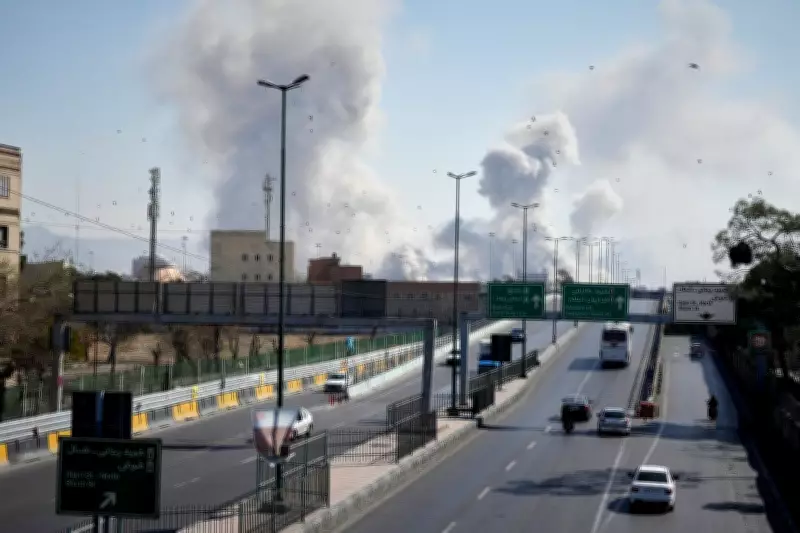
Recent video evidence has emerged showing fighter jets destroying an underground bunker allegedly linked to Iran's supreme leadership. The targeting of this facility, purportedly associated with the late Ayatollah Ali Khamenei, raises questions about strategic objectives in the conflict. A former CIA director commented on the U.S. campaign, stating, "Victory is what President Trump declares it to be," highlighting the subjective nature of success in such engagements.

Diplomatic Maneuvers and Regional Apologies
Amidst the military escalations, the Iranian president has taken the unusual step of apologizing to neighboring nations. This diplomatic gesture suggests an acknowledgment of regional tensions and potential collateral impacts from the conflict. The apologies come as many Middle Eastern countries express concern over the spreading violence and its economic repercussions.
Global oil and gas markets have experienced rapid price increases as the Iran conflict shows no signs of abating. This economic pressure adds another layer of complexity to international responses to the crisis.
International Reactions and Humanitarian Concerns
Canadian Prime Minister Carney has clarified that Canada is not directly engaged in the Middle East conflict, though Canadians in the region report anxiety about returning home. One Montreal resident described being awakened by bombs, illustrating the personal toll of distant conflicts.
The situation has prompted discussions about international security protocols, with Fraser noting concerns that "everything that moves is a target" for those caught in conflict zones. These remarks underscore the challenges facing civilians and foreign nationals in volatile regions.
As the conflict enters what appears to be a more intense phase, global observers monitor both military developments and diplomatic efforts. The juxtaposition of Trump's aggressive stance with Iran's conciliatory gestures toward neighbors creates a paradoxical situation where escalation and de-escalation signals emerge simultaneously.
The international community continues to assess the implications of these developments, with particular attention to regional stability, global energy markets, and humanitarian considerations. The evolving situation demonstrates how geopolitical conflicts can rapidly transform diplomatic landscapes and military strategies.