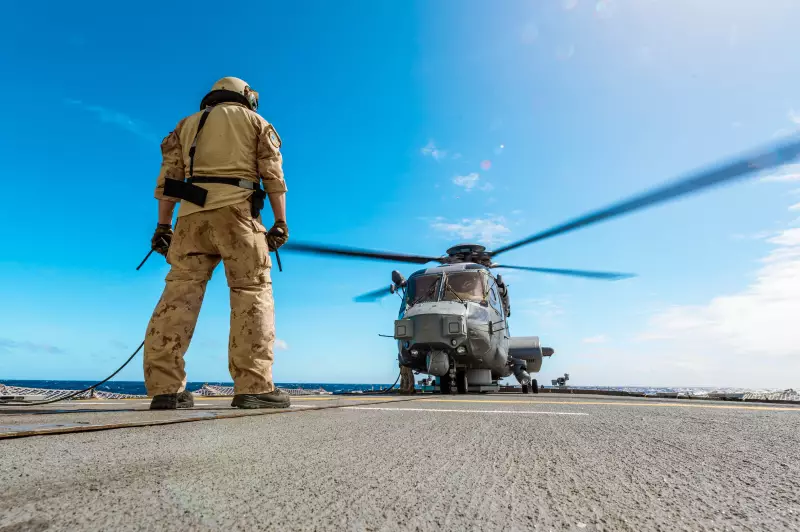
Military Technician Fined for Failing to Report Crack in CH-148 Cyclone Helicopter
A Canadian Armed Forces technician has been fined following an incident where a crack in a CH-148 Cyclone helicopter was not reported, according to recent military disciplinary proceedings. The technician, who was serving onboard HMCS Montreal, failed to disclose the structural issue, which was discovered during a routine inspection.
Details of the Safety Violation
The crack was found in the helicopter's airframe, a critical component that ensures the aircraft's integrity during flight operations. This oversight occurred despite strict protocols requiring immediate reporting of any defects or damages to military equipment. The technician, whose identity has been confirmed as Joshua Streeter, an air weapons technician, was involved in Exercise Talisman Sabre in July 2023 when the helicopter was in use.
The failure to report the crack poses significant safety risks, as undetected structural issues can lead to catastrophic failures during missions. The Canadian Armed Forces have emphasized that such lapses are taken very seriously to maintain operational readiness and protect personnel.

Broader Implications for Military Safety
This incident highlights ongoing challenges in military maintenance and safety compliance. The CH-148 Cyclone helicopter, used for maritime patrol and search-and-rescue missions, is a key asset for the Royal Canadian Air Force. Ensuring its airworthiness is paramount, especially given its role in high-stakes environments.
Experts note that timely reporting of defects is crucial to prevent accidents and extend the lifespan of military aircraft. The fine imposed on the technician serves as a deterrent, reinforcing the importance of adherence to safety regulations. Military officials have stated that additional training and oversight measures may be implemented to prevent similar occurrences in the future.
This case underscores the need for vigilance in military operations, where even minor oversights can have far-reaching consequences for national defense and personnel safety.