South Korea Intensifies Bid for Canadian Submarine Contract with High-Level Delegation
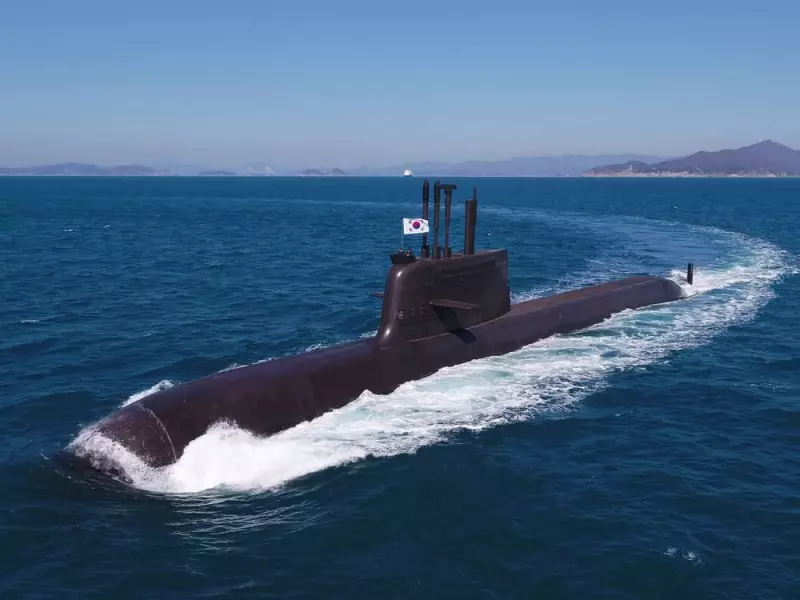
South Korea has launched a significant diplomatic and industrial offensive in its pursuit of a major Canadian submarine procurement contract. The Asian nation is dispatching a high-level delegation to Canada, led by Presidential Chief of Staff Kang Hoon-sik and including top executives from leading shipbuilding and automotive corporations.
Delegation Composition and Strategic Objectives
The delegation represents a coordinated government-industry effort to secure what could become one of Canada's most expensive military procurement programs in history. Chief of Staff Kang Hoon-sik, travelling as President Lee Jae Myung's special envoy, confirmed the delegation includes Industry Minister Kim Jung-kwan alongside senior executives from Hanwha Ocean Co., HD Hyundai Heavy Industries Co., and Hyundai Motor Group.
Kang emphasized that Canada's submarine deal extends well beyond simple vessel procurement, describing it as a comprehensive industrial package that could potentially include automotive manufacturing components. He referenced past discussions where Canadian officials raised the possibility of Hyundai Motor establishing a car manufacturing plant as part of the broader submarine agreement.

Economic Implications and Competitive Landscape
The potential economic impact of winning this contract is substantial for South Korea. According to Kang, securing the deal could generate at least 40 trillion won in domestic economic output while supporting over 300 local suppliers. The project has the potential to create more than 20,000 jobs within South Korea's industrial sector.
Canada's military plans involve purchasing up to 12 conventionally powered submarines as Prime Minister Mark Carney significantly increases defence spending. Industry estimates suggest the contract value could range between $20 billion and $24 billion, excluding decades of maintenance and support infrastructure costs.
The bidding competition has narrowed to South Korea and Germany's Thyssenkrupp Marine Systems. Kang acknowledged the formidable challenge posed by Germany, given its industrial strengths and historical role in transferring submarine technology to South Korea during the early stages of its own naval program.
Broader Industrial Partnership Framework
South Korea's approach emphasizes presenting the submarine project as a comprehensive industrial partnership rather than a simple defence procurement. The delegation plans to highlight how large-scale defence projects increasingly require coordinated public-private efforts that extend beyond individual corporate capabilities.
Kang stated that the Canadian submarine project, one of the largest recent defence procurements globally, would be evaluated not only on performance and price but also on industrial cooperation and job creation potential. He plans to deliver Seoul's commitment to expanded industrial and security cooperation directly to senior Canadian officials during the visit.
Strategic Context and International Positioning
South Korea's shipbuilding dominance has long attracted international attention, with even former U.S. President Donald Trump openly courting Seoul to help revitalize America's struggling shipyards. A South Korean pledge to assist in "Making American Shipbuilding Great Again" has since become a cornerstone of a new trade agreement between Washington and Seoul.
This Canadian initiative forms part of Seoul's broader overseas defence marketing strategy, with additional campaigns underway or planned in countries including Saudi Arabia, the United Arab Emirates, Indonesia, Peru, and Norway. Kang declined to provide specific bidding strategy details, citing commercial sensitivity amid ongoing competition, but emphasized the delegation would focus on presenting a "win-win" framework for bilateral industrial cooperation.
While Hyundai Motor has separately stated it currently has no plans to build an automotive manufacturing plant in Canada, the breadth of the delegation underscores South Korea's strategic approach to positioning the submarine contract as a catalyst for broader economic partnership between the two nations.